Technical detail
Transglutaminase vs Other Texture Solutions
Texture is not a single ingredient decision. It is a system decision: protein quality, water management, thermal history, shear, salt balance, pH, and the finished eating experience all compete for control.
Transglutaminase, also known as protein-glutamine gamma-glutamyltransferase, is different from many conventional texture tools because it does not primarily thicken the water phase. It modifies the protein network itself. In practical formulation terms, it can improve binding strength, bite, sliceability, yield, and structural integrity by creating protein-to-protein crosslinks within compatible systems.
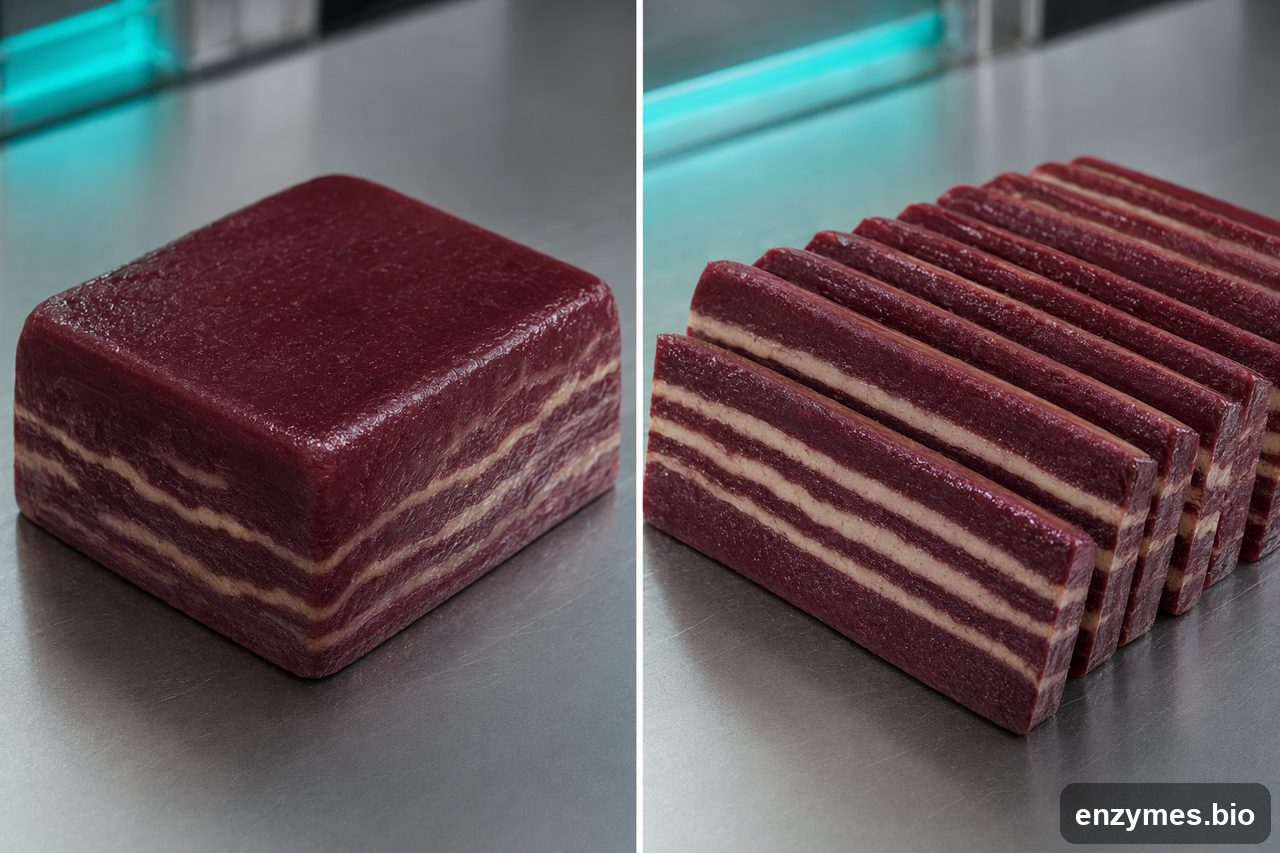
That makes transglutaminase especially useful when the target is architectural texture: formed meat, seafood restructuring, dairy gel firmness, plant-protein binding, hybrid protein systems, and cleanly cut formats where cohesion matters.
Wholesale and bulk transglutaminase for food manufacturers, ingredient blenders, distributors and resellers. Every order is quoted individually. Request a quote with your product or application, the quantity you need and the destination country.
The short version
Use transglutaminase when the formulation needs stronger protein networking. Use starches, gums, fibers, emulsifiers, salts, and process tools when the primary problem is water control, viscosity, emulsion stability, or thermal behavior.
In many commercial products, the best answer is not one tool replacing every other tool. It is transglutaminase doing the protein-binding work while complementary ingredients manage moisture, mouthfeel, freeze-thaw behavior, or processing tolerance.
What transglutaminase does that most texture systems do not
Most texture solutions add structure around the protein system. Transglutaminase builds structure through the protein system.
In a compatible formulation, it can:
- Increase protein-to-protein binding strength
- Improve bite, chew, firmness, or slice integrity
- Reduce crumble in formed or restructured products
- Support yield by strengthening the matrix around retained moisture and fat
- Help align texture across variable raw material inputs
- Expand formulation flexibility in animal, dairy, seafood, and plant-protein systems
- Support premium texture without relying only on high solids, high salt, or heavy hydrocolloid loading
The value is not simply “more firmness.” The commercial value is controlled firmness: structure that survives forming, cooking, cooling, cutting, packing, and reheating while still matching the intended sensory profile.
Transglutaminase vs starches
Starches are useful, economical, and familiar. They build viscosity, hold water, and contribute gel strength after hydration and heat processing. They are often selected for yield, cost control, and processing robustness.
Transglutaminase operates on a different axis. It does not act like a starch thickener. It strengthens the protein network and can help improve cohesion where starch alone may create bulk without true protein binding.
Where starches fit best
- Water binding and viscosity development
- Cost-effective solids contribution
- Cooked gel body
- Sauce, filling, and matrix thickening
- Thermal process tolerance, depending on starch type
Where transglutaminase can outperform starch-led texture
- Cleaner bite in protein-forward products
- Better sliceability in formed meats, seafood, or analog formats
- Stronger cohesion without excessive pastiness
- Reduced risk of a heavy, starchy eating profile
- Improved structural integrity in high-protein systems
Commercial takeaway
If the challenge is “this product releases water,” starch may help. If the challenge is “this product does not hold together like a protein structure,” transglutaminase is often the more precise lever.
Transglutaminase vs gums and hydrocolloids
Gums and hydrocolloids are powerful tools for viscosity, suspension, gelation, and water control. They can provide stability in sauces, dairy alternatives, dressings, meat systems, and plant-based products.
However, hydrocolloids often structure the continuous phase rather than creating true protein-to-protein connectivity. Overuse can create slickness, gumminess, elastic drag, or a delayed flavor release.
Where gums and hydrocolloids fit best
- Managing free water
- Increasing viscosity at low inclusion
- Stabilizing emulsions and suspensions
- Improving freeze-thaw behavior
- Adjusting mouthfeel and lubrication
- Supporting plant-based and reduced-fat systems
Where transglutaminase can be more targeted
- Cohesion in protein pieces, patties, blocks, slices, and gels
- Bite strength without excessive viscosity
- Reduced dependence on high gum systems
- Better internal binding in meat, seafood, dairy, and plant-protein matrices
- Structural design where a natural protein bite is the target
Commercial takeaway
Hydrocolloids manage the water architecture. Transglutaminase manages the protein architecture. High-performance formulations often need both, but for different reasons.
Transglutaminase vs phosphates and functional salts
Phosphates and salts can improve protein extraction, water retention, emulsification, and cooked yield in processed meat and seafood systems. They are proven tools, but they may carry label, sensory, or regulatory constraints depending on market positioning.
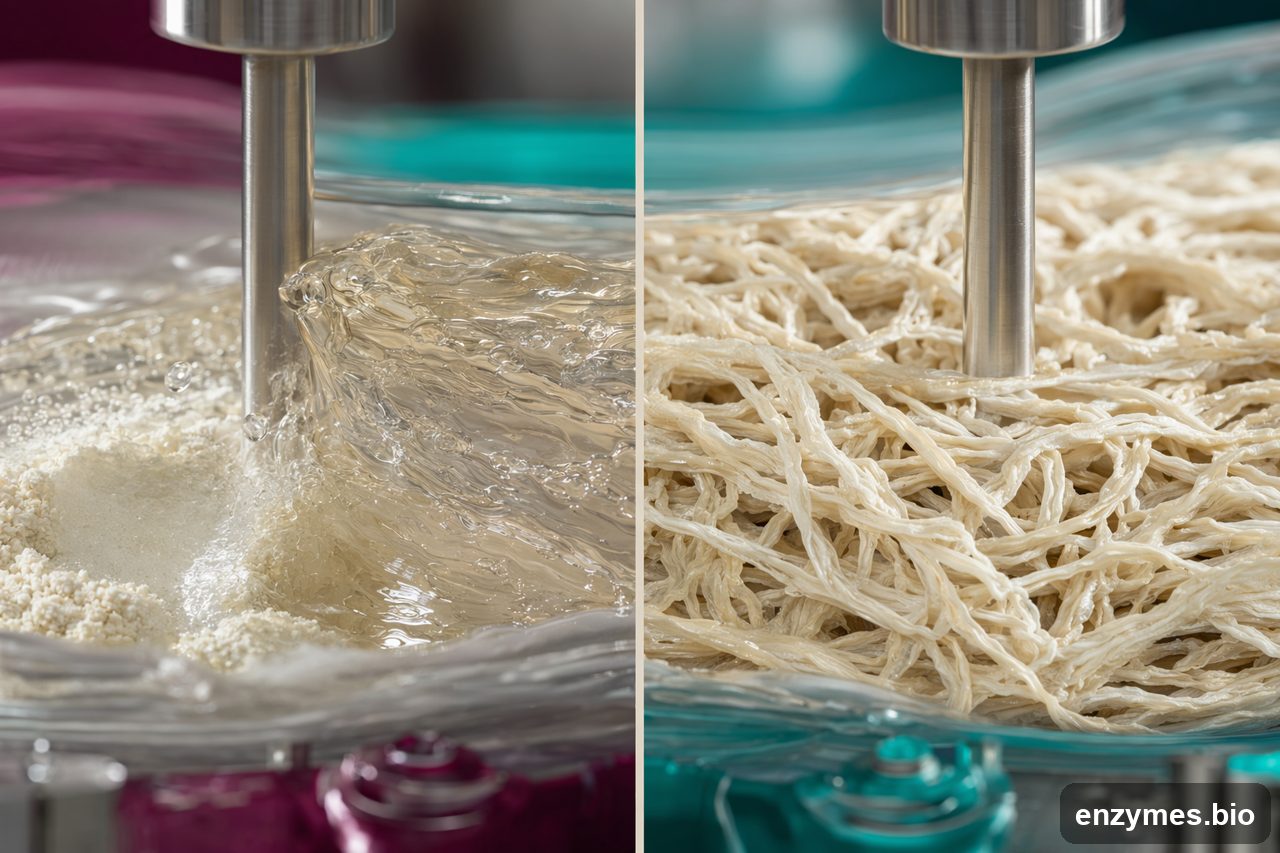
Transglutaminase offers a different pathway to binding. It can support structure without relying solely on ionic strength or phosphate-driven functionality. It is not a universal phosphate replacement, but it can reduce pressure on salt-phosphate systems when the key gap is cohesion.
Where salts and phosphates fit best
- Protein solubilization and extraction
- Water-holding support
- Emulsion stability in processed meat systems
- Yield improvement in conventional processes
- Process familiarity and predictable handling
Where transglutaminase can add value
- Stronger formed-piece integrity
- Improved bind in restructured meat or seafood
- More texture flexibility in lower-salt development work
- Support for phosphate-reduction strategies where technically feasible
- Binding performance in systems where extracted protein alone is not enough
Commercial takeaway
Phosphates help proteins behave during processing. Transglutaminase helps proteins connect. The strongest formulation strategy depends on whether the product needs extraction, binding, yield, label adjustment, or all four.
Transglutaminase vs emulsifiers
Emulsifiers help manage interfaces between fat and water. They are essential in many systems where stability, dispersion, aeration, or mouthfeel depend on interfacial control.
Transglutaminase does not replace emulsifier function. Its role is structural. In emulsified or comminuted protein systems, it can strengthen the protein matrix around dispersed fat and water, but it is not the primary tool for forming the emulsion.
Where emulsifiers fit best
- Fat dispersion
- Emulsion stability
- Batter and dough functionality
- Aeration and volume control
- Creaminess and mouthfeel design
Where transglutaminase contributes differently
- Firmness and cut strength in protein gels
- Reduced fracture or crumble in formed systems
- Improved hold during slicing, packing, and heating
- Structural reinforcement after the emulsion is built
Commercial takeaway
Emulsifiers organize interfaces. Transglutaminase reinforces the protein scaffold. In products with both fat and protein texture targets, they can be complementary rather than interchangeable.
Transglutaminase vs heat-set and acid-set texture
Heat and acid are classic ways to structure proteins, especially in dairy, egg, seafood, and plant-protein systems. They can create gels, curds, coagulates, and firm matrices.
The limitation is that heat-set and acid-set systems can be sensitive to timing, pH drift, protein quality, shear, and mineral balance. Texture may form late in the process, sometimes after the product is already in its final shape.
Transglutaminase can provide an additional pre-structure or mid-process structure step, depending on the application. It may support cleaner cutting, stronger gels, or improved stability before final heating or cooling.
Where heat and acid fit best
- Coagulated dairy and plant-protein gels
- Cooked protein setting
- pH-driven gelation or curd formation
- Traditional texture profiles
- Processes where thermal kill, setting, and flavor development are linked
Where transglutaminase adds control
- Building structure before final heat exposure
- Strengthening gels without simply increasing total solids
- Improving cut surface and shape retention
- Supporting texture consistency across protein variability
- Reducing brittleness when formulation and process are balanced correctly
Commercial takeaway
Heat and acid set the system. Transglutaminase can help design the network before, during, or around that setting step.
Transglutaminase vs mechanical processing
Grinding, chopping, tumbling, mixing, shearing, extrusion, and forming all affect texture. Mechanical energy changes particle size, protein exposure, hydration, and matrix alignment.
Mechanical processing can create opportunity for transglutaminase by exposing reactive protein surfaces and improving distribution. It can also damage texture if overused.
Where mechanical processing fits best
- Particle size control
- Protein extraction and exposure
- Matrix alignment
- Hydration and ingredient distribution
- Forming, shaping, and portioning
Where transglutaminase adds value
- Holding mechanically formed structures together
- Improving bind after tumbling or mixing
- Reinforcing plant-protein matrices after hydration and alignment
- Supporting clean portioning, slicing, and cooking behavior
Commercial takeaway
Process creates the architecture. Transglutaminase can lock it in. The two should be developed together, not treated as separate variables.
Application comparison by product type
Meat and poultry
In processed, formed, or restructured meat systems, transglutaminase can improve binding strength, slice integrity, bite, and yield. It is often evaluated where teams want better cohesion without making the product overly pasty or dependent on starch-heavy systems.
Best-fit texture goals:
- Stronger formed pieces
- Cleaner slicing
- Improved bind in chopped or comminuted systems
- Better cook stability
- More consistent bite across raw material variation
Seafood
Seafood proteins can be delicate, variable, and sensitive to handling. Transglutaminase can support restructuring, portion control, firmness, and improved integrity in surimi-style, minced, or formed seafood products.
Best-fit texture goals:
- Firm but clean bite
- Reduced fragmentation
- Improved shape retention
- Better portion integrity after thawing and cooking
- More consistent handling in value-added formats
Dairy and cultured systems
In dairy protein systems, transglutaminase can contribute to gel firmness, reduced syneresis, and improved mouthfeel when formulation conditions are compatible. It may be considered for yogurt-style textures, cheese analog development, and high-protein dairy formats.
Best-fit texture goals:
- Firmer gels
- Reduced whey-off
- Improved spoonability or cut strength
- More stable high-protein texture
- Potential reduction of stabilizer pressure
Plant-based and hybrid protein systems
Plant proteins often need help with cohesion, elasticity, and bite. Transglutaminase can be valuable when the protein substrate is compatible and the process allows enough contact, hydration, and hold time for network formation.
Best-fit texture goals:
- Improved patty or nugget bind
- Reduced crumble
- Better bite in hybrid protein systems
- More stable high-moisture matrices
- Cleaner cut and handling behavior
Decision matrix: which texture route fits the problem?
| Formulation problem | Transglutaminase | Starch | Gum or hydrocolloid | Salt or phosphate | Emulsifier | Process change |
|---|---|---|---|---|---|---|
| Weak protein-to-protein bind | High fit | Low to medium | Low to medium | Medium | Low | Medium |
| Water release | Medium | High | High | Medium | Low | Medium |
| Poor sliceability | High | Medium | Medium | Medium | Low | High |
| Excessive crumble | High | Medium | Medium | Medium | Low | High |
| Need more viscosity | Low | High | High | Low | Medium | Medium |
| Fat-water instability | Low to medium | Medium | Medium | Low | High | Medium |
| Lower-salt development | Medium to high | Medium | Medium | Variable | Low | Medium |
| Cleaner protein bite | High | Medium | Variable | Medium | Low | High |
| Freeze-thaw stress | Medium | High | High | Medium | Medium | High |
| Label simplification pressure | Medium | Variable | Variable | Variable | Variable | High |
When transglutaminase is not the first answer
Transglutaminase is powerful, but it is not a universal texture fix. It should not be selected as the primary tool when the problem is mainly:
- Low viscosity in a sauce or liquid system
- Emulsion formation without adequate interfacial support
- Water migration caused by poor solids balance
- Freeze-thaw damage that requires cryostability design
- Flavor release issues caused by fat phase or sweetener balance
- Texture failure driven by overprocessing or poor thermal control
- Protein systems with limited compatibility or insufficient accessible protein sites
In those cases, a gum, starch, emulsifier, fiber, salt adjustment, protein change, or process redesign may be the more direct route.
Process variables that decide performance
Transglutaminase performance depends on the formulation and the process window. R&D teams should evaluate it as a process ingredient, not a last-minute additive.
Key variables include:
- Protein source and protein quality
- Degree of protein denaturation or prior heat exposure
- Moisture level and water distribution
- Salt system and ionic environment
- pH range and buffering behavior
- Fat level and particle size
- Mixing intensity and distribution quality
- Hold time before heat, chill, or final forming
- Thermal profile and enzyme inactivation step
- Packaging format and post-process handling
The same ingredient can produce different outcomes depending on how the protein is hydrated, mixed, shaped, rested, cooked, cooled, and cut.
Practical development approach
For a commercial trial, start with the texture problem, not the ingredient list.
1. Define the target failure mode
Is the product crumbling, weeping, fracturing, smearing, shrinking, slicing poorly, or eating too soft? Each failure points to a different texture lever.
2. Map the current system
Document the protein source, process order, water addition, fat level, salt system, thermal step, and final handling conditions. Transglutaminase needs to be placed where it can contact the relevant proteins before the structure is fixed.
3. Compare against current texture tools
Run transglutaminase alongside your existing starch, gum, salt, phosphate, fiber, or process route. The goal is not only peak firmness. The goal is the best commercial balance of yield, bite, cost, label, line speed, and finished-product consistency.
4. Test finished-product behavior
Evaluate texture after the real stress points: cooking, cooling, slicing, freezing, thawing, reheating, packaging compression, and shelf-life storage.
5. Tune the architecture
The strongest prototype is not always the best product. Adjust the network for the intended sensory profile: clean cut, elastic chew, tender bite, firm gel, cohesive crumble resistance, or high-moisture juiciness.
Buyer considerations for procurement and scale-up
Procurement teams should compare more than price per kilogram. For transglutaminase, the commercial value is tied to performance in the finished system.
Evaluate:
- Fit with the target protein system
- Consistency across production lots
- Ease of dispersion and handling
- Stability under storage and plant conditions
- Compatibility with the process sequence
- Required technical documentation
- Regulatory and label requirements by market
- Supplier responsiveness during plant trials
- Ability to support application-specific troubleshooting
A lower-cost texture solution may become expensive if it increases rework, slows forming, worsens slicing yield, or forces sensory compromises.
Bottom line
Transglutaminase is best understood as a protein architecture tool. Starches thicken and bind water. Gums manage viscosity and water phase behavior. Phosphates and salts modify protein functionality. Emulsifiers stabilize interfaces. Heat, acid, and mechanical processing shape the matrix.
Transglutaminase connects proteins into a stronger network. That makes it a high-value option when the commercial target is binding strength, slice integrity, clean bite, yield support, and formulation flexibility in protein-rich foods.
Request a quote or get pricing
Tell us what you are building, the protein system, the target texture, and the process conditions. Transglutaminase Enzyme Solutions will help match the right transglutaminase grade to your application and provide pricing for commercial evaluation.
Ready for a quote? Use the inquiry form at the foot of this page. Tell us the application, the quantity per order or per year and the delivery country. Price, pack size and lead time are quoted per order.