Technical detail
Transglutaminase for noodles, pasta, and wheat-based products
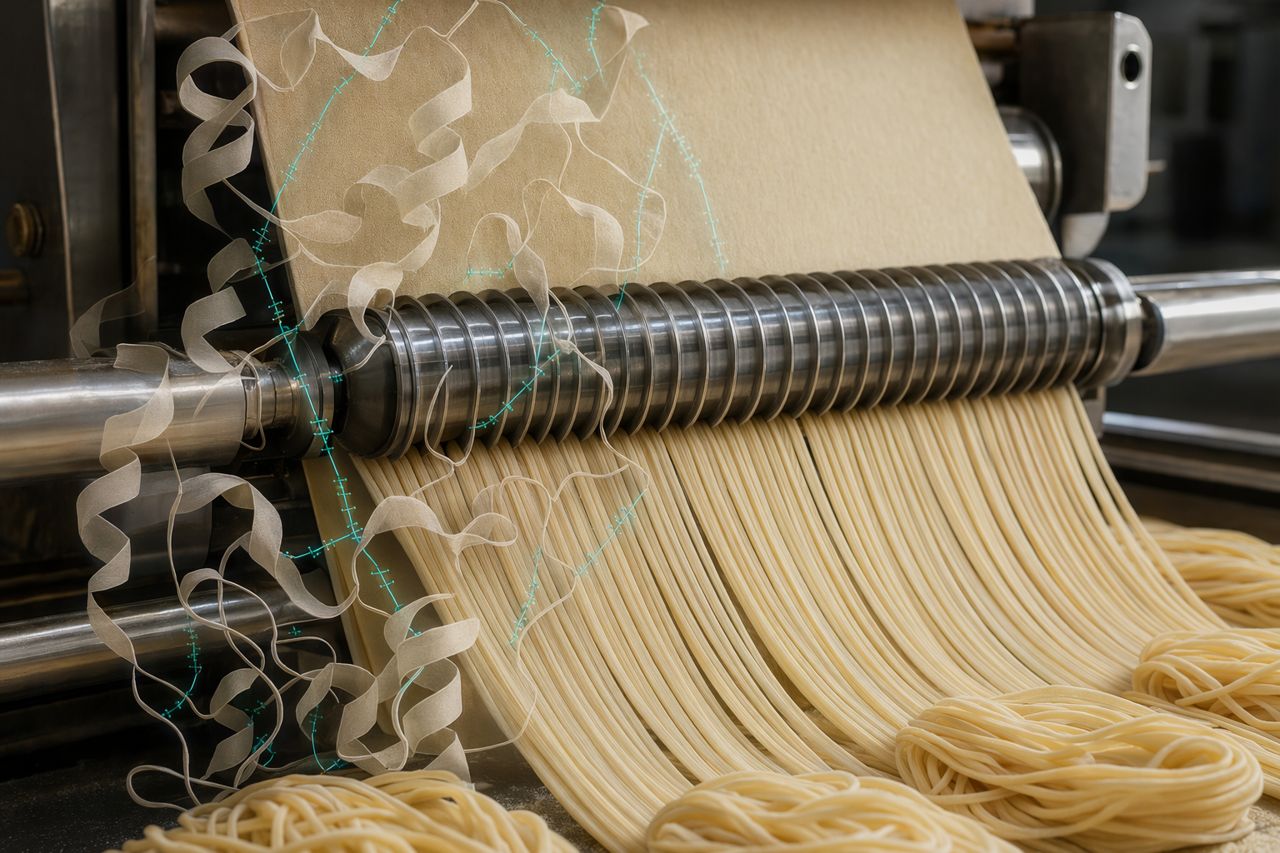
Noodle and pasta quality is built on structure: gluten development, protein continuity, starch behavior, hydration control, and thermal setting. Transglutaminase Enzyme Solutions supplies transglutaminase in bulk to fresh, frozen, dried and instant noodle makers, pasta and dumpling producers, flour-improver blenders and the distributors who serve them, for a cleaner bite, stronger elasticity and better cooking tolerance in wheat-based systems. Every order is quoted individually.
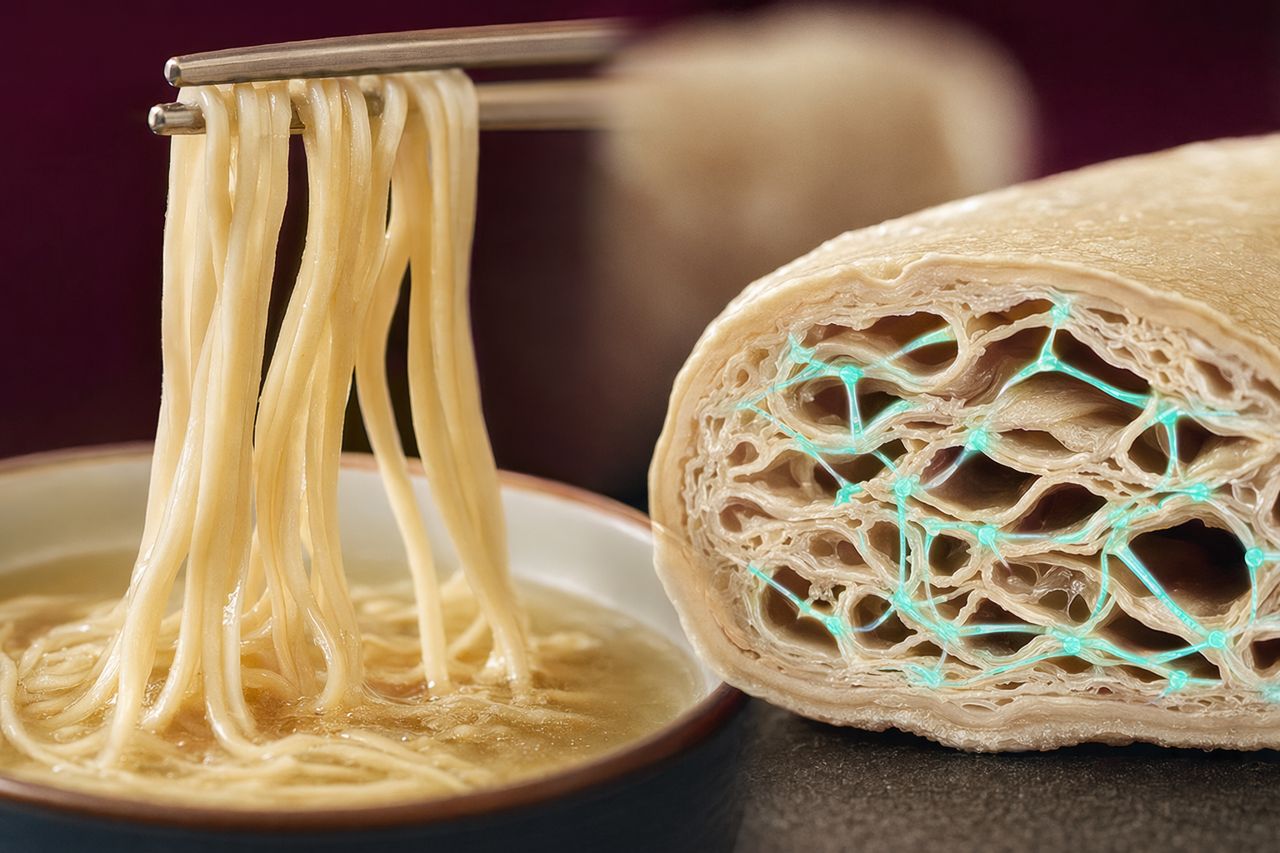
Transglutaminase, also known as protein-glutamine gamma-glutamyltransferase, supports protein crosslinking within suitable food matrices. In practical terms, it helps manufacturers design a more resilient protein network without relying only on flour strength, egg solids, gums, or intensive mechanical development.
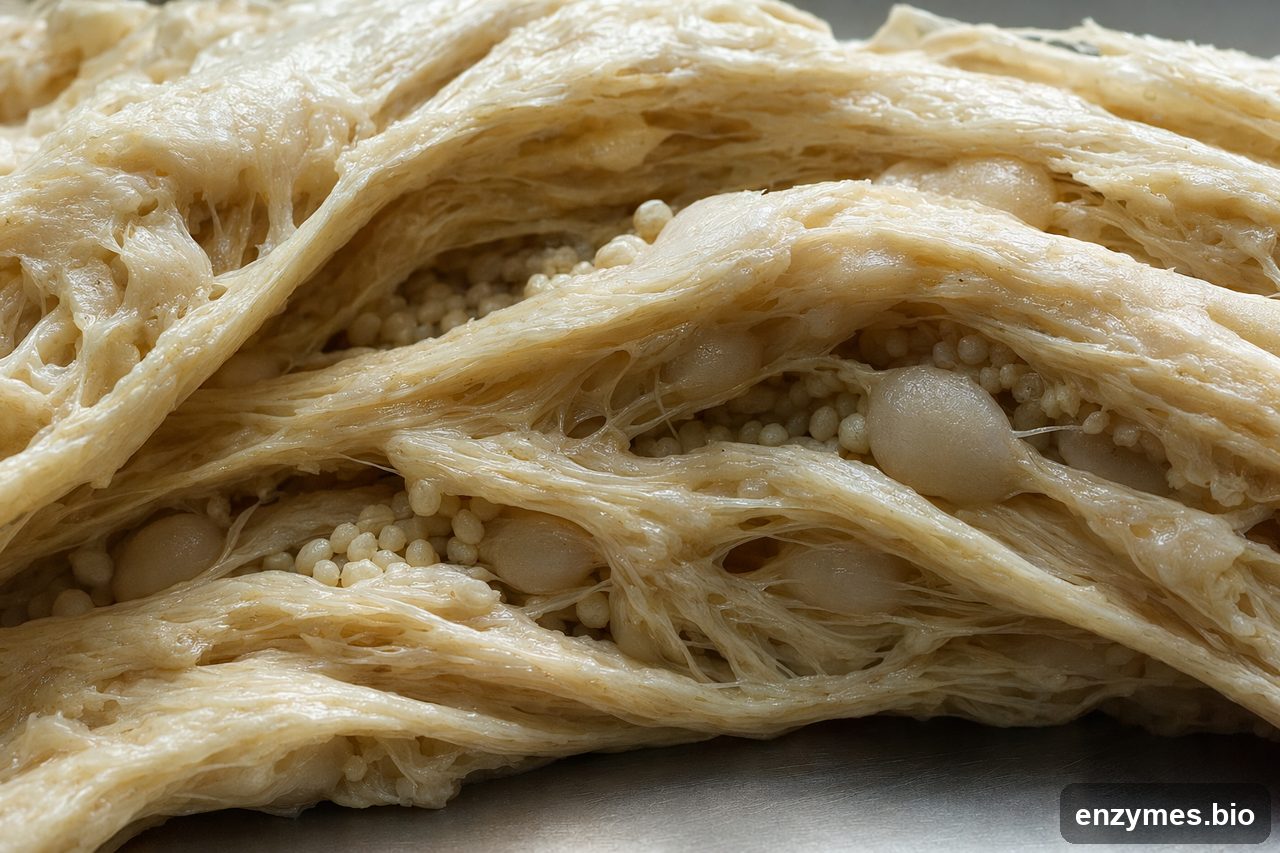
For R&D and production teams, the value is direct: more controlled texture, reduced breakage, better process latitude, and improved finished-product consistency.
Wholesale and bulk transglutaminase for food manufacturers, ingredient blenders, distributors and resellers. Every order is quoted individually. Request a quote with your product or application, the quantity you need and the destination country.
What transglutaminase does in noodle and pasta systems
In wheat-based doughs, protein structure determines how the product handles mixing, sheeting, cutting, drying, freezing, cooking, and hot-hold conditions. Transglutaminase helps strengthen interactions between available proteins, supporting a more cohesive matrix.
Depending on the formulation and process, this can contribute to:
- Firmer bite and cleaner chew in fresh, chilled, frozen, and dried noodle systems
- Improved elasticity and spring in ramen, udon, alkaline noodles, and dumpling wrappers
- Lower cooking loss by helping the matrix hold together during boiling or reheating
- Reduced surface sloughing and improved broth clarity in soup and instant applications
- Better strand integrity during cutting, portioning, freezing, packing, and transport
- Improved tolerance to formulation variation, including shifts in flour protein quality
- Support for egg-reduced or egg-free designs where protein network reinforcement is needed
- Improved texture in fortified systems using soy, pea, fava, dairy, or other compatible proteins
Application fit
Transglutaminase is especially relevant where a wheat-based product must hold texture under mechanical, thermal, or hydration stress.
Fresh noodles
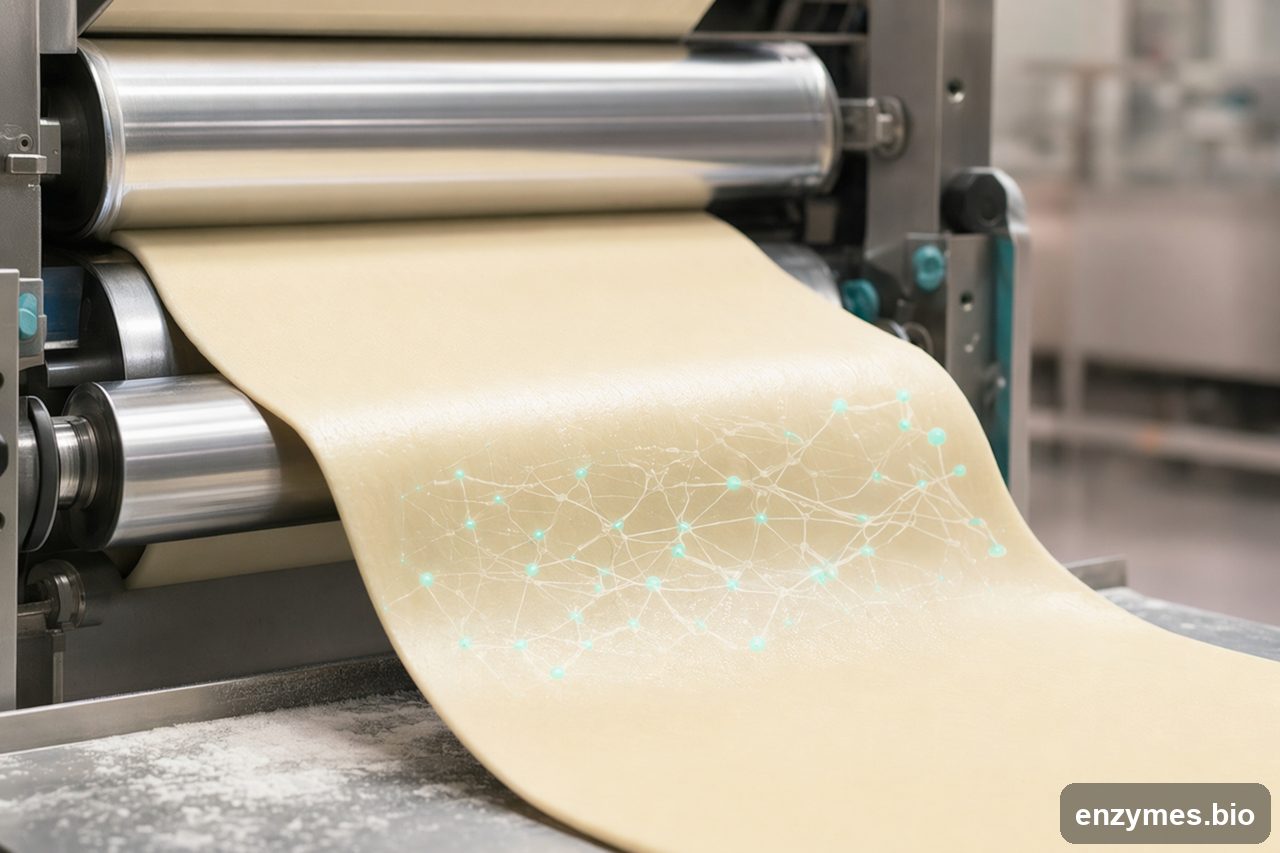
Fresh noodle production often requires extensibility during sheeting and firmness after cooking. Transglutaminase can support a stronger dough sheet and a more consistent cooked bite, especially where flour quality varies across supply periods.
Frozen noodles and pasta
Freeze-thaw cycles can weaken texture and increase breakage. A reinforced protein network can help preserve strand integrity and reduce mushiness after reheating.
Instant and quick-cook noodles
Fast hydration and thermal abuse can expose weak structure. Transglutaminase can help improve cooked firmness, reduce surface breakdown, and support better bite in high-throughput instant noodle formats.
Pasta and filled pasta
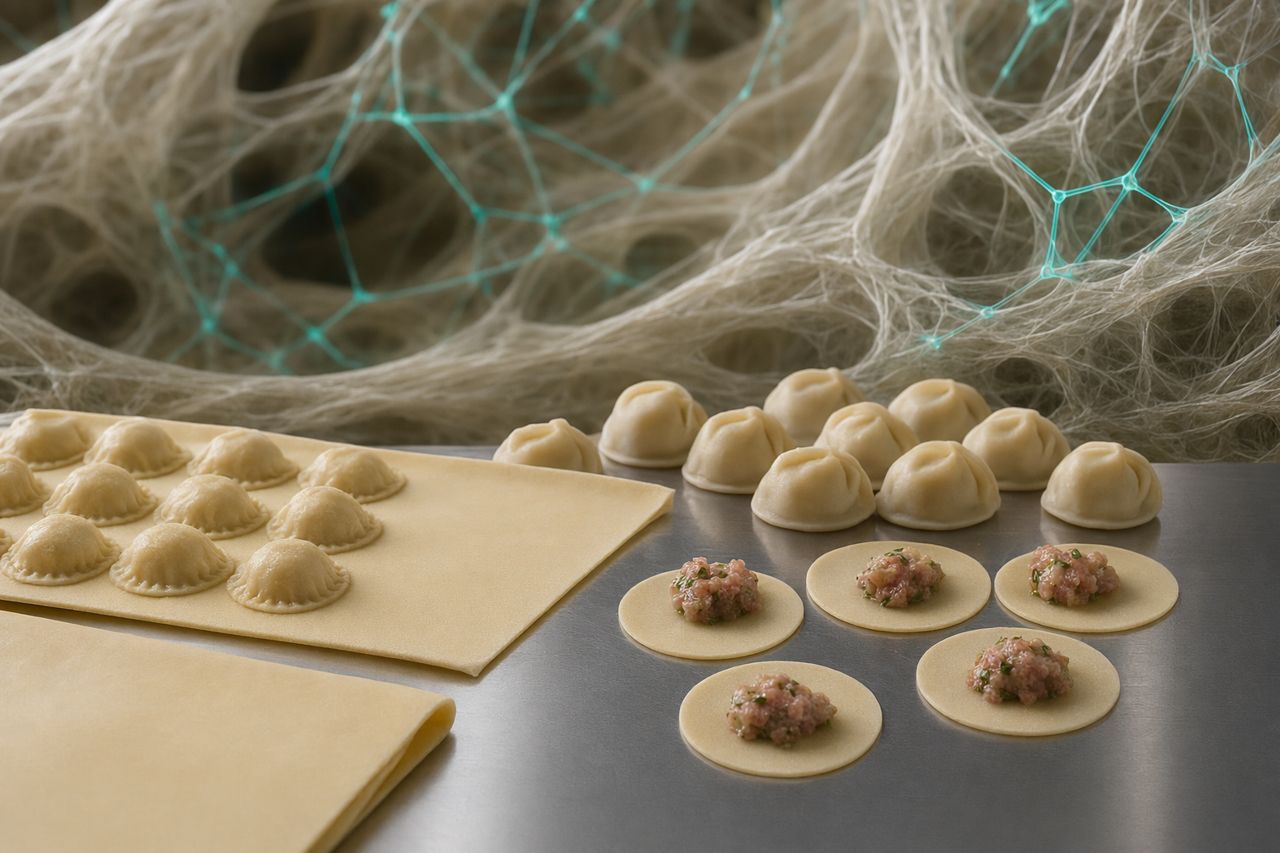
In pasta systems, texture depends on protein quality, drying conditions, starch gelatinization, and cooking behavior. Transglutaminase may support firmness, reduce cook-out, and improve performance in tortellini, ravioli, dumpling wrappers, and other filled formats where dough strength is critical.
Alkaline noodles
Alkaline noodle systems require elasticity, bite, and spring. Transglutaminase can be evaluated as part of a texture architecture that includes flour selection, water level, salt, alkaline salts, mixing energy, resting time, and cooking method.
Commercial reasons manufacturers evaluate it
1. Texture standardization across flour variability
Wheat flour is not a fixed input. Seasonal protein quality, supplier changes, and regional flour differences can affect dough strength and cooked bite. Transglutaminase gives R&D teams another lever for controlling performance when raw material variation is commercially unavoidable.
2. Higher yield through better structure
Stronger protein networks can help reduce breakage and processing loss. In large-scale noodle and pasta operations, small improvements in strand integrity, cutting performance, and cooking tolerance can translate into meaningful yield protection.
3. Formulation flexibility
Transglutaminase can help support product designs that reduce reliance on high-cost structural ingredients. It may be useful when adjusting egg content, incorporating plant proteins, improving whole-grain textures, or developing premium chew without overbuilding the formula.

4. Better eating quality after cooking, holding, or reheating
The first bite matters, but so does the fifth minute in broth, the reheated meal kit, and the frozen product after distribution. Transglutaminase can help protect bite and reduce textural collapse under real handling conditions.
Formulation and process considerations
Performance depends on protein availability, water distribution, mixing, resting time, temperature profile, salt system, pH, and subsequent cooking or drying conditions. For most noodle and pasta programs, evaluation should be run inside the actual plant-relevant process, not only in a benchtop dough.
Key variables to assess:
- Flour protein quality and gluten strength
- Hydration level and water addition sequence
- Mixing intensity and dough temperature
- Resting or holding time before sheeting, extrusion, or cutting
- Salt, kansui, phosphate, and other mineral systems
- Inclusion of egg, dairy, soy, pea, fava, or other protein sources
- Thermal step used to set or deactivate the system
- Finished product format: fresh, chilled, frozen, dried, instant, or retort-adjacent
Transglutaminase Enzyme Solutions can support sample planning and application trials around texture targets rather than generic recommendations. The right use level and addition point should be selected against the finished product specification, not copied from another format.
Typical performance targets
R&D teams usually evaluate transglutaminase against measurable product outcomes such as:
- Cooked firmness
- Tensile strength or strand resistance
- Elastic recovery
- Bite profile and chew curve
- Cooking loss
- Broth turbidity
- Breakage after freezing or packing
- Sheet strength before cutting or filling
- Sensory preference after hot-hold or reheating
Procurement teams typically evaluate it against cost-in-use, process reliability, supply continuity, documentation quality, and lot-to-lot consistency.
Specification support for industrial buyers
Transglutaminase Enzyme Solutions supplies transglutaminase for B2B formulation and production programs where technical reliability matters. Available documentation can be coordinated for qualified buyers, including product specification, allergen statement, composition guidance, storage recommendations, shelf-life information, country-of-origin details, and regulatory documentation relevant to the intended market.
We support teams working on:
- New noodle and pasta product development
- Texture improvement in existing formulas
- Flour cost and variability management
- Egg-reduced or plant-forward reformulation
- Frozen and ready-meal noodle performance
- Premium Asian noodle texture design
- Cook tolerance and hot-hold optimization
How to start a trial
The fastest path is to define the texture problem in commercial language: too soft after cooking, too much breakage, weak sheet strength, excessive cooking loss, poor frozen recovery, or inconsistent bite across flour lots.
From there, a practical trial can compare a control formula against a structured set of transglutaminase treatments using your real flour, water system, mixing sequence, processing time, and cooking method.
Request a wholesale quote
Use the inquiry form at the foot of this page and tell us the product (fresh, frozen, dried or instant noodles, pasta or wrappers), the texture problem you want solved, the quantity per order or per year, and the destination country. Price, pack size and lead time are quoted per order.
Transglutaminase Enzyme Solutions will respond with pricing direction, documentation availability, and the next practical step for evaluation.