Technical detail
Transglutaminase for plant-based meat and protein foods
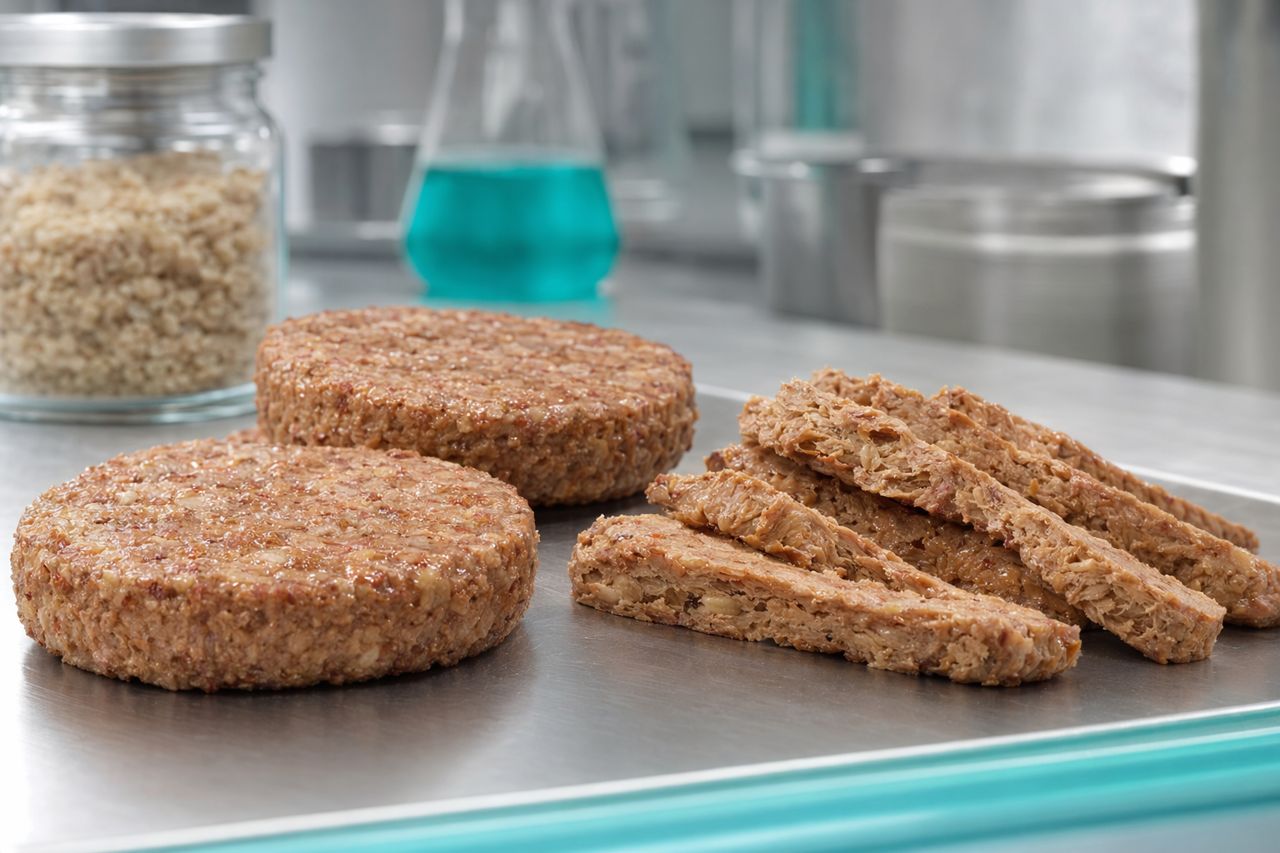
Plant-based protein is a structural challenge before it is a flavor challenge. Patties, strips, nuggets, formed deli slices, seafood analogues, and hybrid protein blocks need internal cohesion that survives mixing, forming, cooking, freezing, thawing, and handling.
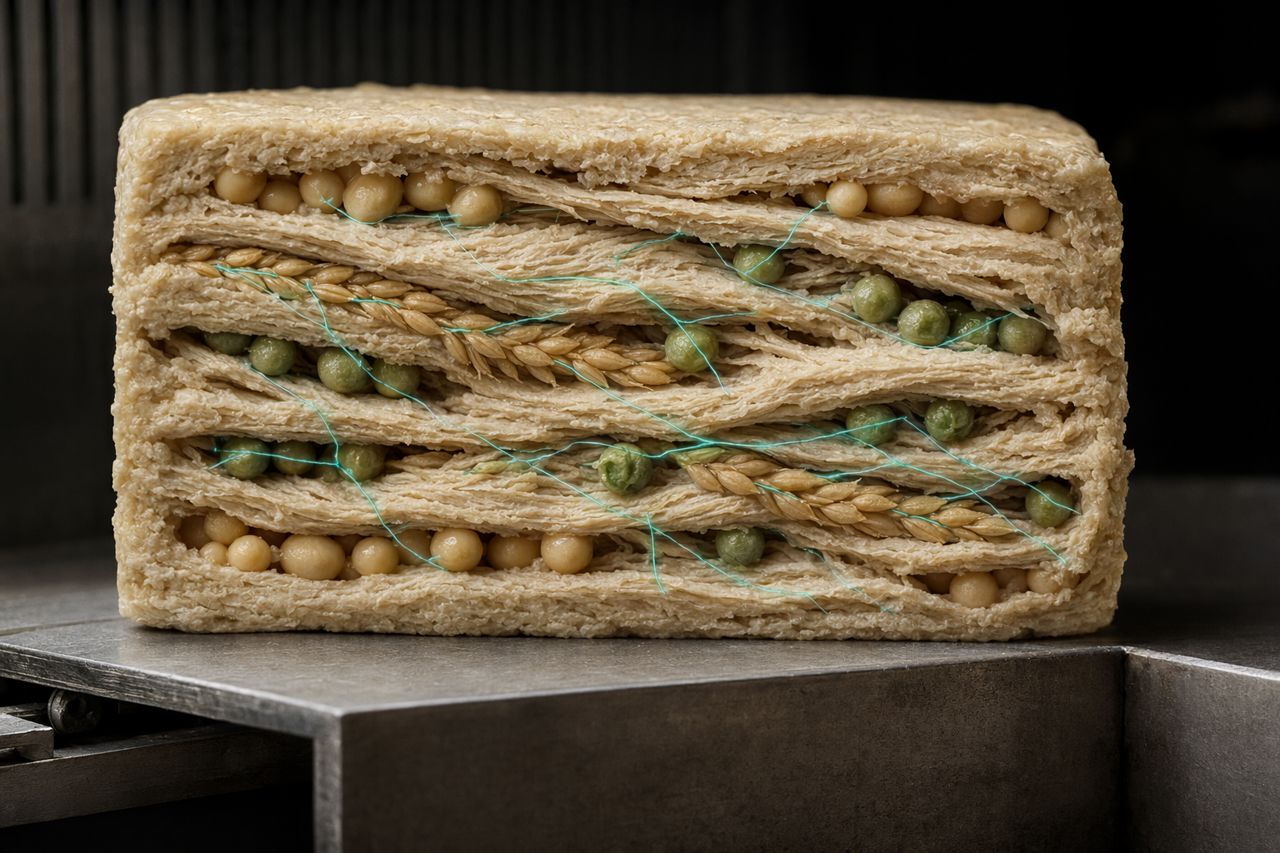
Transglutaminase, also known as protein-glutamine gamma-glutamyltransferase, helps build covalent links between available protein sites. In practical formulation language, that can mean stronger binding, cleaner edges, reduced crumbling, improved bite, and more stable inclusion of hydrated particles, fibers, and fat phases.
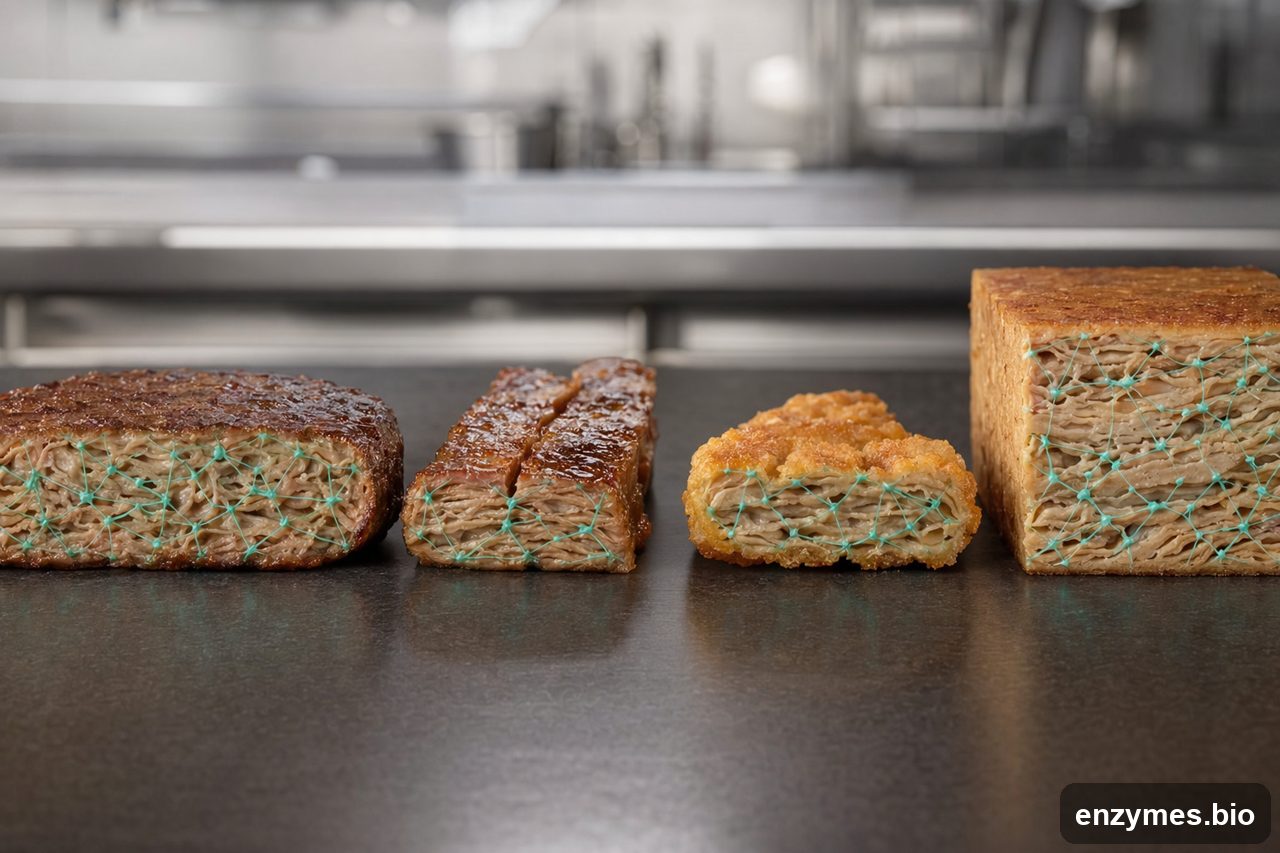
Transglutaminase Enzyme Solutions supports R&D, procurement, and innovation teams developing plant-protein systems where texture has to be engineered deliberately.
Wholesale and bulk transglutaminase for food manufacturers, ingredient blenders, distributors and resellers. Every order is quoted individually. Request a quote with your product or application, the quantity you need and the destination country.
Where transglutaminase adds value
Transglutaminase is used when a plant-protein product needs more than simple thickening or cold-set viscosity. It is most useful when the target is a protein network that can carry mechanical stress.
Typical development goals include:
- Improved binding strength in formed patties, nuggets, balls, strips, and blocks
- Reduced fracture and crumbling during forming, cooking, packaging, or reheating
- Cleaner slicing and cutting performance in plant-based deli, loaf, and block formats
- More cohesive bite without relying only on gums, starches, or thermal gels
- Better particle integration for textured vegetable protein, mycoprotein, fibers, and hydrated protein inclusions
- Formulation flexibility when reducing methylcellulose dependence or balancing hydrocolloid systems
- Process stability through cold handling, thermal setting, freeze-thaw cycles, and downstream packaging
The enzyme does not create structure from nothing. It works best when the protein source, hydration, ionic environment, pH, heat history, and process timing are designed as one system.
Protein systems we help evaluate
Plant proteins vary widely in reactivity and texture behavior. A soy isolate, pea concentrate, wheat gluten, and mycoprotein matrix may all respond differently to the same process. Transglutaminase Enzyme Solutions helps teams assess transglutaminase fit across:
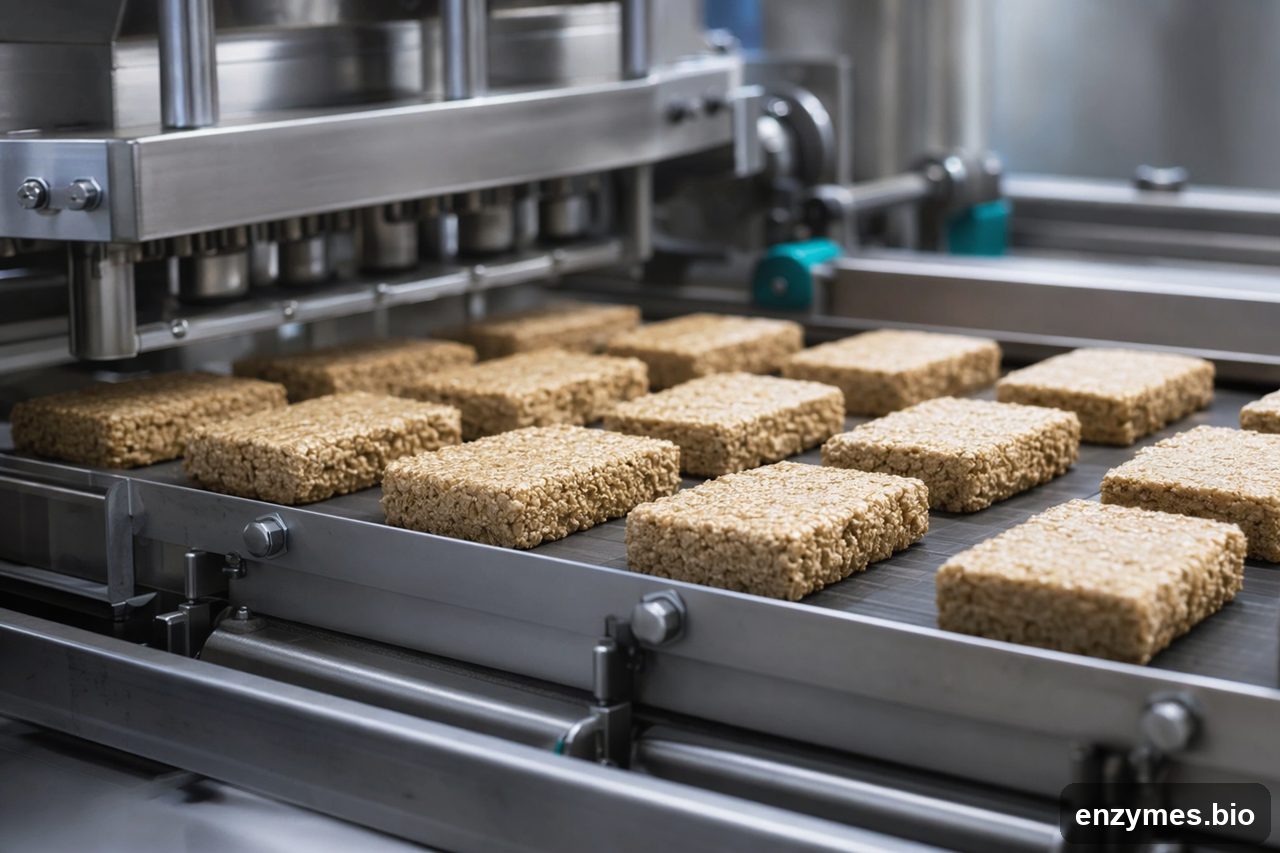
Soy-based systems
Soy proteins can provide strong network potential, especially when hydration and heat history are controlled. Transglutaminase may help improve bite, binding, and slice integrity in patties, emulsified formats, and formed blocks.
Pea-protein systems
Pea protein often needs support for cohesiveness and edge definition. Transglutaminase can be useful in blended systems where pea is paired with wheat, soy, fava, chickpea, potato, or structured protein inclusions.
Wheat and gluten-containing systems
Wheat protein contributes elasticity and chew. Transglutaminase can help tune firmness, binding, and cut strength, particularly in products where extensibility must be balanced with clean bite.
Mycoprotein and biomass-derived matrices
Mycoprotein and fermentation-derived protein structures can bring fibrous texture but may require additional binding to improve product integrity. Transglutaminase can support matrix consolidation when protein accessibility and moisture distribution are managed.
Blended plant-protein systems
Many commercial products rely on blends rather than a single protein. Transglutaminase can help create a more unified network across mixed proteins, textured inclusions, hydrated powders, oil systems, and seasoning phases.
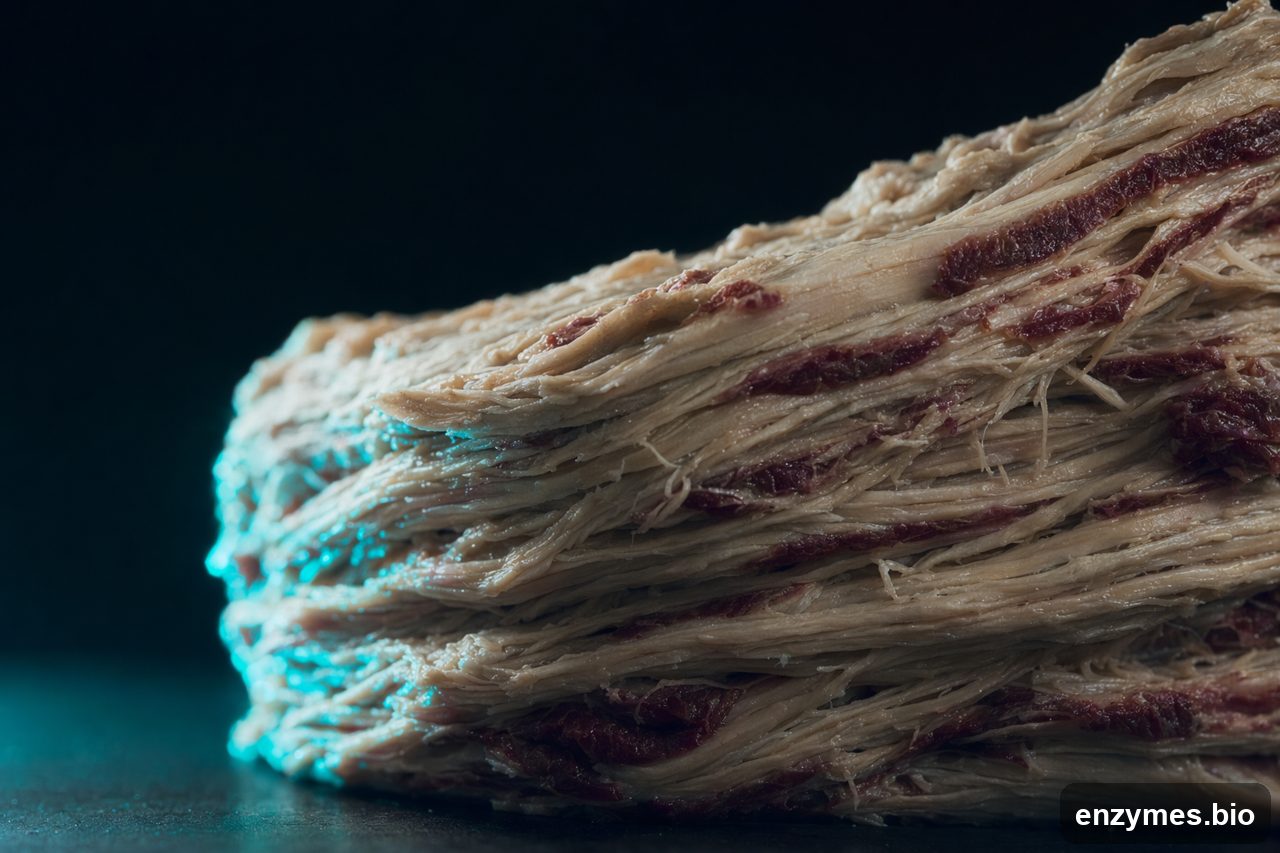
Texture outcomes to target
A successful transglutaminase project starts with a measurable commercial texture target, not a generic enzyme addition.
We typically frame development around questions such as:
- Should the finished product be tender, elastic, fibrous, firm, or sliceable?
- Is the main failure mode crumbling, tearing, mushiness, weeping, edge breakage, or weak bite?
- Does the product need to perform after freezing, chilled distribution, retort-style processing, grilling, frying, or reheating?
- Are binders being reduced for label, cost, sensory, or supply-chain reasons?
- Does the product contain large inclusions that need better anchoring?
This helps define whether transglutaminase should act as the primary binding tool, a support for an existing hydrocolloid system, or one element in a broader protein-architecture strategy.
Process design considerations
Transglutaminase performance depends heavily on process order. In plant-based protein foods, the most important variables are usually:
- Protein type and degree of denaturation
- Hydration quality and water distribution
- Salt and mineral balance
- pH and acidulant system
- Oil phase structure and emulsification quality
- Mixing intensity and shear history
- Hold window before final setting or cooking
- Thermal profile and intended enzyme inactivation point
- Interaction with starches, fibers, gums, methylcellulose, and other binders
For R&D teams, this means the enzyme should be screened in the actual formula architecture, not only in a simplified water-protein slurry. For operations teams, it means process repeatability matters as much as ingredient selection.
Commercial fit
Transglutaminase can be considered when a plant-based protein project is facing one or more of these issues:
- Texture is acceptable at bench scale but fails during scale-up
- Products hold shape before cooking but lose cohesion after thermal processing
- Slices crack, crumble, or smear during cutting
- Formed products break during packaging or transport
- Binder levels are increasing cost or creating unwanted sensory impact
- Protein blends are delivering nutrition targets but not structure targets
- Freeze-thaw or chilled storage is exposing weak internal networks
Transglutaminase Enzyme Solutions can help procurement and technical teams evaluate format, handling profile, formulation compatibility, and supply requirements for production planning.
How to start a transglutaminase evaluation
A practical evaluation usually begins with the product format and target texture. Useful information includes:
- Protein sources and approximate formula architecture
- Desired product format and processing route
- Current binder system
- Primary texture problem
- Heat treatment and packaging approach
- Allergen, diet, label, or regional compliance constraints
- Target launch scale and supply timeline
From there, Transglutaminase Enzyme Solutions can help scope a transglutaminase option for development trials and commercial review.
Request pricing or technical fit guidance
Tell us what you are building and what the texture needs to do. Our team will respond through Transglutaminase Enzyme Solutions’ own project intake form.
Ready for a quote? Use the inquiry form at the foot of this page. Tell us the application, the quantity per order or per year and the delivery country. Price, pack size and lead time are quoted per order.