Technical detail
Transglutaminase for Cheese Texture and Yield Projects
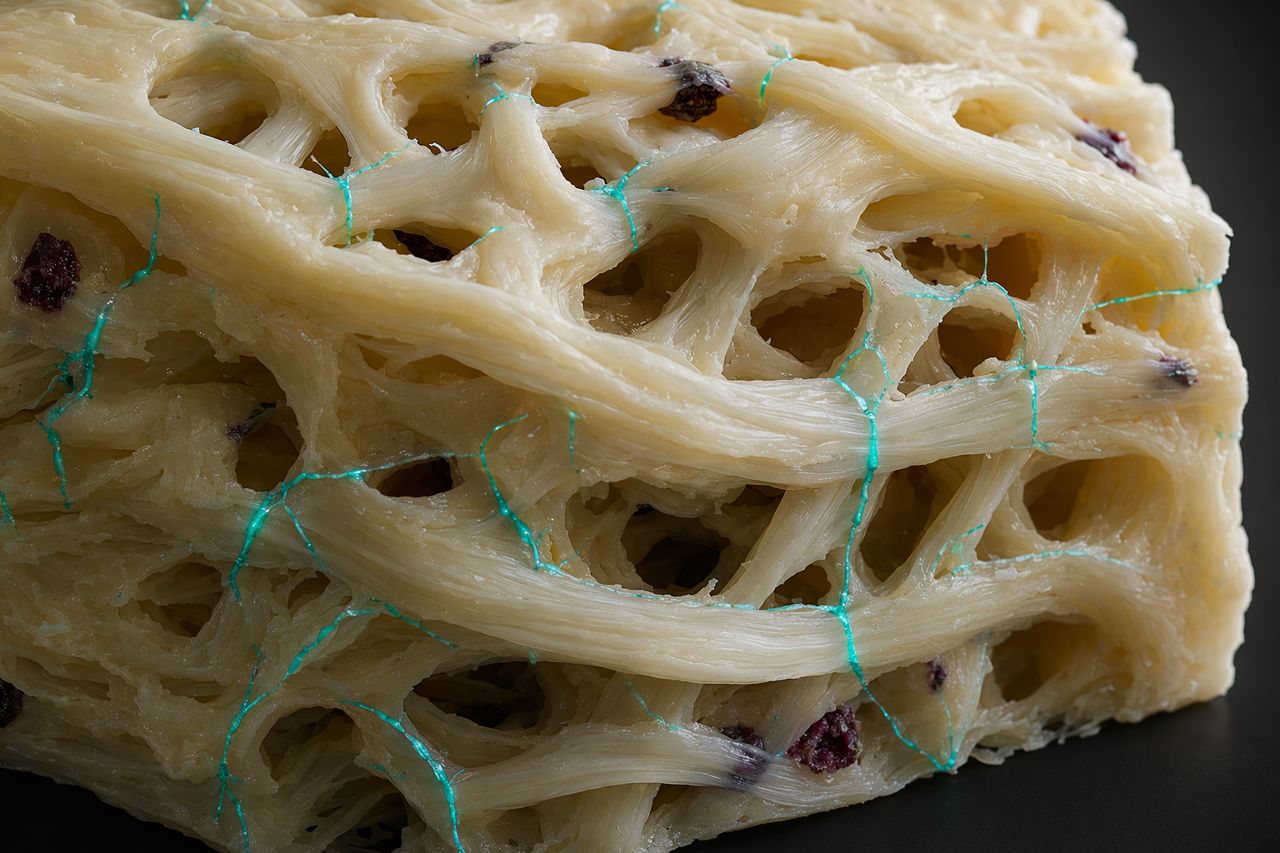
Cheese texture is a protein architecture problem. Transglutaminase, also known as protein-glutamine gamma-glutamyltransferase, is used in selected cheese and cheese-analogue systems to reinforce protein networks where firmness, sliceability, moisture control, and processing yield are commercial targets.
Transglutaminase Enzyme Solutions supports R&D, procurement, and product innovation teams working on cheese structure: natural cheese optimization, processed cheese systems, recombined dairy formats, hybrid dairy-plant concepts, and selected analogue formulations.
Wholesale and bulk transglutaminase for food manufacturers, ingredient blenders, distributors and resellers. Every order is quoted individually. Request a quote with your product or application, the quantity you need and the destination country.
What transglutaminase contributes in cheese systems
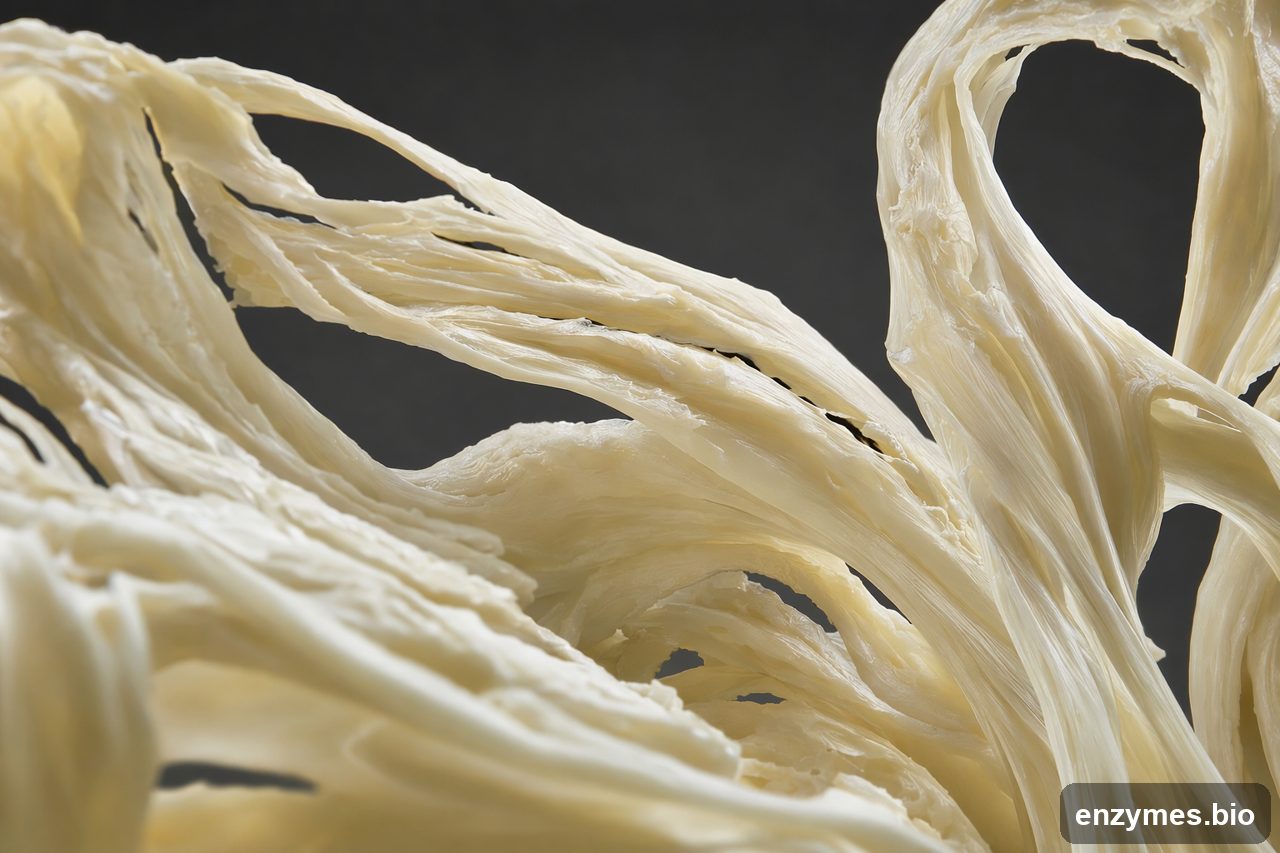
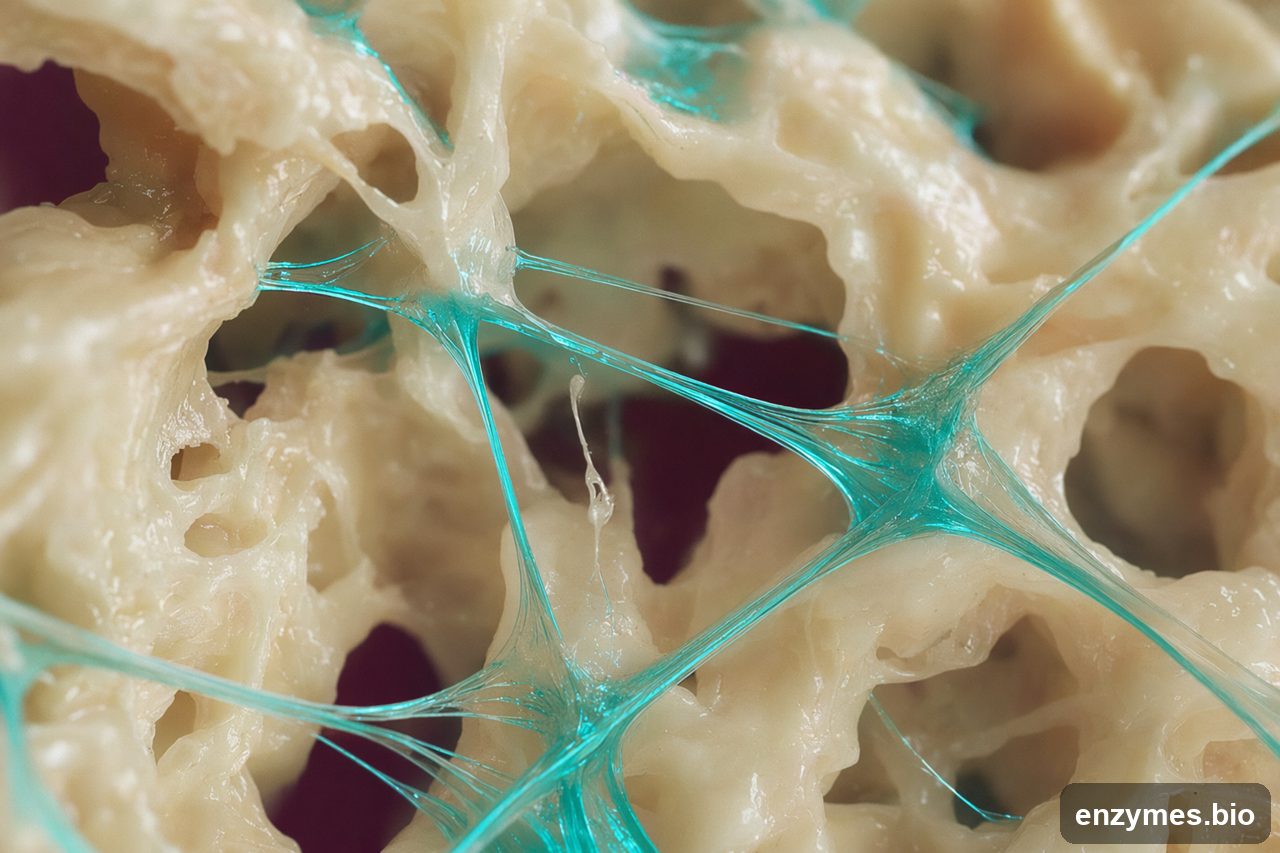
Transglutaminase modifies protein networks by creating covalent links between suitable protein sites. In practical cheese development, this can help improve how the matrix holds together under cutting, slicing, shredding, packing, and storage stress.
Typical project objectives include:
- Firmer bite without simply increasing total solids
- Improved sliceability and reduced edge fracture
- Better curd or gel integrity in selected processes
- Moisture retention aligned with yield and texture goals
- Stronger binding in recombined, processed, or analogue systems
- Improved cohesion in formulations using dairy proteins, plant proteins, or mixed protein systems
- Texture standardization when raw material variability affects performance
The enzyme is not a shortcut for poor formulation. It performs best when the protein system, process sequence, heat treatment, salt level, pH window, and holding time are engineered together.
Where it fits
Natural and semi-hard cheese projects
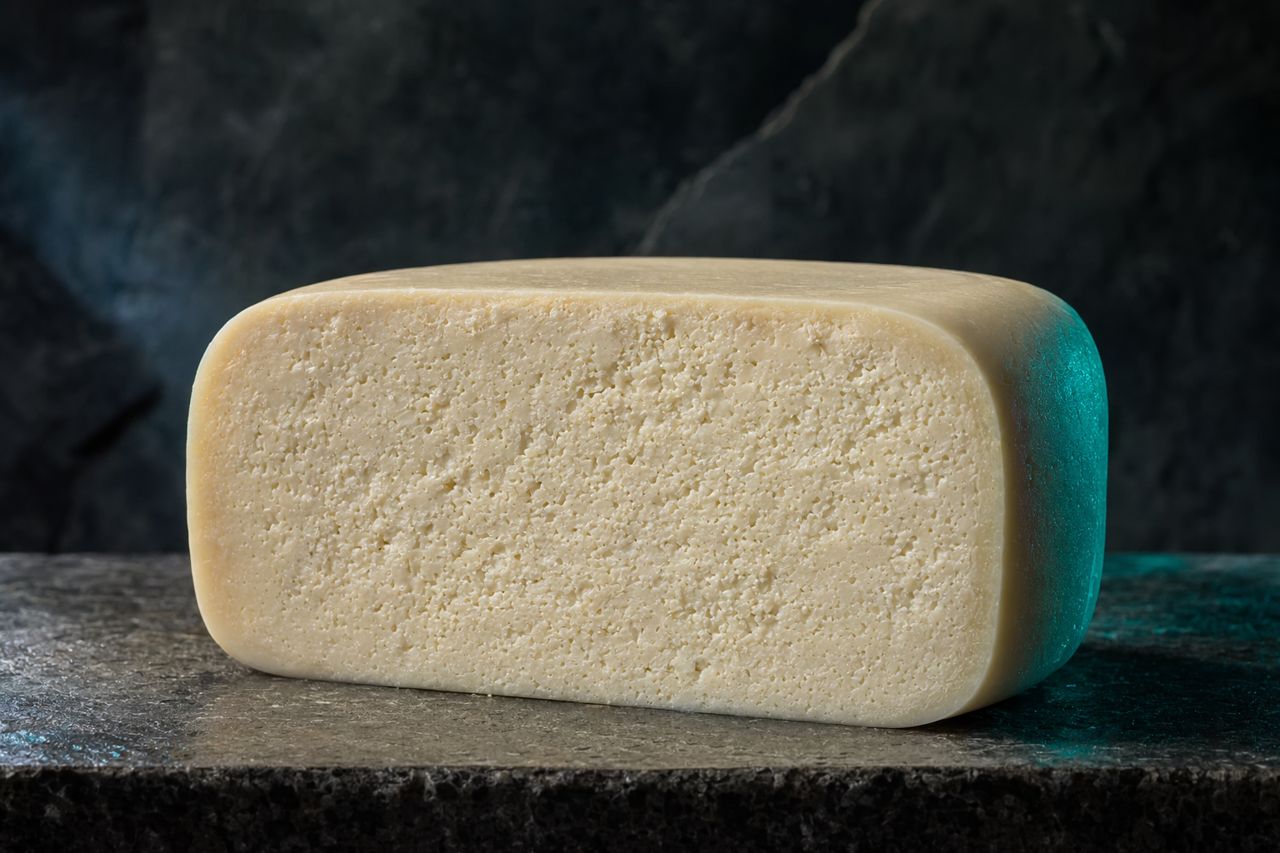
In selected natural cheese applications, transglutaminase may be evaluated for curd firmness, moisture management, slicing performance, and yield support. The development focus is usually on finding the right process point for enzyme exposure without disrupting cheesemaking fundamentals such as acidification, coagulation behavior, syneresis, and final body.
Processed cheese and cheese preparations
Processed cheese systems often require repeatable melt, body, slice integrity, and pack stability. Transglutaminase can support protein network reinforcement when the formulation contains suitable protein substrates and the process gives the enzyme the right conditions before final stabilization.
Cheese analogues and hybrid systems
In plant-forward, dairy-reduced, or hybrid cheese formats, protein behavior is often less predictable than in conventional dairy systems. Transglutaminase can help connect compatible proteins into a more coherent structure, supporting body, cut quality, and moisture control while allowing broader formulation flexibility.
Shredded, sliced, and portioned formats
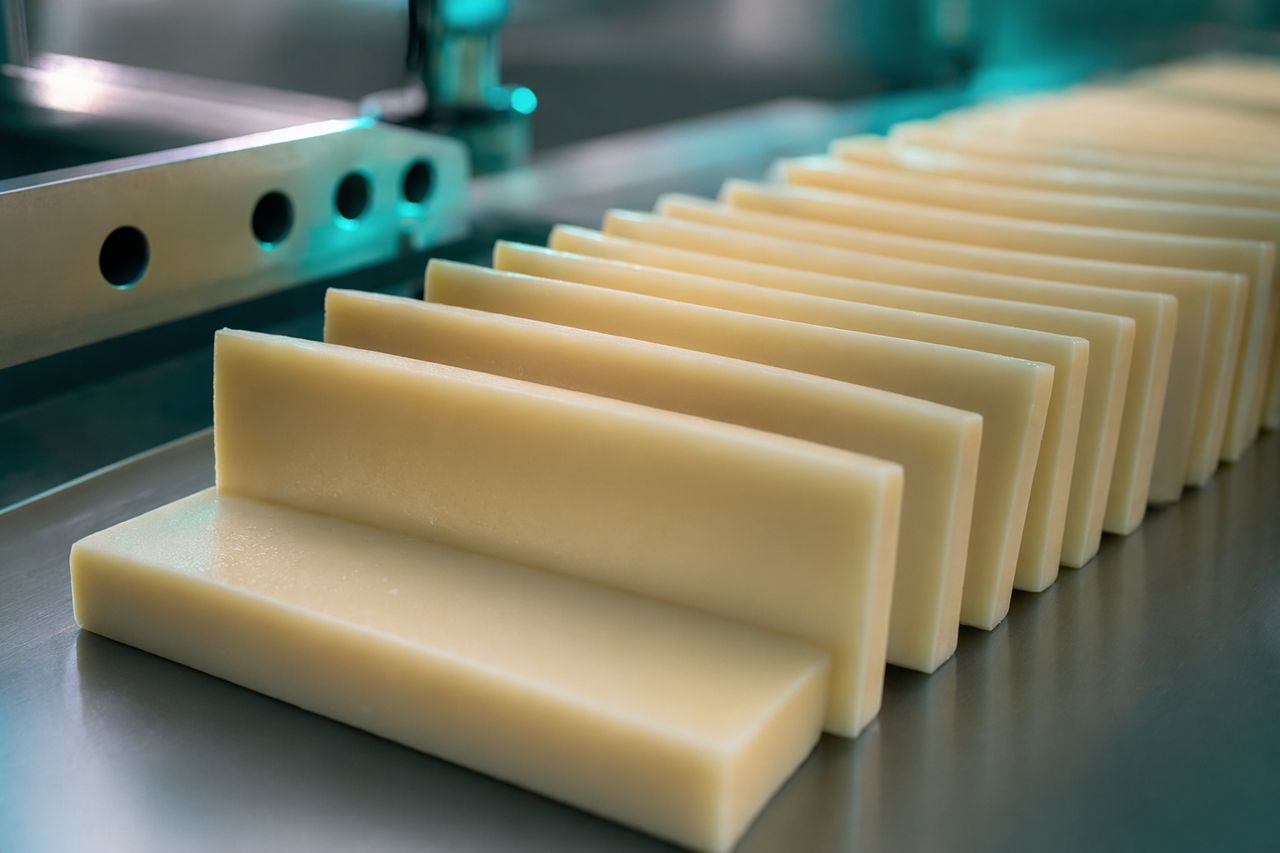
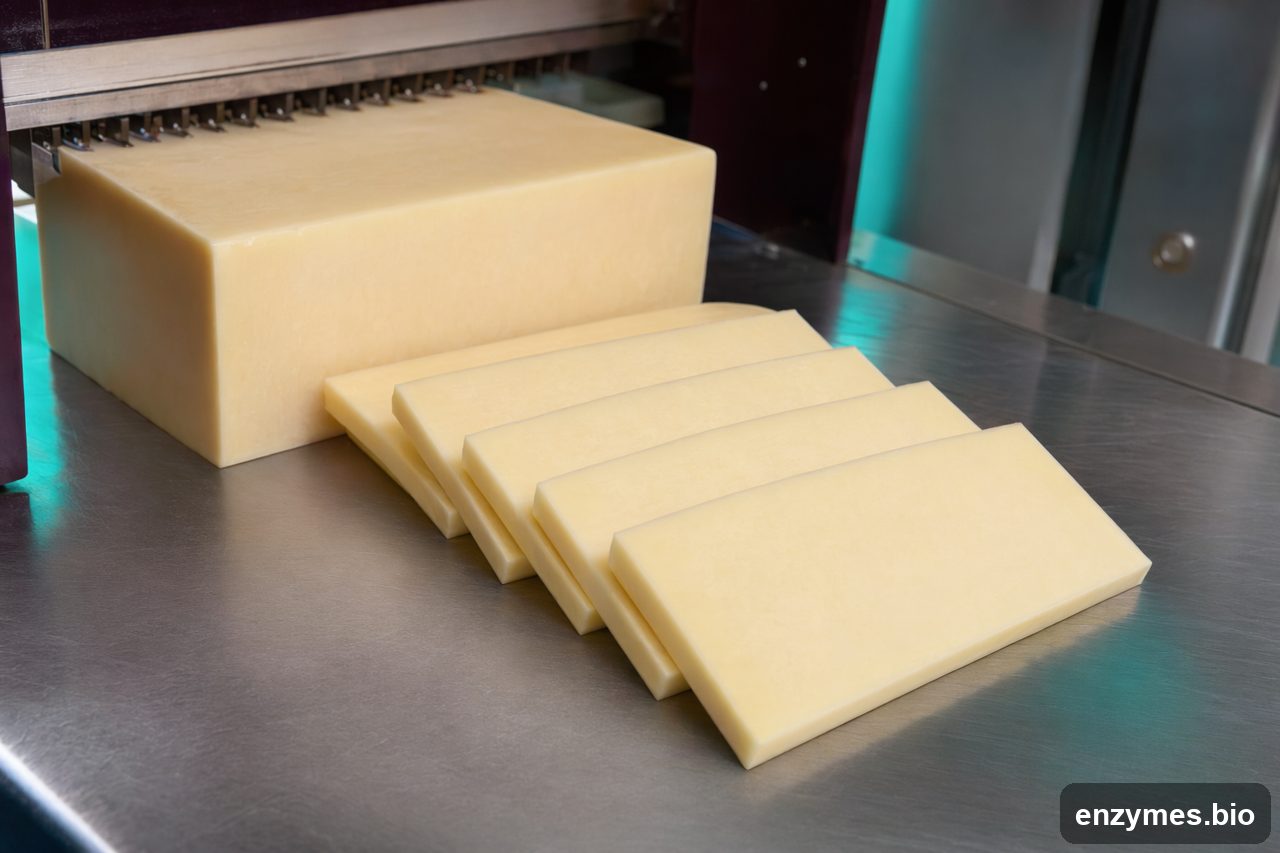
Commercial cheese performance is often judged after conversion, not only in the block. Slicing loss, shred breakage, clumping behavior, edge integrity, and moisture migration can affect yield and customer acceptance. A stronger protein matrix can support cleaner mechanical handling when the formulation is correctly balanced.
Performance targets buyers usually specify
When teams approach Transglutaminase Enzyme Solutions for a cheese project, the useful brief is rarely just “we need transglutaminase.” The better brief defines the performance gap.
Strong technical briefs often include:
- Cheese type or analogue format
- Dairy, plant, or hybrid protein base
- Current texture issue: too soft, brittle, wet, weak, crumbly, rubbery, or inconsistent
- Target format: block, slice, shred, cube, spread, filling, topping, or meltable preparation
- Process map: hydration, mixing, heating, cooling, holding, fermentation, or packing sequence
- Key constraints: clean-label requirements, allergen position, ingredient declaration rules, halal or kosher expectations, and regional regulatory requirements
- Commercial objective: yield improvement, downgrade reduction, line stability, reformulation, or premium texture development
This information allows grade selection and trial design to be aligned with the actual product economics.
Formulation and process considerations
Protein availability
Transglutaminase needs accessible protein sites. Dairy proteins, added milk proteins, plant proteins, and blended systems can respond differently depending on denaturation, hydration, particle size, emulsification, and ionic conditions.
Process timing
The point of addition matters. Too early, and the enzyme may interfere with upstream structure formation. Too late, and the network may already be fixed. The target is controlled exposure during the window where protein mobility and structure development are both useful.
Heat history
Heat treatment affects substrate availability and enzyme performance. In many projects, the sequence of heating, holding, cooling, and final stabilization determines whether the enzyme supports clean structure or creates unwanted firmness.
Salt, pH, and moisture
Cheese systems are chemically dense. Salt level, pH, water activity, fat phase behavior, and mineral balance all influence texture. Transglutaminase should be evaluated inside the real formulation, not only in a simplified bench gel.
Sensory balance
More binding is not always better. Over-structured cheese can become rubbery, dry, resistant to melt, or poorly perceived. The commercial target is controlled structure: enough network strength to improve handling and yield, while preserving the intended bite, melt, and eating quality.
Procurement view: what matters beyond the sample
For industrial cheese teams, enzyme selection is both technical and commercial. Procurement needs predictable supply, documentation, batch consistency, and a grade that fits manufacturing realities.
Transglutaminase Enzyme Solutions supports evaluation around:
- Application fit for dairy, analogue, or hybrid systems
- Handling profile for plant trials and production scale-up
- Documentation packages for internal supplier approval
- Ingredient declaration and regional compliance discussion
- Packaging formats suitable for pilot and commercial use
- Lead-time planning and repeat supply coordination
Development pathway
A practical cheese texture project usually follows a staged approach:
- Define the target cheese format and performance gap.
- Review the protein system, process sequence, and constraints.
- Select a transglutaminase grade suited to the application.
- Run small-scale trials against a clear control.
- Evaluate texture, slice or shred behavior, moisture behavior, sensory profile, and storage stability.
- Adjust formulation and process timing before scale-up.
- Confirm commercial handling, documentation, and supply requirements.
This keeps the enzyme as one part of a controlled protein design strategy, not an isolated additive decision.
Request pricing for cheese applications
Send the core details of your cheese or cheese-analogue project and Transglutaminase Enzyme Solutions will respond with grade direction, availability, and pricing information through this site’s own quote process.
Ready for a quote? Use the inquiry form at the foot of this page. Tell us the application, the quantity per order or per year and the delivery country. Price, pack size and lead time are quoted per order.