Technical detail
Transglutaminase for Meat Binding and Restructured Meat: Yield, Bind and Buyer Trust
Trim, off-cuts and irregular pieces are the cheapest protein in a meat plant, and they stay cheap as long as they will not hold together through slicing and cooking. The usual shortcut makes it worse: beef pumped with water-retention agents for yield turns loose and crumbly once it is cooked, and customers reject it as "pieced together meat". Transglutaminase (TG) is the enzyme that fixes the bind itself, joining protein surfaces so that pieces behave like one muscle. This page is written for the processor, portioning plant or foodservice supplier who has to decide whether a binding step pays, how to run it, and what to ask before ordering.
Wholesale and bulk transglutaminase for food manufacturers, ingredient blenders, distributors and resellers. Every order is quoted individually. Request a quote with your product or application, the quantity you need and the destination country.
The business case: yield, cooking loss and portion value
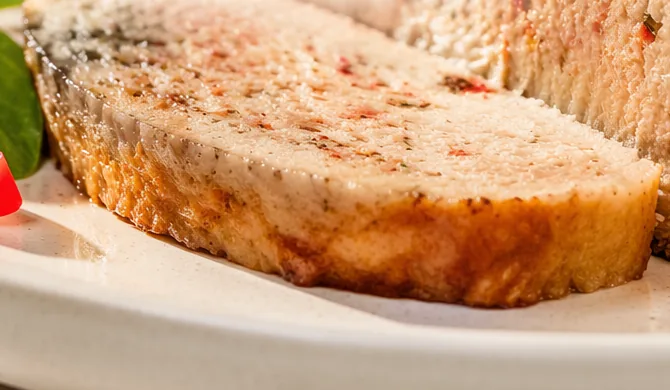
The clearest plant figures come from braised beef. In one reported trial, adding a low dose of TG to an existing phosphate programme moved cooked yield from 82% to 96%, cut cooking looseness from 22% to 8% and lifted the texture score from 6.5 to 8.7. Phosphate residue in the finished beef fell from 4.3 to 3.0 g/kg in the same trial, because the enzyme carried part of the binding work the phosphate had been doing. Read those as one plant's result on one product, a target to test against, not a promise for your line.
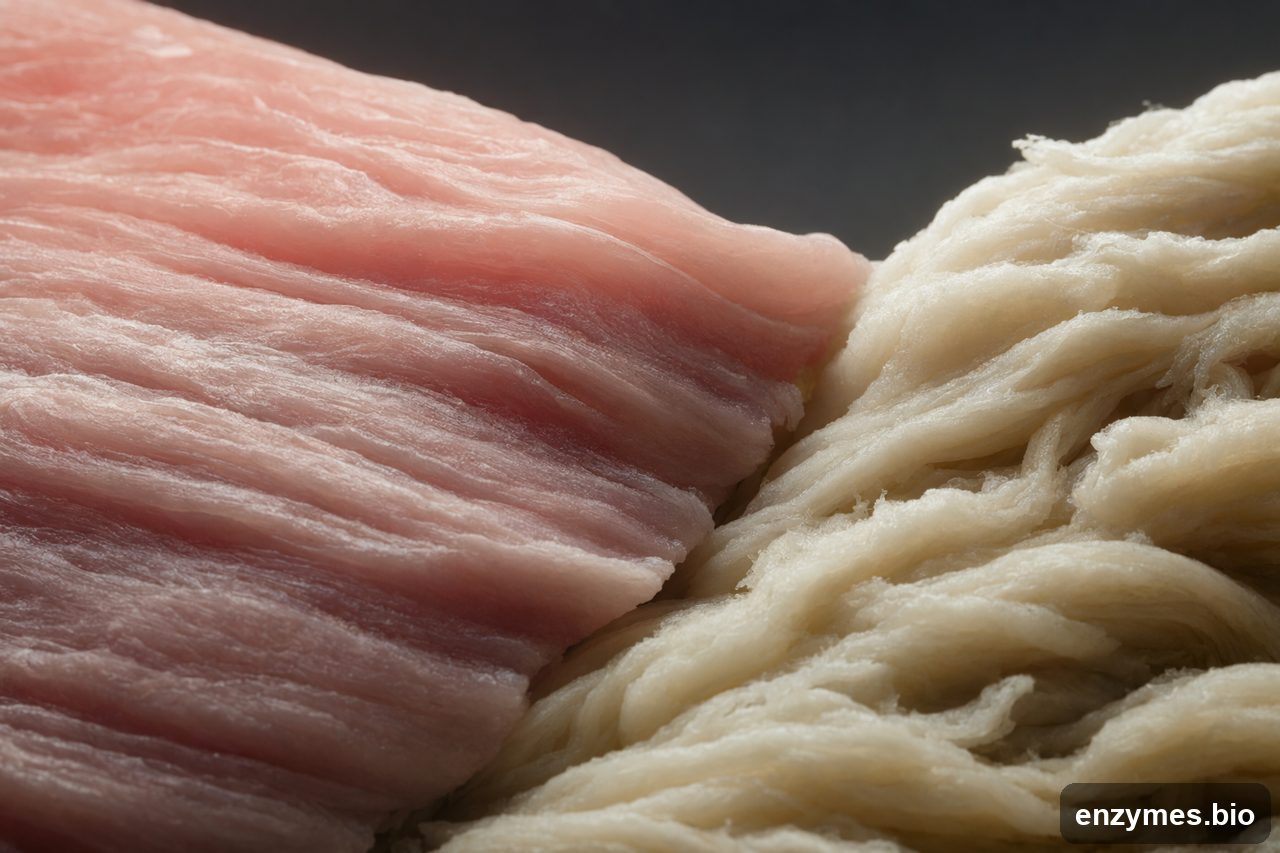
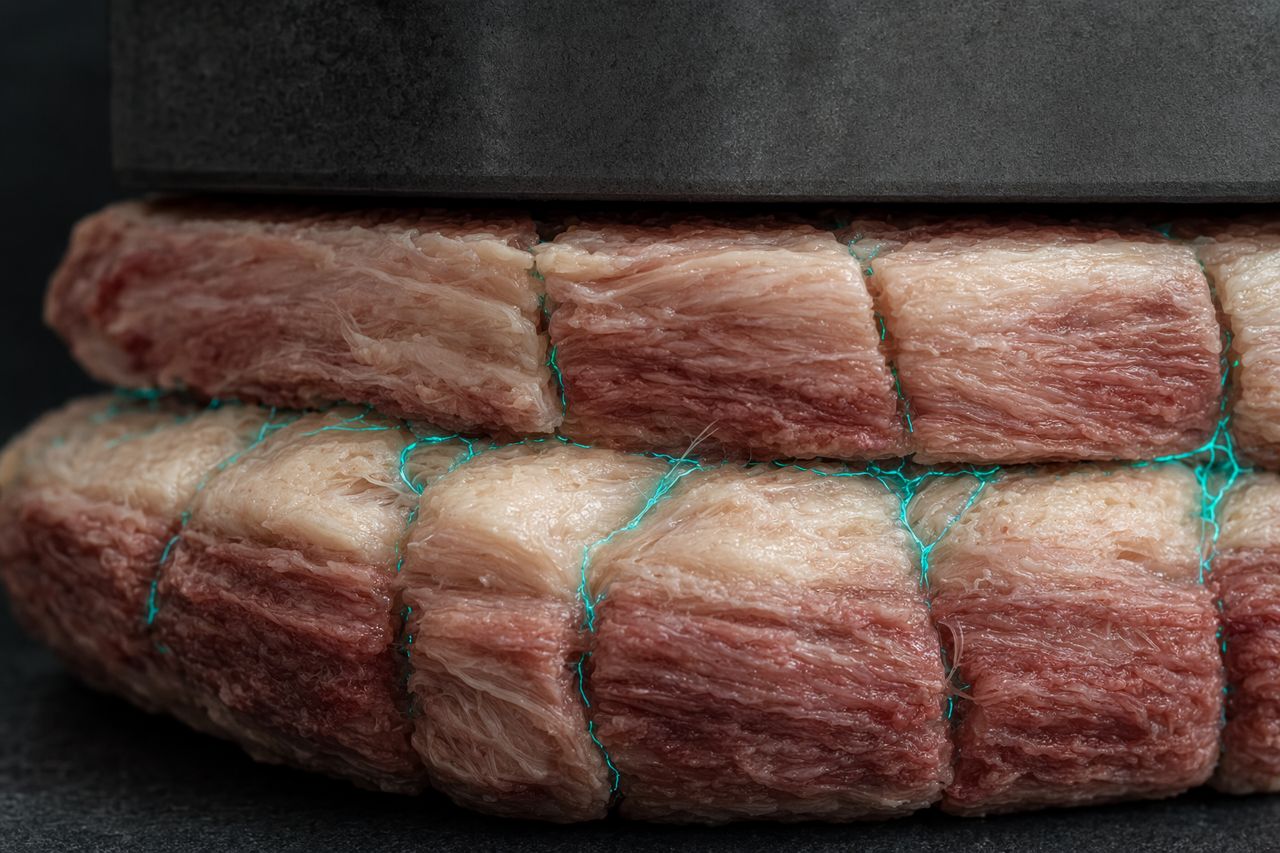
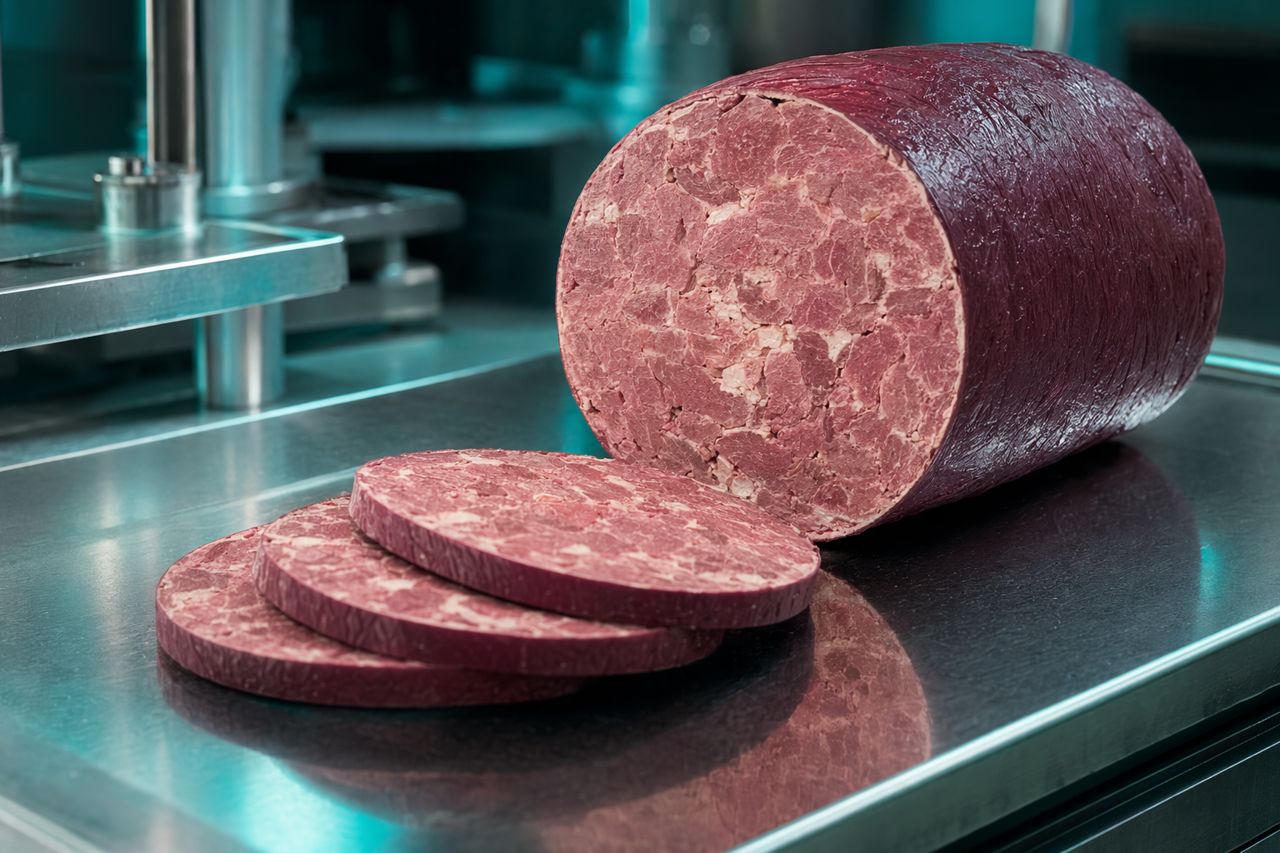
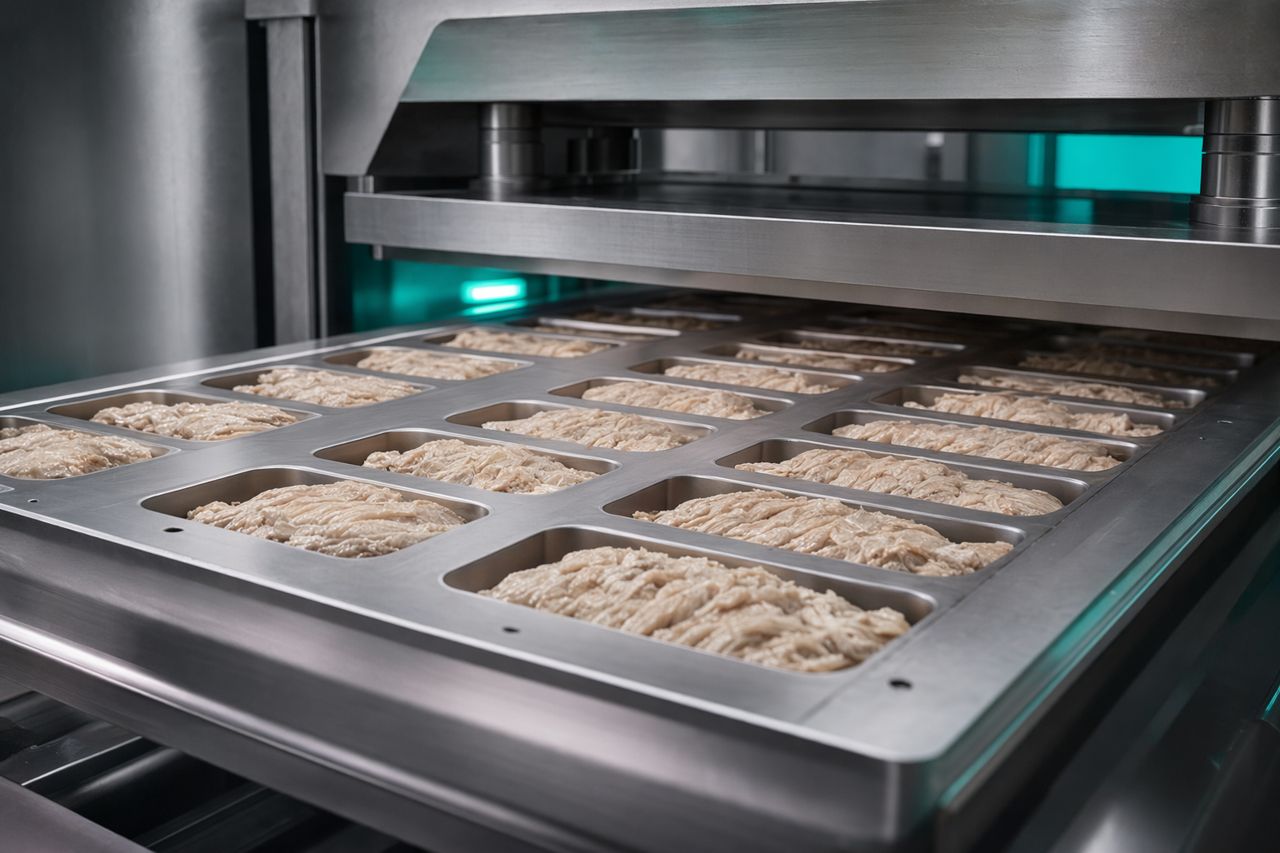
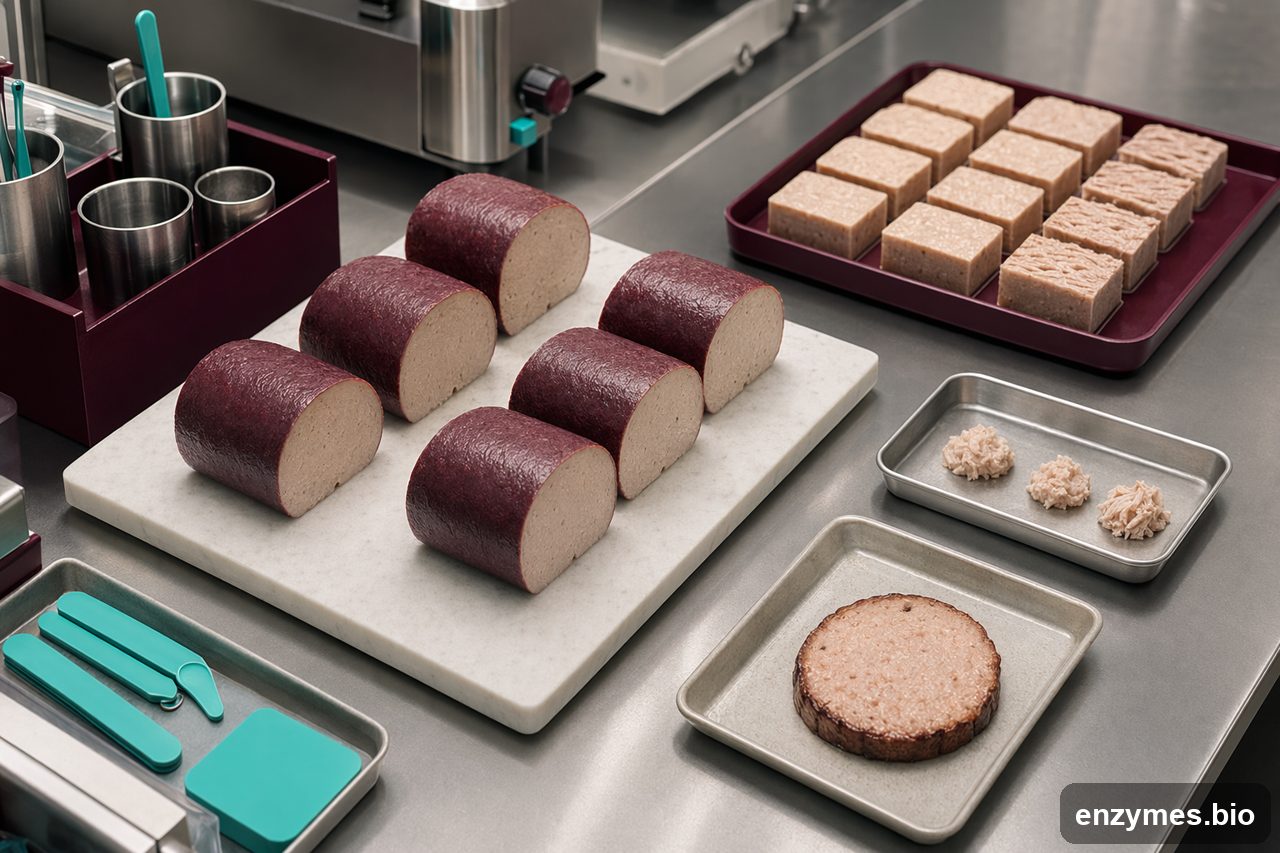
The second gain is the value of the raw material. Fresh scrap meat is recombined and sold as rolls for thin slicing, which is a higher-value format than the trim it started as. The process is short: scraps, enzyme solution, mixing, shaping in a mould, then a frozen hold, giving a block that slices like natural meat and does not fall apart when boiled. The third gain is portion control: two boneless chicken breasts bonded into a single piece cook evenly and are easy to portion, which is what a foodservice kitchen pays for.
Where processors use it
- Thin-sliced beef and lamb for hot-pot. This is the volume use: grades are sold as dedicated products for bonding fatty beef and lamb slices.
- Formed steaks and whole-muscle portions. Steak and meat-product recombining is sold as its own pack, separate from the slicing rolls.
- Braised and cooked beef for prepared meals. Here the enzyme is added to keep the piece intact after a yield-raising injection.
- Poultry portions. Leg and thigh meat is bonded with an enzyme slurry, the practical method when the pieces are irregular.
- Meatballs, sausages and ham. In minced products the enzyme is used to raise gel strength, elasticity and heat stability, and to let a recipe carry less raw meat. Ham sausage and grilled sausage have their own recombining grade.
- Fish balls and fillings. The stated benefits for fish balls are better texture and elasticity, no splitting, higher water-holding and yield, and less water released in storage. Bun and dumpling fillings are a less familiar use: the enzyme helps the meat filling clump so the finished piece holds its shape.
How the braised-beef programme runs
The trial behind the figures above used these steps and conditions.
- Inject the phosphate brine at a rate of 25-30%, as the plant already did.
- Add TG at 0.04% of the meat, or 0.05% for tougher cuts such as brisket.
- Vacuum tumble 20 minutes forward, rest 5 minutes, then 20 minutes in reverse.
- Hold the meat cold at 0-4 C for 8 hours; this is the step the result depends on, because the cross-linking happens during the hold.
- Braise at 80-85 C and never let the liquor boil.
- Cool for 30 minutes at room temperature, then for 2 hours at 0-4 C before slicing or packing.
The programme was sold as a kit of concentrated enzyme, a phosphate blend and a hydrocolloid mix with a procedure card, which tells you the enzyme is used with the yield system, not instead of it.
Comparison: four ways to hold meat together
| Approach | What it does well | Where it fails | Fits |
|---|---|---|---|
| Phosphate and water-retention agents alone | Raises yield | Cooked meat goes loose and crumbly; buyers call it "pieced together meat" | Products that are never sliced thin or braised |
| TG added to the phosphate and hydrocolloid system | Yield 82% to 96% and cooking looseness 22% to 8% in one braised-beef trial | Needs the 8-hour cold hold at 0-4 C; boiling undoes the texture | Braised beef, prepared-meal components |
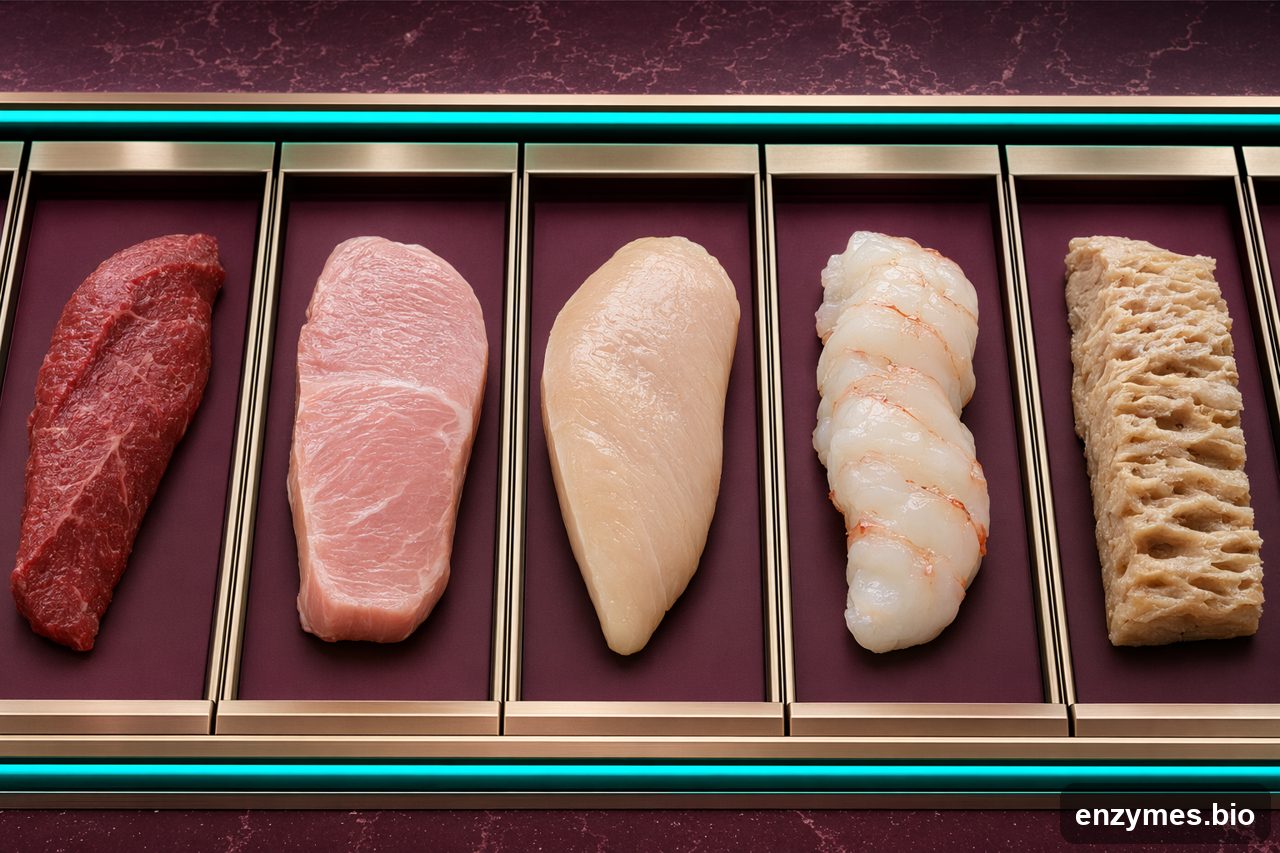
| TG slurry on whole pieces | Bonds irregular leg and thigh pieces into one portion | Needs full surface contact between the pieces | Poultry portions, formed steaks |
| TG mixed into scrap or mince, moulded and frozen | Rolls and blocks that slice like natural meat and survive boiling | Grain and seams stay visible if pieces are laid carelessly | Hot-pot slices, rolls, meatballs |
| Fish tenderiser (a different product, not a binder) | Firmer, more elastic fish that resists breaking in cooking | Does not join pieces | Fillets and fish blocks |
Dose: why two honest numbers disagree
Buyers ask for one dose and get two very different answers. The braised-beef trial ran at 0.04% of the meat, on injected whole muscle with a long cold hold. The label of a 100 u/g powder recommends 2-3 kg per tonne, without naming the product it is meant for. Both can be right: less enzyme is needed when the hold is long and the pieces are large, more when mince or scrap must set quickly in a mould. Under a fish-ball process demonstration the only buyer question was "how much TG to go?", and nobody answered it. The useful answer is a dose range tied to your product, hold time and activity grade, confirmed in a plant trial.
Seven ways binding trials go wrong
- Chasing yield with phosphate alone and then blaming the cut when the cooked meat crumbles.
- Skipping or shortening the cold hold, so the meat goes to the cooker before the bond has formed.
- Boiling instead of braising gently, which loosens what the hold built.
- Laying pieces without regard to grain: one viewer of a formed steak remarked "Look at how obvious the meat texture is", and seams are what customers notice first.
- Expecting the enzyme to rescue a weak paste: a home maker who followed a fish-ball recipe exactly still found the balls would not bounce, and bind depends on the paste as well as the enzyme.
- Using it where it is not needed and ignoring where it is: crumbly sausages are the products people single out as worth binding.
- Comparing offers by weight when the grades differ in activity, which makes the cheaper powder the dearer one in use.
Trust: labelling, cooking and handling
The enzyme's reputation problem is about disclosure, not chemistry. Roughly 8 million pounds of meat a year are made with it in the United States, and the people who object mostly object to not being told. The common complaint is that companies do not label bound products, and commenters say plainly that the enzyme itself is not the issue. Its poor image comes mainly from lower-quality cuts being passed off as larger, more expensive ones. Downstream buyers assume that anyone selling raw bound meat must label it as such, so settle the labelling rule for each market before the first shipment.
The real food-safety point is the seam. Surfaces that were once on the outside of the meat end up inside the bound piece, and as one commenter put it, "normally searing the outside kills them", so a bound portion has to be cooked through like a minced product. Give your customers that cooking instruction with the product. Expect two further questions from free-from and faith-based channels. Some consumers have been told the enzyme is a concern for gluten-sensitive people, and commenters ask for the evidence, so have your position ready. People also want to know how the enzyme is made, and feel that sellers avoid the question. The straightforward answer is that commercial TG is made by fermentation of the microbe Streptoverticillium mobaraense.
In the plant, treat the powder as a respiratory hazard: operators who work with it advise a respirator and gloves whenever it is handled dry. A slurry or pre-dissolved solution keeps dust down as well as spreading the enzyme evenly.
What to ask a supplier
- Activity grade. The grades buyers order most are 100 U/g and 130 U/g, and a concentrated 1000 U/g grade is also ordered. A product named "TG 100" is simply the 100 unit grade, so compare every offer per unit of activity.
- Straight enzyme or blend. Ingredient houses sell TG as named blends for restructured beef, so ask what else is in the bag and what the carrier is.
- Intended use. Some preparations are declared for use as a meat binder and tenderiser rather than as a general-purpose enzyme.
- Pack size for the trial. A 500 g pack is the usual unit for a kitchen or pilot run. The 130 u/g powder is packed in 1 kg bags. Other makers also ship in 1 kg units. Production volumes move in 25 kg drums.
- More than one source. Compare offers per unit of activity.
- Bounce grades for balls. Preparations for pork, beef and fish balls are sold under "elasticity" names, which may be blends; ask for the enzyme activity behind the name.
- Working range and storage. Ask for the pH and temperature range and the shelf life on the specification sheet of the exact grade quoted, and for the dose the supplier recommends for your product, not a general one.
Send us your cut and your yield target
Email us the cut or trim you want to bind, your line speed, your current yield and the yield you are aiming for. We reply with a suggested grade, a starting dose range for a plant trial and a troubleshooting checklist, and we can quote a sample pack for the trial. Paste those details into the message field of the enquiry form at the bottom of this page.
More transglutaminase guides
- Transglutaminase for Sausage, Ham, and Processed Meat Systems
- Transglutaminase for Ready Meals and Prepared Food Manufacturing
- Transglutaminase for Fish and Seafood Binding
- Transglutaminase for Surimi and Imitation Seafood Texture
- Transglutaminase for Yogurt and Fermented Dairy
- Transglutaminase for Clean-Label and Yield Projects
- Common Transglutaminase Application Mistakes
- Key Formulation Factors for Transglutaminase in Food Protein Systems
- How to Plan a Transglutaminase Trial for Food Protein Systems
- Transglutaminase Safety, Labeling, and Compliance
- Transglutaminase in Food Texture Development
- Transglutaminase vs Other Texture Solutions for Food Formulation
- What Is Transglutaminase? Protein Binding Enzyme for Food Structuring