Technical detail
Transglutaminase for Poultry Products
Engineered binding for formed chicken, restructured poultry, stuffed products, and portion-controlled items.
Transglutaminase, also known as protein-glutamine gamma-glutamyltransferase, helps poultry proteins build stronger internal networks. In practical processing terms, that means cleaner cohesion, improved bite, better slice integrity, and more dependable structure in products that must hold together through shaping, stuffing, chilling, cooking, freezing, thawing, and reheating.
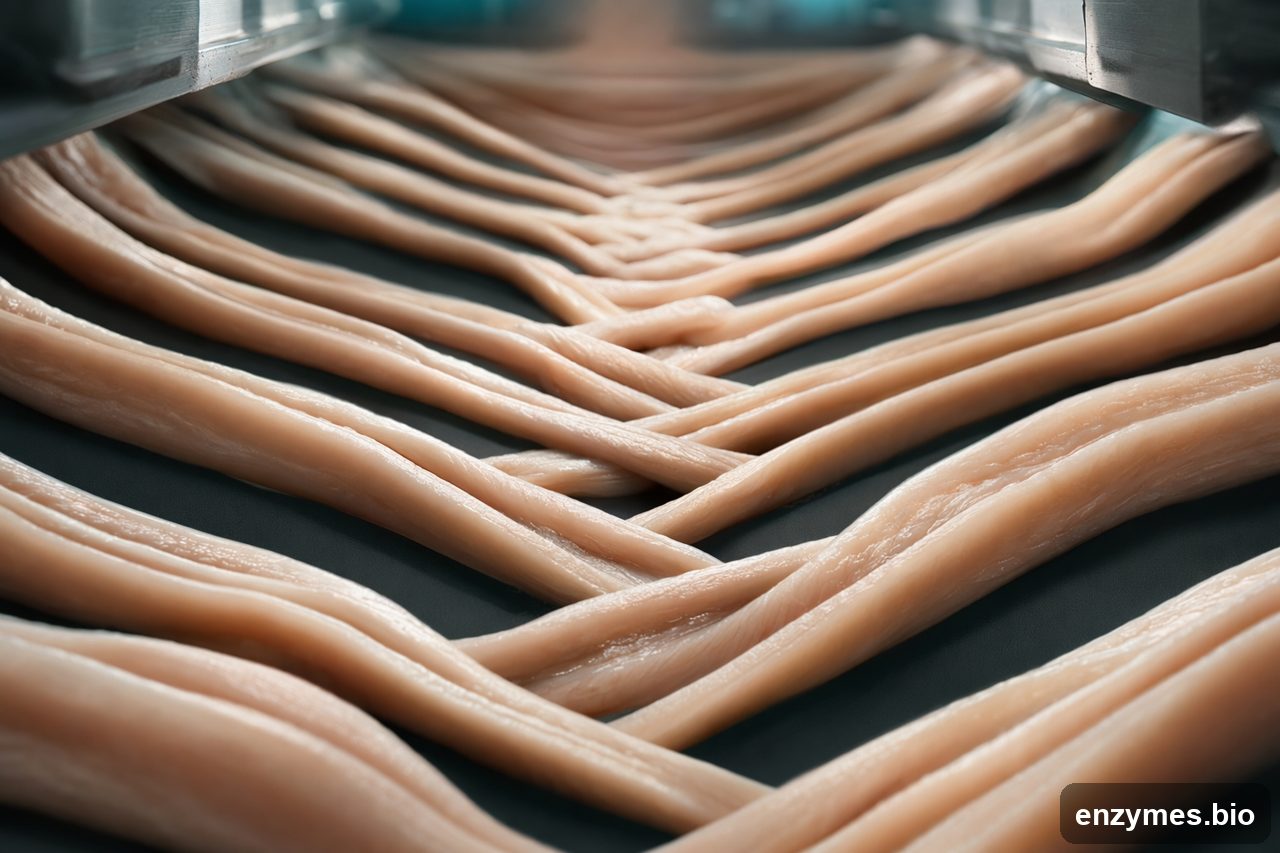
Transglutaminase Enzyme Solutions supports poultry manufacturers using transglutaminase as a texture and yield design tool — not as a generic additive. The goal is controlled binding strength, repeatable processing behavior, and a finished product that performs consistently at commercial scale.
Wholesale and bulk transglutaminase for food manufacturers, ingredient blenders, distributors and resellers. Every order is quoted individually. Request a quote with your product or application, the quantity you need and the destination country.
Why transglutaminase in poultry processing
Poultry systems can be difficult to standardize. Raw material variation, moisture targets, salt levels, comminution, tumbling, inclusions, marinades, and cook processes all influence final texture. Transglutaminase gives formulation and process teams another way to reinforce the protein matrix.
It can help manufacturers improve:
- Cohesion in formed products such as nuggets, patties, medallions, strips, and molded chicken portions
- Binding strength in restructured poultry using trim, small cuts, or portioned muscle pieces
- Slice integrity in cooked poultry rolls, deli-style items, and shaped products
- Stuffing stability in filled poultry formats where seams and interfaces must remain controlled
- Texture consistency across variable raw material inputs
- Cook yield and purge control when used inside a balanced protein, moisture, and thermal process
- Portion control by helping formed items keep shape during handling and heat treatment
Application fit
Formed chicken products
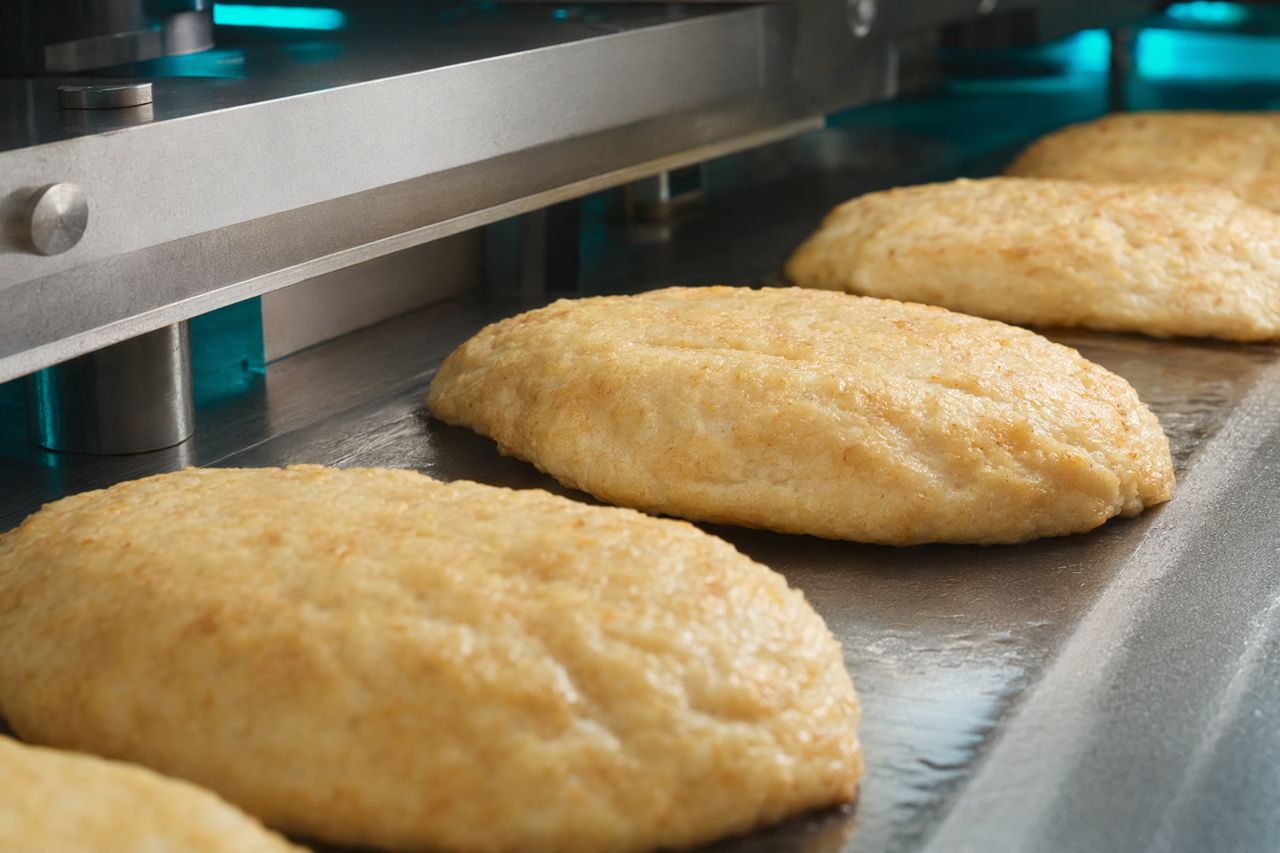
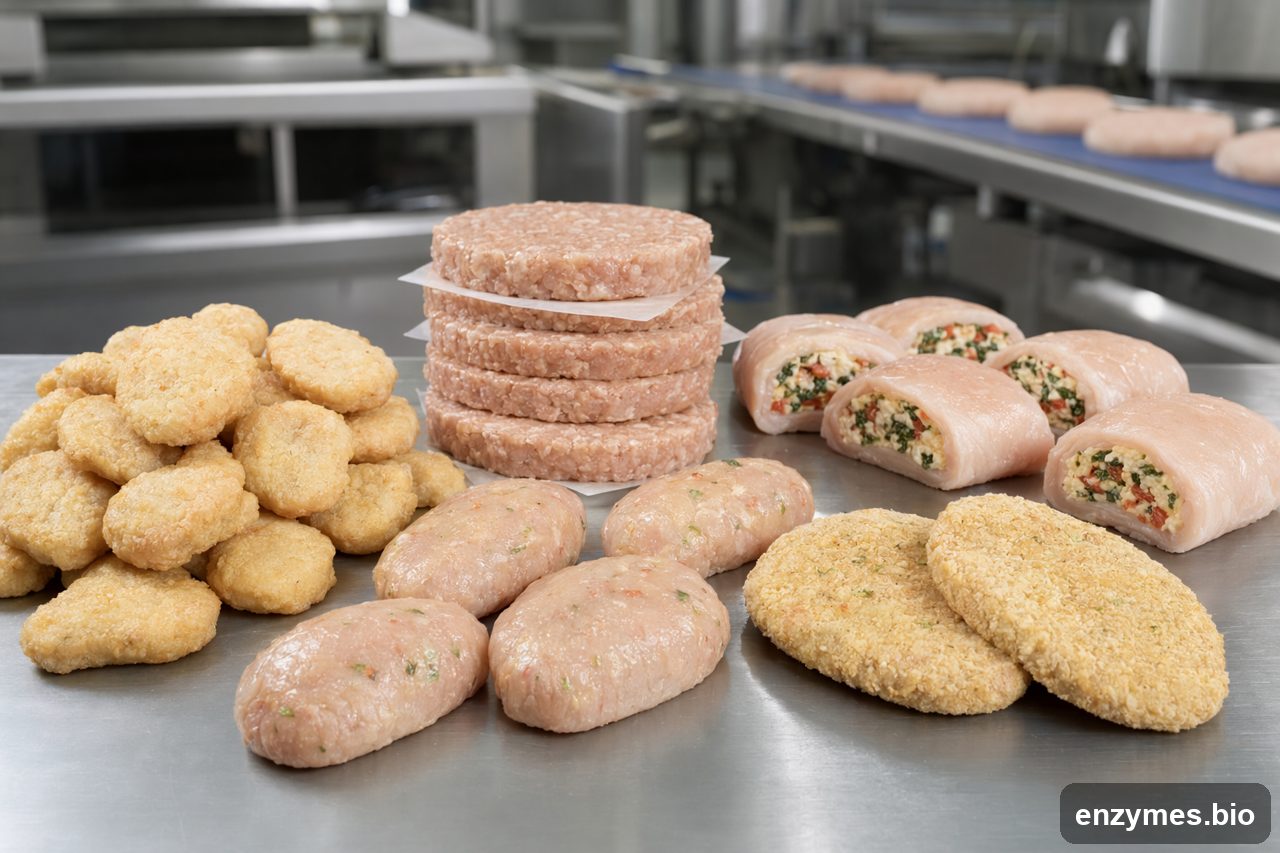
In nuggets, patties, tenders, strips, and shaped portions, transglutaminase can support a firmer, more cohesive bite without making the product rubbery when the formulation is properly tuned. It is especially useful where processors need to work with comminuted meat, trim streams, mechanically handled material, or blended protein systems.
Restructured and portion-controlled poultry
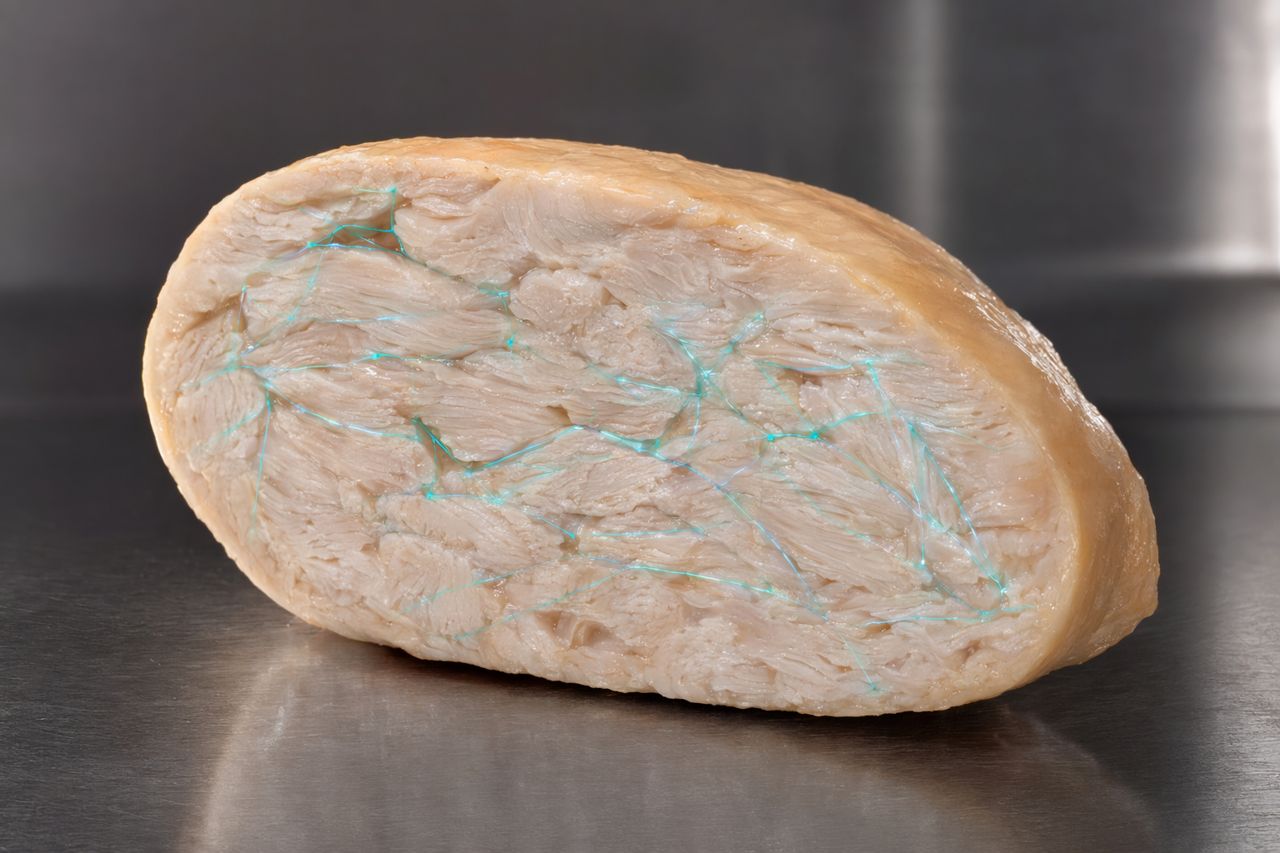
For products built from smaller muscle pieces or trim, transglutaminase can improve binding at contact points. This helps create cleaner shape retention, fewer weak seams, and more predictable slicing or portioning after setting and cooking.
Stuffed and layered products
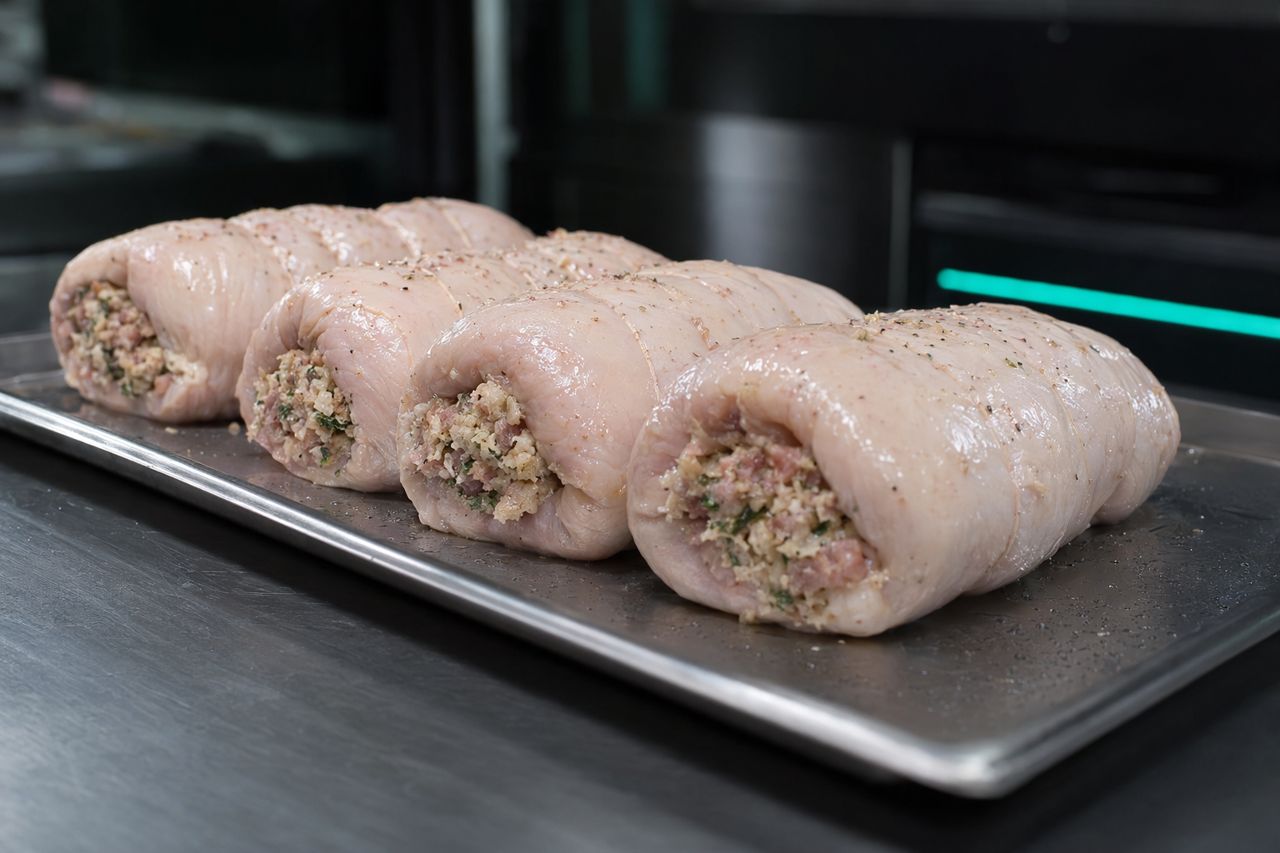
Stuffed chicken products demand structural control at interfaces: meat-to-meat, meat-to-filling, and seam areas. Transglutaminase can help stabilize the outer poultry matrix so the product handles better during forming, breading, cooking, and packaging.
Cooked, sliced, and deli-style poultry
For rolls, loaves, and cooked poultry formats that require slicing, transglutaminase can support improved slice definition and reduced crumbling. This is valuable for foodservice, retail convenience, and prepared meal applications where visual consistency matters.
Hybrid and extended poultry systems
Poultry products increasingly include fibers, starches, plant proteins, brines, marinades, seasoning systems, and functional binders. Transglutaminase can be used as part of a broader protein system strategy, but compatibility must be evaluated carefully. The strongest results come from balancing protein availability, moisture, salt, mixing, temperature, and rest time.
What performance depends on
Transglutaminase performance in poultry is not determined by one ingredient decision. It depends on the full processing architecture.
Key variables include:
- Protein quality and surface availability — contact between reactive proteins drives effective network formation
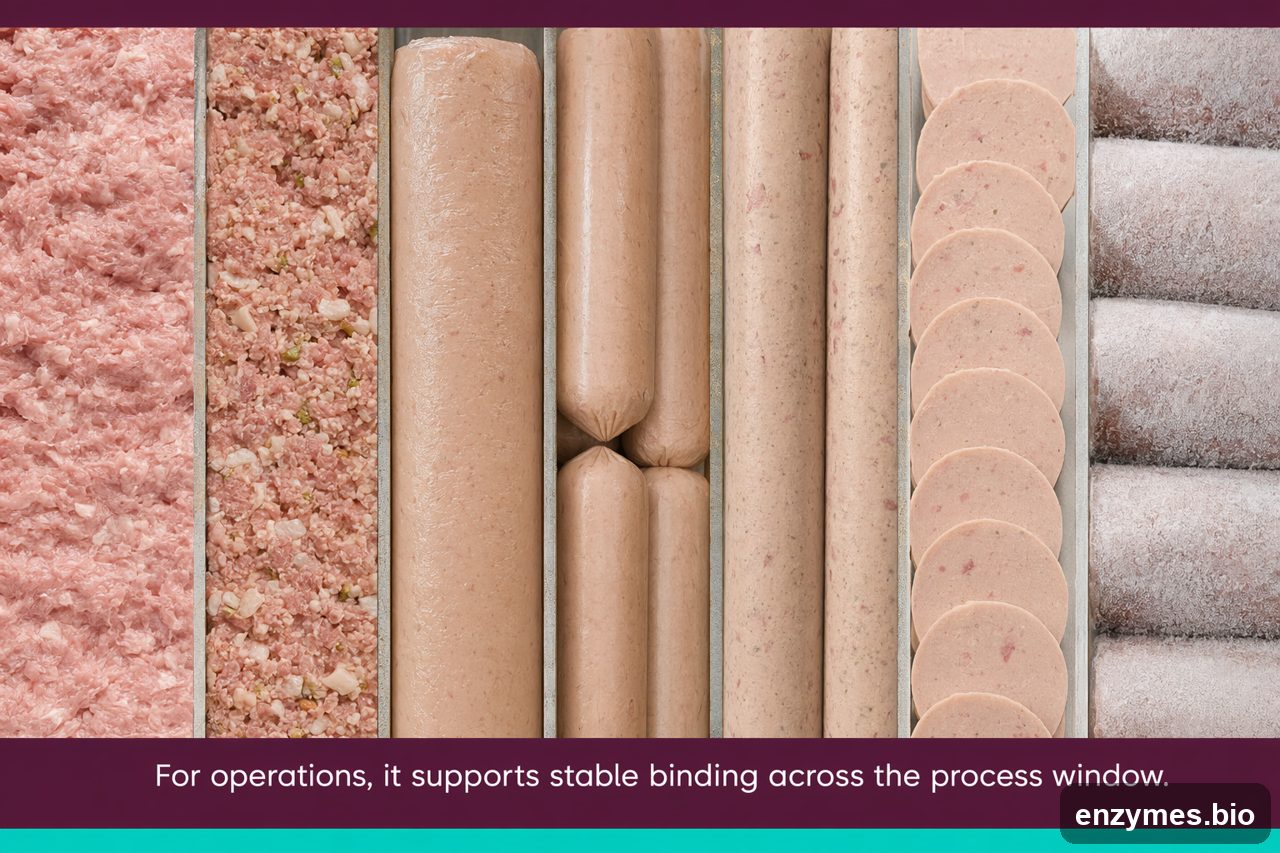
- Particle size and muscle structure — whole muscle pieces, coarse grind, and fine emulsions behave differently
- Moisture and brine design — excess free water can weaken structure if not balanced with the full formulation
- Salt and phosphate strategy — extraction and protein solubility influence binding behavior
- Mixing and tumbling energy — sufficient distribution is needed without damaging texture
- Contact time before cooking or freezing — the product needs the right set window for the intended process
- Temperature profile — chilling, holding, cooking, and freeze-thaw conditions all affect final structure
- Compatibility with inclusions — vegetables, cheese, fillings, coatings, starches, and fibers can alter matrix continuity
Transglutaminase Enzyme Solutions works from the product target backward: bite, cut, yield, shape, label position, equipment constraints, and throughput requirements.
Commercial advantages for poultry manufacturers
When correctly validated, transglutaminase can support both product quality and manufacturing economics.
Potential advantages include:
- Better use of trim and variable raw material streams
- More consistent portion shape and weight control
- Reduced breakage during handling and packaging
- Improved texture in value-added poultry formats
- Stronger product architecture for stuffed, layered, or formed items
- More flexibility when designing reduced-salt, extended, or hybrid systems
- Support for premium eating quality in convenience and foodservice products
Development guidance
A successful poultry trial should define the target before selecting the process.
Recommended development questions:
- Is the priority bite, binding, yield, sliceability, or shape retention?
- Is the product whole-muscle, coarse-formed, finely comminuted, or emulsion-based?
- Will the product be cooked before sale, raw frozen, par-cooked, breaded, or stuffed?
- What are the hold, chill, cook, freeze, thaw, and reheat conditions?
- Which ingredients may compete with or support protein network formation?
- What label, allergen, and market requirements must be respected?
These answers guide formulation, process timing, and pilot validation.
Procurement and specification support
For procurement teams, Transglutaminase Enzyme Solutions provides commercial clarity around grade selection, application fit, documentation, packaging format, lead times, and supply planning. For R&D and operations teams, we focus on the performance questions that matter: whether the enzyme supports the intended poultry matrix under real plant conditions.
We can support discussions around:
- Product type and process route
- Ingredient compatibility
- Thermal and chilled process requirements
- Trial planning and scale-up considerations
- Commercial supply requirements
- Documentation needs for B2B qualification
Request pricing for poultry applications
Tell us what you are making, how it is processed, and what performance gap you need to solve. Transglutaminase Enzyme Solutions will respond with application-fit guidance and commercial next steps.
Ready for a quote? Use the inquiry form at the foot of this page. Tell us the application, the quantity per order or per year and the delivery country. Price, pack size and lead time are quoted per order.