Technical detail
Transglutaminase Buyer’s Guide for Food Processors
Transglutaminase is purchased for one reason: to make protein systems behave with more control.
For food processors, that can mean stronger binding, better slice integrity, improved yield, firmer bite, cleaner forming, more stable gels, or greater flexibility when combining animal, dairy, seafood, or plant proteins. The right transglutaminase specification can open formulation space. The wrong one can create uneven dispersion, inconsistent texture, poor process fit, or avoidable labeling and procurement friction.
This guide is for the businesses that buy transglutaminase in volume: procurement, R&D and product teams at food manufacturers, and the ingredient distributors and resellers who supply them. Transglutaminase Enzyme Solutions quotes every order individually.
Wholesale and bulk transglutaminase for food manufacturers, ingredient blenders, distributors and resellers. Every order is quoted individually. Request a quote with your product or application, the quantity you need and the destination country.
What transglutaminase does in food systems
Transglutaminase, also known as protein-glutamine gamma-glutamyltransferase, supports protein cross-linking. In practical manufacturing terms, it helps build structure between compatible protein surfaces.
Depending on the substrate and process, that structure can improve:
- Binding strength in formed or restructured products
- Bite, chew, firmness, and sliceability
- Gel stability in dairy, meat, seafood, and plant-based systems
- Yield retention during forming, cooking, freezing, or handling
- Emulsion and matrix integrity in hybrid formulations
- Reduced breakage, purge, crumbling, or delamination
- Formulation flexibility when working with lower-cost or mixed protein streams
Transglutaminase is not a universal fix. It performs best when the protein system, moisture, salt level, mixing sequence, residence time, thermal step, and finished-product target are aligned.
Common commercial application areas
Meat and poultry processing
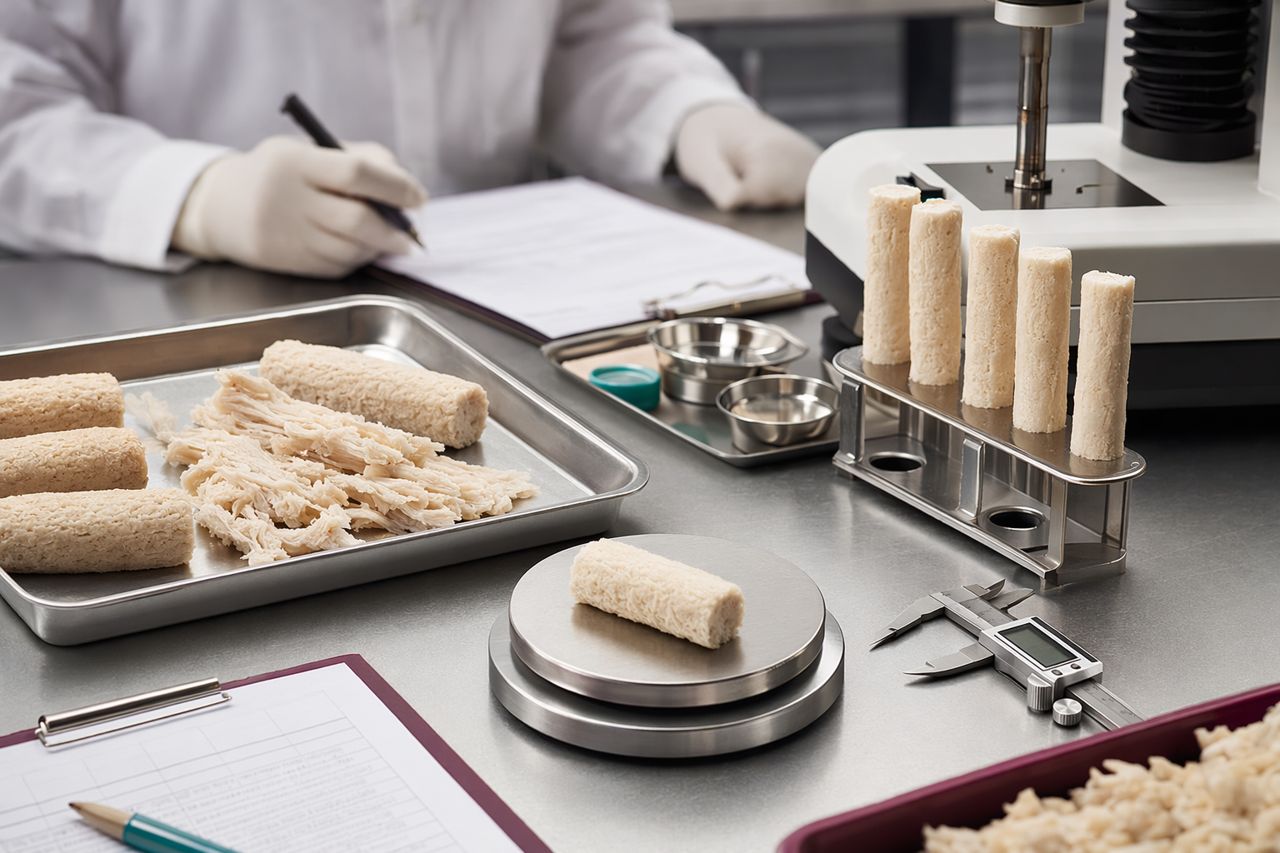
Transglutaminase is used to improve cohesion, forming performance, slice integrity, bite, and yield in restructured or value-added protein products. Buyers should evaluate performance under the actual plant process, including mixing intensity, forming pressure, chilled hold time, cooking profile, and packaging format.
Key commercial outcomes:
- Clean slice and reduced edge fracture
- Stronger formed-piece integrity
- Improved bite without excessive firmness
- Better handling during marination, tumbling, cooking, or freezing
- Reduced variability in blended meat systems
Seafood and surimi-style systems
In seafood applications, transglutaminase can support elastic gel formation, shape retention, bite control, and reduced breakage. It is especially useful where protein quality, seasonal variability, or moisture management create texture challenges.
Key commercial outcomes:
- Elastic bite and gel strength
- Less cracking or splitting
- Improved block, stick, or formed-product stability
- Better tolerance to downstream cutting and packing
Dairy and cultured products
Transglutaminase can improve protein network strength in selected dairy systems, supporting viscosity, gel texture, water management, and mouthfeel. It may be considered for yogurt, cheese-style products, desserts, and high-protein dairy concepts where texture and stability are central to consumer acceptance.
Key commercial outcomes:
- Smoother, more stable gel texture
- Reduced syneresis in suitable systems
- Improved body in high-protein formulations
- Better structure without relying only on hydrocolloids
Plant-based and hybrid foods
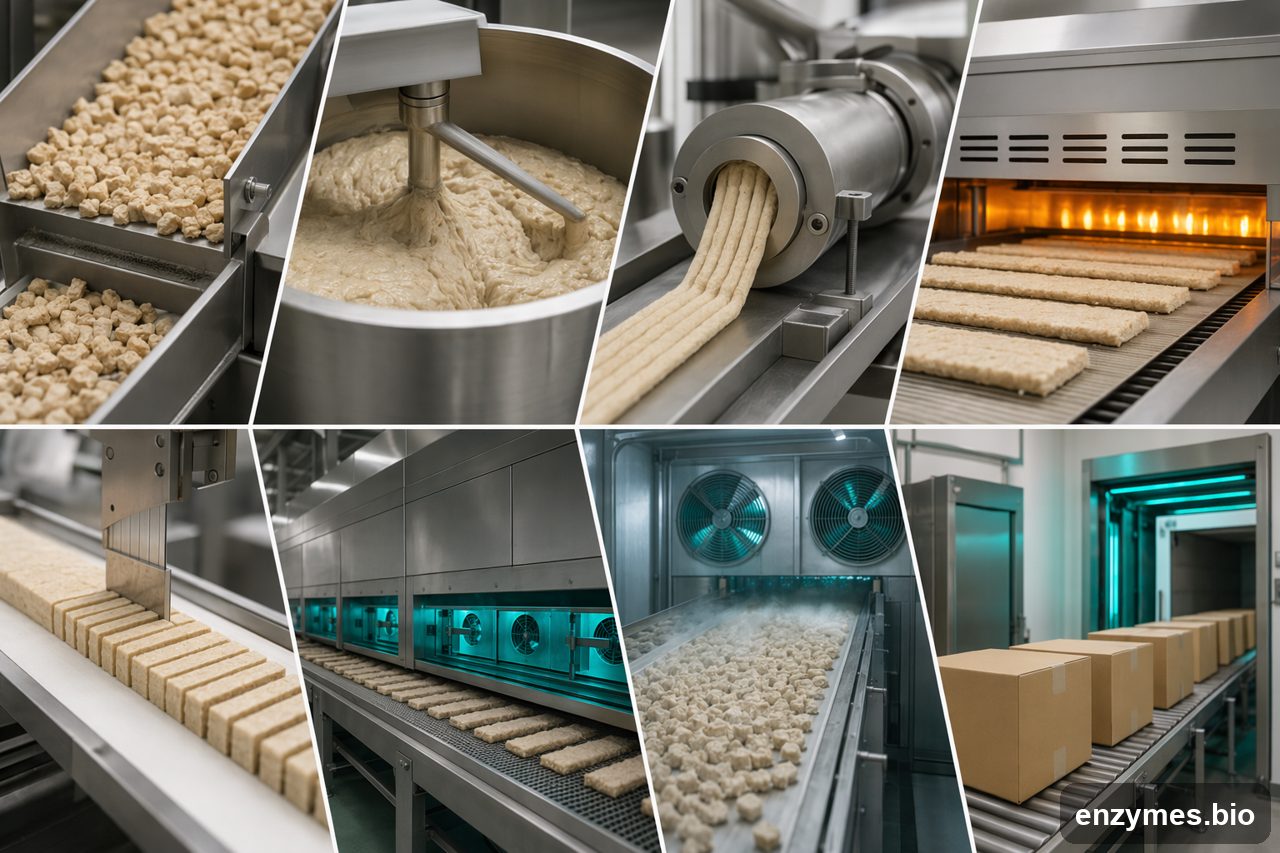
Plant proteins can vary significantly in solubility, particle size, thermal behavior, and binding potential. Transglutaminase can help build structure in plant-forward or hybrid systems, but performance depends heavily on protein source, preprocessing, hydration, and formulation design.
Key commercial outcomes:
- More cohesive plant protein matrices
- Improved bite and sliceability
- Better formed-product strength
- Reduced brittleness or crumbling
- Greater flexibility in combining protein sources
Bakery, noodles, and specialty protein systems
In selected flour, noodle, dough, and protein-enriched systems, transglutaminase may support texture, elasticity, resilience, and process tolerance. Buyers should validate its interaction with gluten, non-gluten proteins, starches, gums, emulsifiers, and thermal steps.
What to specify before requesting pricing
A useful quote requires more than “bulk transglutaminase.” Before approaching suppliers, align internally on the commercial and technical target.
1. Application and substrate
Define the food system clearly:
- Meat, poultry, seafood, dairy, plant protein, bakery, noodle, or hybrid system
- Main protein sources and approximate protein behavior
- Fresh, frozen, cooked, fermented, or shelf-stable process
- Finished product format: block, slice, patty, gel, emulsion, filling, dough, or formed piece
- Current pain point: weak binding, purge, cracking, soft bite, poor yield, texture drift, or high formulation cost
2. Desired functional outcome
Transglutaminase can be used for different objectives. State the priority outcome:
- Stronger binding
- Firmer gel
- More elastic bite
- Cleaner slicing
- Reduced cooking loss
- Better freeze-thaw stability
- Improved formed-product handling
- Lower reliance on certain binders or texturizers
- Better consistency across raw material variation
A supplier should be able to discuss these outcomes in process language, not only in laboratory terminology.
3. Product format
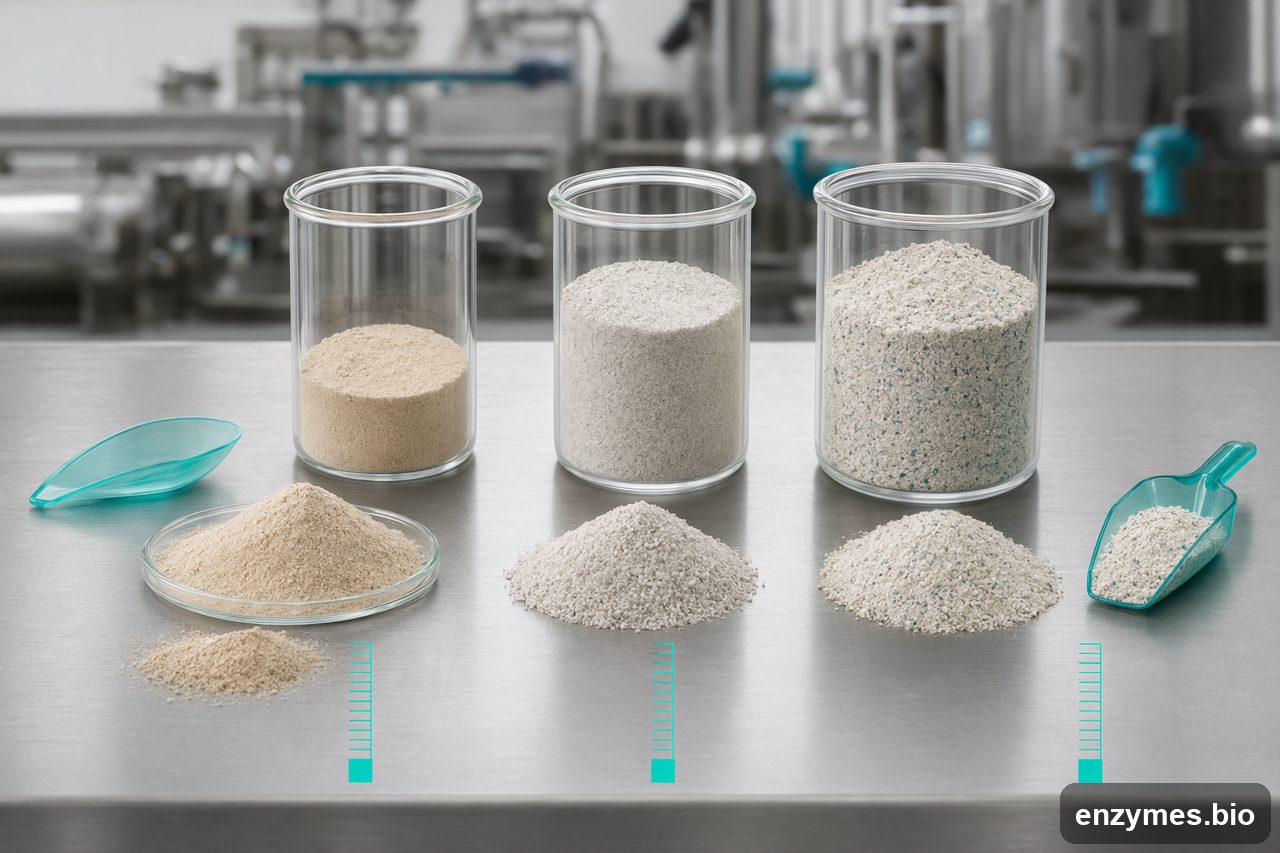
Transglutaminase may be supplied as a concentrated enzyme preparation, carrier blend, or application-specific premix. The format affects dispersion, handling, labeling, purchasing, and plant control.
Ask whether the offered material is:
- A general-purpose transglutaminase preparation
- A blend designed for meat, seafood, dairy, plant-based, or bakery systems
- A premix with carriers, salts, proteins, fibers, or process aids
- Optimized for dry addition, slurry addition, tumbling, chopping, mixing, or hydration steps
The best format is not always the most concentrated one. In many plants, dispersion reliability and operator control matter more than theoretical potency.
4. Process fit
Transglutaminase performance depends on how and when it is introduced. During supplier conversations, discuss:
- Addition point and mixing sequence
- Hydration approach
- Contact time before thermal inactivation or final setting
- Chilled versus warm process conditions
- Salt, phosphate, acid, sugar, oil, and hydrocolloid interactions
- Compatibility with marinades, brines, dairy cultures, plant protein isolates, or starch systems
- Hold-time tolerance and operational flexibility
Procurement teams should involve R&D or process engineering before locking in a specification. A lower quoted price can become expensive if the product requires major process changes or creates inconsistent plant performance.
Documents procurement should request
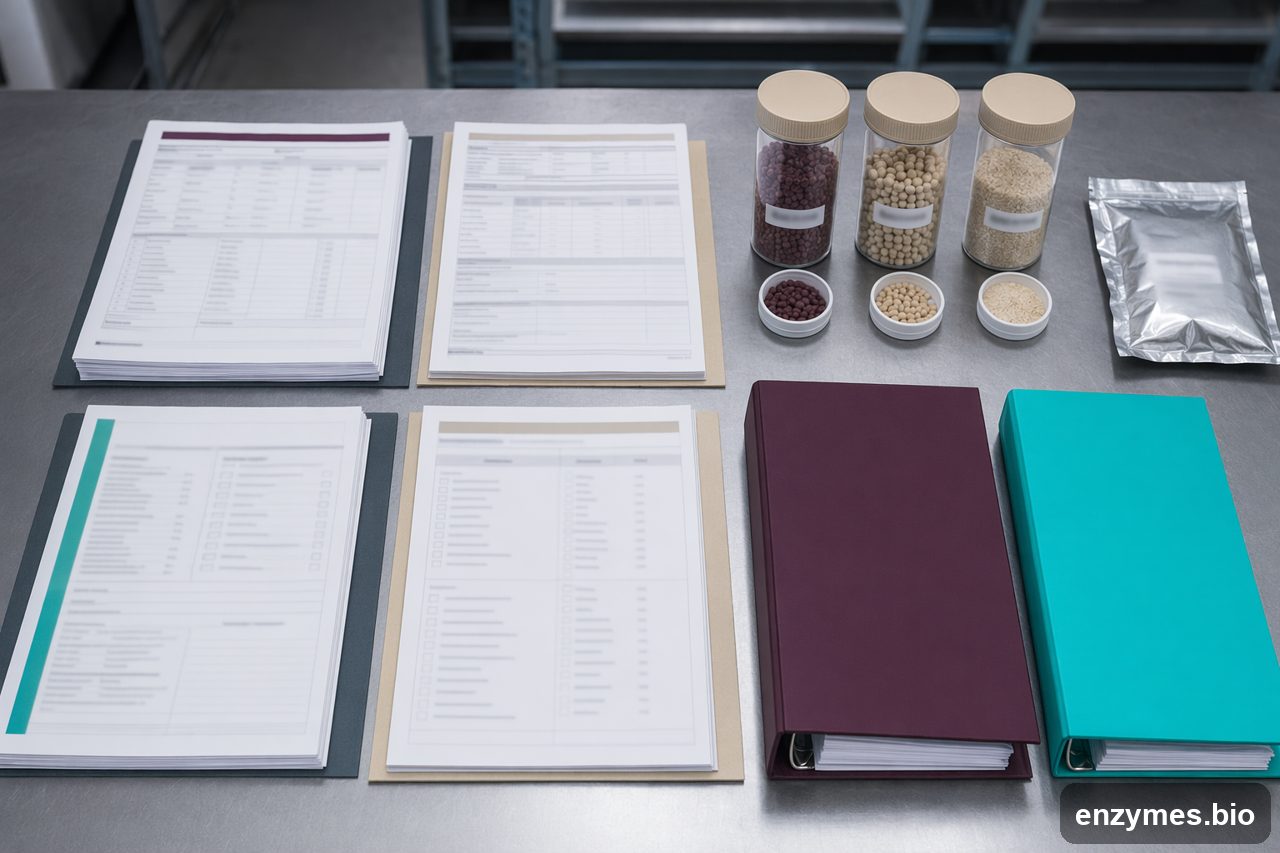
For supplier qualification, request a complete document package early. At minimum, buyers should ask for:
- Product specification sheet
- Ingredient declaration or composition statement
- Safety data sheet
- Allergen statement
- Country of origin
- Lot traceability statement
- Shelf-life and storage guidance
- Packaging format and pallet configuration
- Certificate of analysis format
- Food safety certification status
- Regulatory support for intended market and application
- GMO, halal, kosher, vegetarian, or other status where relevant
If the transglutaminase is supplied as a blend, confirm every functional and carrier ingredient. Blends can be commercially useful, but hidden formulation assumptions can create label, allergen, or export issues.
How to compare suppliers without relying on confidential assay details
Activity figures and assay methods are not always comparable between suppliers. For commercial buying, performance in the actual food system is more valuable than a number on a data sheet.
Use application trials to compare:
- Binding strength under your mixing and forming process
- Texture profile after cooking, chilling, slicing, freezing, or reheating
- Yield retention and purge control
- Distribution uniformity and absence of localized over-binding
- Finished-product appearance and mouthfeel
- Compatibility with your ingredient deck
- Repeatability across multiple lots
- Ease of handling for operators
- Documentation quality and responsiveness
A strong supplier should protect proprietary analytical details while still giving you enough technical clarity to run a disciplined qualification.
Trial design for R&D teams
A good trial does not need to be complicated, but it does need to be controlled.
Start with a baseline
Run your current formulation and process without transglutaminase. Record texture, yield, slicing, purge, gel stability, and operator observations.
Test one variable at a time
Change the transglutaminase format or use level independently from salt, protein, water, starch, hydrocolloid, or thermal profile adjustments. If too many variables move at once, the result is difficult to interpret.
Evaluate commercial conditions
Bench results can mislead when plant mixing energy, residence time, batch size, pump shear, stuffing, forming, cooking, or freezing conditions are different. Validate at pilot or plant scale before approving a supplier.
Measure what matters to the product
Useful evaluation points may include:
- Slice integrity
- Bite and firmness
- Gel strength or elasticity
- Cooking yield
- Purge after storage
- Freeze-thaw resilience
- Visual uniformity
- Rework behavior
- Consumer sensory alignment
- Line efficiency and scrap reduction
Red flags when buying transglutaminase
Be cautious if a supplier cannot clearly answer basic application and procurement questions.
Potential red flags include:
- Vague ingredient composition for blended products
- No clear application guidance
- Inconsistent documentation between lots
- Unclear country of origin or traceability
- Storage guidance that conflicts with shipping practice
- No support for regulatory or labeling review
- Claims that one product works equally well in every protein system
- Pricing that ignores packaging, lead time, freight, shelf-life, or technical support
For industrial food processors, reliability is part of the product. A transglutaminase that performs well once but fails to repeat is not a qualified ingredient.
Commercial buying considerations
Packaging and handling
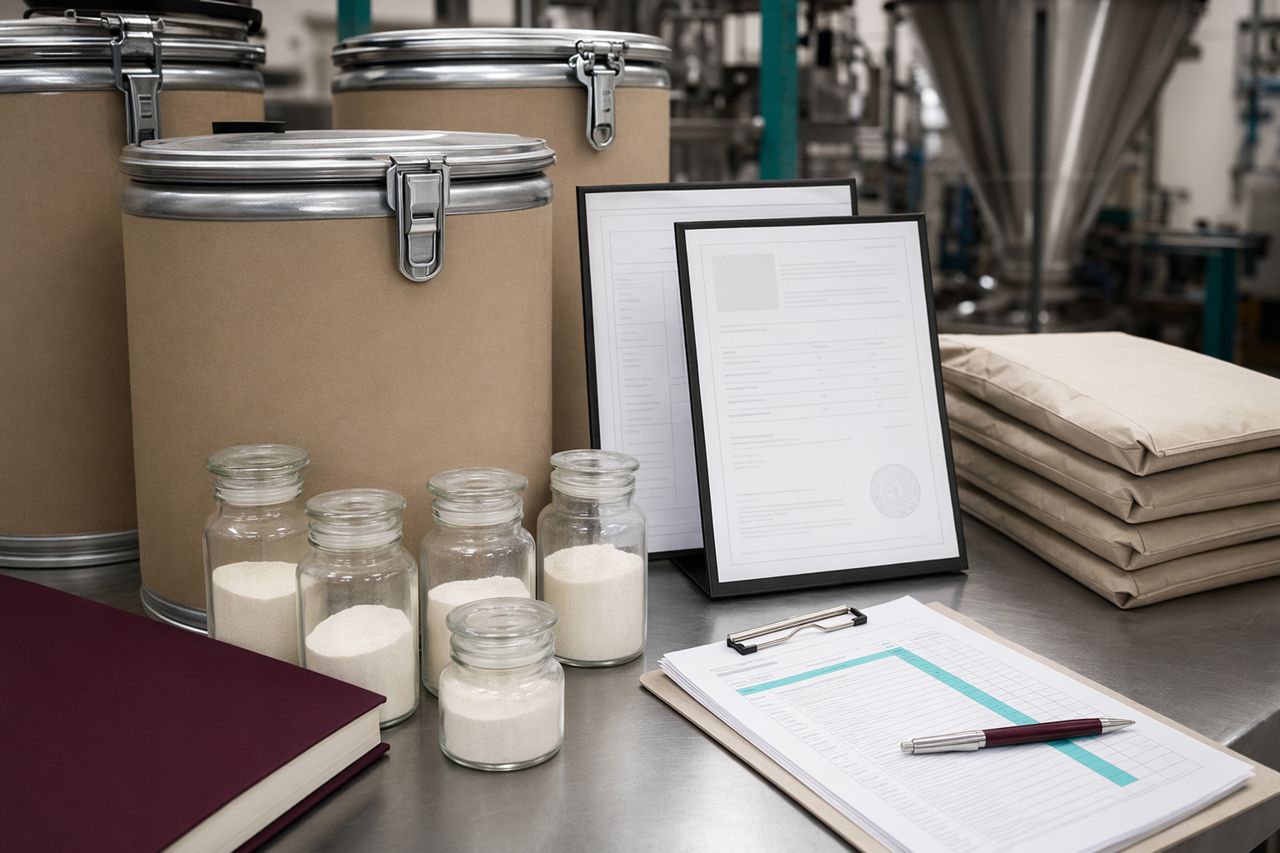
Confirm packaging size, inner liner integrity, resealability, moisture protection, and warehouse requirements. Transglutaminase is typically handled as a dry ingredient, so dust control, humidity exposure, and operator dosing accuracy should be considered.
Lead time and inventory planning
Procurement should confirm production lead time, import timing if applicable, minimum order quantity, reserve inventory options, and lot allocation for scale-up. For launch programs, secure trial, pilot, and first-production material from aligned specifications whenever possible.
Cost-in-use, not just price per package
The lowest purchase price is not always the lowest operating cost. Compare cost against finished-product outcomes:
- Yield improvement
- Scrap reduction
- Labor or rework reduction
- Improved slicing efficiency
- Lower texture-system complexity
- Reduced batch failure risk
- Stronger consumer acceptance
Technical support value
Transglutaminase buying is a formulation decision as much as a procurement decision. Supplier support should help your team understand dispersion, process timing, ingredient interactions, and practical scale-up.
Questions to ask before issuing a purchase order
Use these questions to structure supplier qualification:
- Which application types is this transglutaminase specification designed for?
- Is it a single enzyme preparation or a formulated blend?
- What carriers or supporting ingredients are present?
- What documentation is available for food safety, allergens, origin, and regulatory review?
- How should the product be stored and handled in a food plant?
- What packaging formats are available for production use?
- What process conditions should R&D evaluate first?
- What common formulation conflicts should we watch for?
- How consistent is supply between lots?
- What lead time applies for sample, pilot, and production quantities?
How Transglutaminase Enzyme Solutions supports transglutaminase buyers
Transglutaminase Enzyme Solutions helps food processors evaluate transglutaminase through a practical, application-first lens. We focus on the buying questions that matter to commercial teams: fit, documentation, process reliability, formulation flexibility, and repeatable performance.
We can support:
- Application-fit discussion for meat, seafood, dairy, plant-based, bakery, and hybrid systems
- Sample planning for R&D evaluation
- Specification and documentation review
- Bulk pricing requests
- Packaging and lead-time planning
- Supplier qualification support for procurement teams
Request a wholesale quote
Use the inquiry form at the foot of this page and share the application, the target function, your format preference, whether you buy for your own production or for resale, the expected quantity per order or per year, and the destination country. Price, pack size and lead time are quoted per order.
Prefer a shorter first step? Send just the product and the quantity; we come back with the questions that matter for your quote.