Technical detail
Common Transglutaminase Application Mistakes
Transglutaminase, also known as protein-glutamine gamma-glutamyltransferase, is often described as a binding enzyme. In production, that description is too small. It is a protein-system design tool: it can improve bite, sliceability, water retention, gel strength, and formed-product integrity when the substrate, process window, and mixing sequence are aligned.
When trials fail, the cause is rarely “the enzyme does not work.” More often, the issue is protein access, poor dispersion, competing ingredients, weak process control, or a texture target that has not been translated into a usable formulation strategy.

This guide is written for R&D, pilot plant, procurement, and product innovation teams troubleshooting inconsistent results in meat, seafood, dairy, plant protein, and hybrid protein applications.
Wholesale and bulk transglutaminase for food manufacturers, ingredient blenders, distributors and resellers. Every order is quoted individually. Request a quote with your product or application, the quantity you need and the destination country.
The short version: transglutaminase is not a shortcut around process design
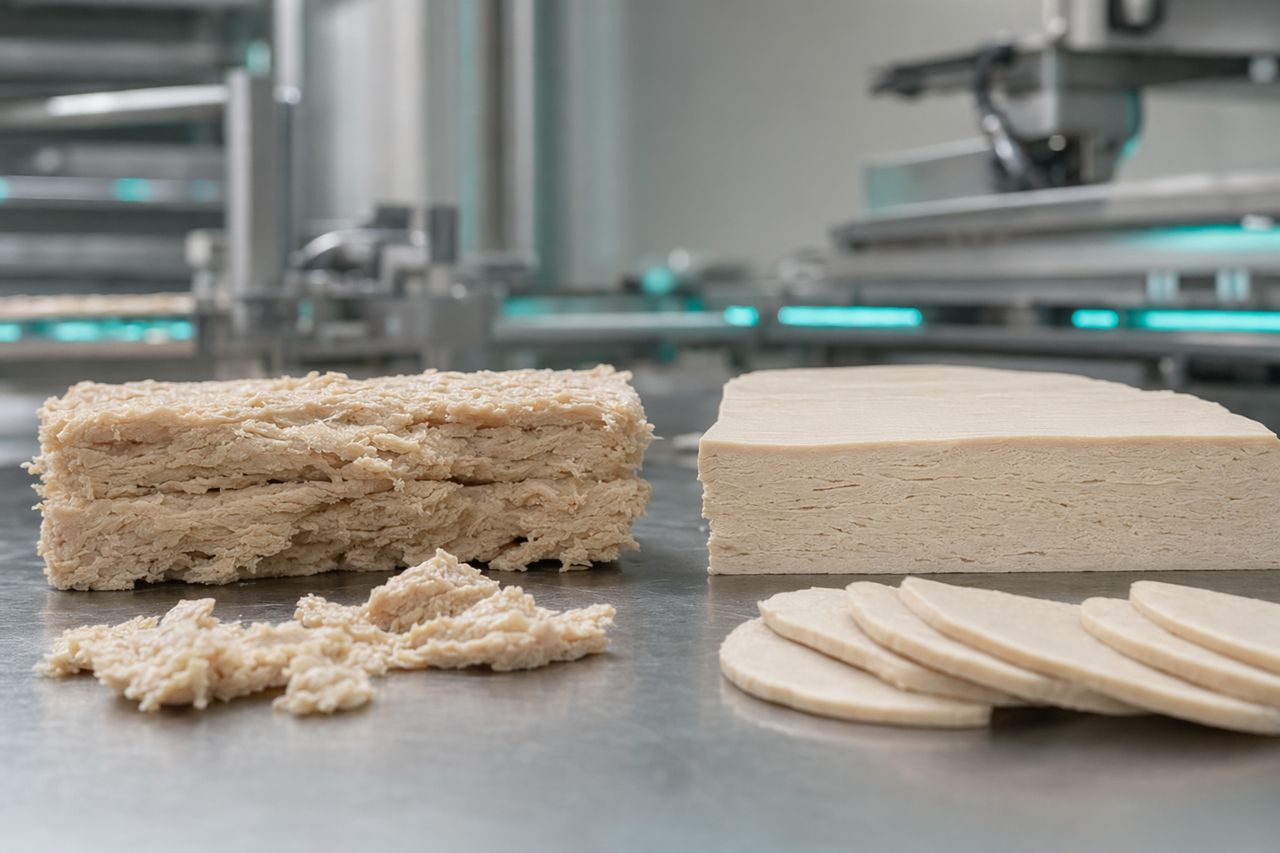
Transglutaminase forms crosslinks between suitable protein sites. That mechanism can help build stronger matrices, improve binding, reduce crumbling, and support cleaner slicing. But it cannot compensate for every upstream variable.
Common failure patterns include:
- Strong bench results that disappear during scale-up
- Patchy binding across the batch
- Rubbery, over-tight texture
- Weak cohesion after cooking, freezing, or slicing
- Inconsistent performance between protein lots
- Good initial structure but poor hold after distribution or reheating
The solution is not always “more enzyme.” In many cases, better hydration, dispersion, substrate preparation, hold time, temperature control, or sequencing will create a more reliable result.
Mistake 1: treating the enzyme as a surface glue
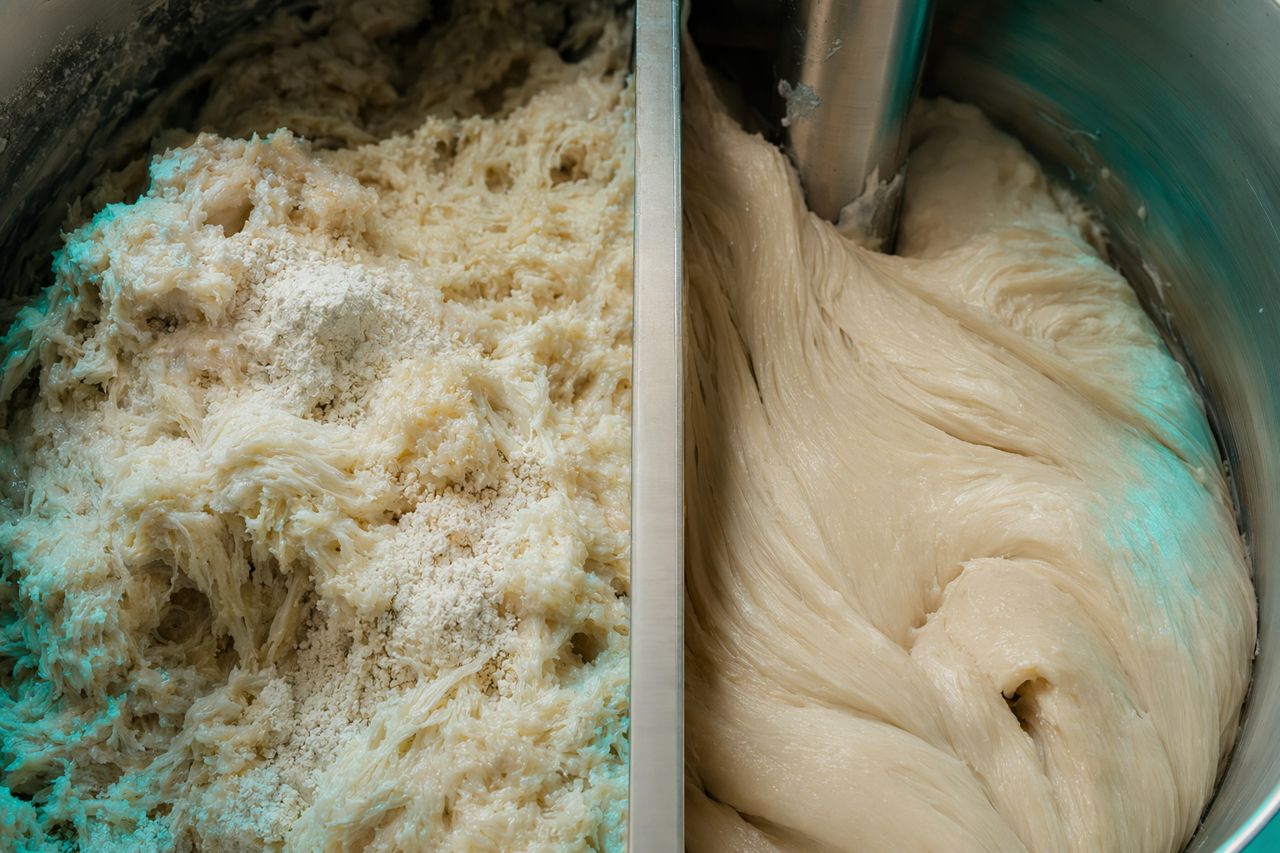
Transglutaminase does not simply stick ingredients together like an adhesive film. It works within a protein matrix. If available proteins are not exposed, hydrated, and in close contact, crosslinking will be limited.
What it looks like
- Meat pieces separate after cooking or slicing
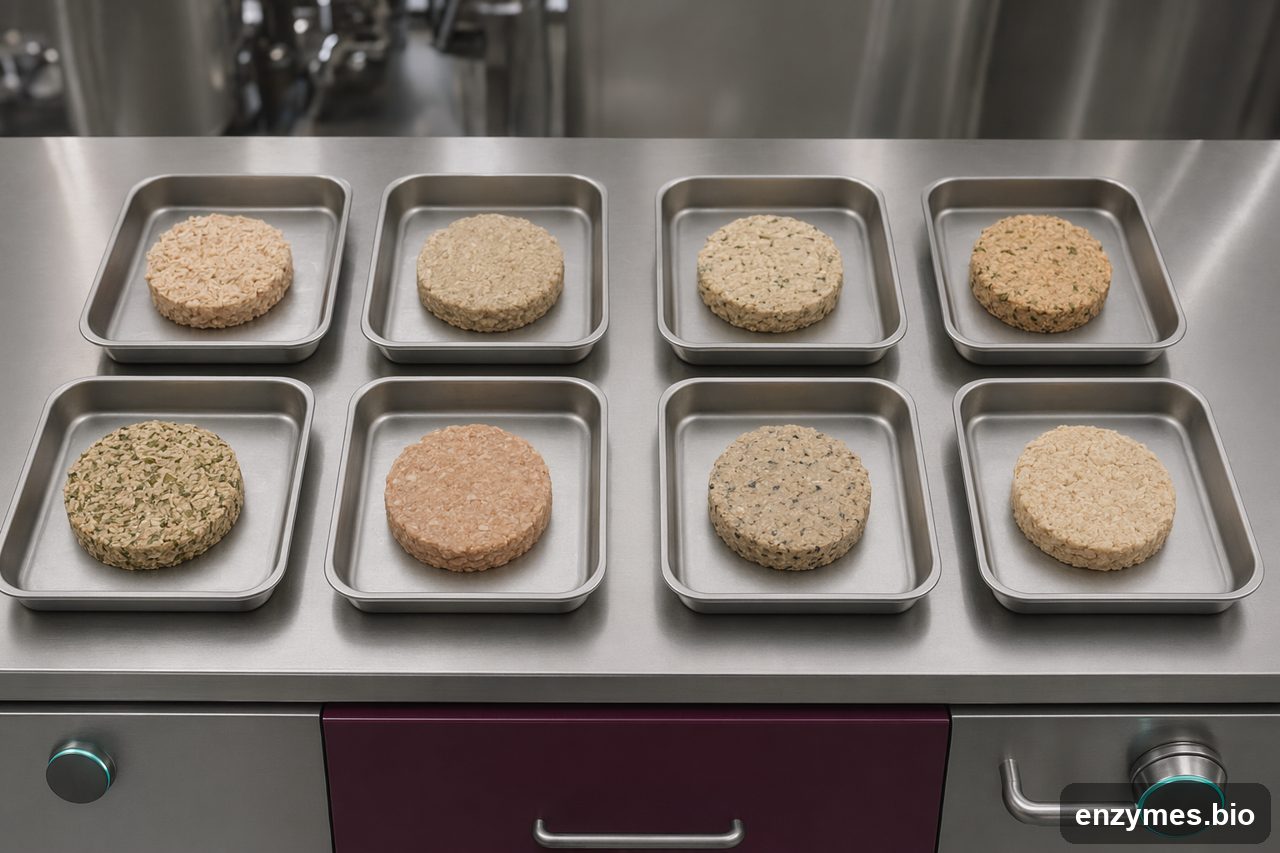
- Plant-based patties crumble despite enzyme addition
- Dairy gels set unevenly or show weak zones
- Restructured products have strong spots and soft spots
What to check
- Is the protein system adequately hydrated before the enzyme is expected to act?
- Are binding proteins distributed throughout the matrix, not just on the surface?
- Is the particle size too coarse for reliable contact?
- Are fat, oil, or particulates physically blocking protein-to-protein interaction?
Practical correction
Design the formula around contact. Improve protein dispersion, manage particle size, and make sure the enzyme is introduced where functional proteins can actually meet. For formed products, a short controlled pre-mix can be more valuable than late-stage enzyme addition.
Mistake 2: adding transglutaminase too late in the process
A late addition may sound convenient, but it can leave the enzyme with limited time and access. Once a system is thermally set, heavily emulsified, acidified, or immobilized, the protein network may no longer be receptive.
What it looks like
- Trial success only when mixed manually at bench scale
- Weak structure in production after continuous mixing
- Binding failure after final spice, oil, acid, or heat steps
- High variation between the top, middle, and bottom of a batch
What to check
- Is the enzyme added before the matrix is locked into place?
- Does the process allow enough residence time for structure development?
- Are downstream steps disrupting the developing network before it stabilizes?
Practical correction
Map the process sequence. In many systems, transglutaminase performs best after hydration and before final set, heavy oil addition, aggressive shear, acidification, or high-temperature processing. The right point depends on the product, but “as late as possible” is rarely the best technical answer.
Mistake 3: poor dispersion and dry-pocket formation
Transglutaminase must be evenly distributed. Dry pockets, clumps, or surface-heavy dosing create localized overbinding next to underdeveloped regions.
What it looks like
- Rubber-like specks or dense sections
- Patchy gels or uneven slice strength
- Product sticks in some areas but tears in others
- Inconsistent bite across a single unit
What to check
- Was the enzyme pre-blended into a carrier or added directly as a powder?
- Was mixing energetic enough to distribute but not so aggressive that it damages the matrix?
- Did the system contain enough free moisture during addition?
- Are powders competing for hydration at the same moment?
Practical correction
Build a repeatable dispersion step. Pre-blending with compatible dry ingredients, adding during a controlled hydration phase, or using a defined addition sequence can reduce clumping and improve batch uniformity.
Mistake 4: assuming all proteins respond the same way
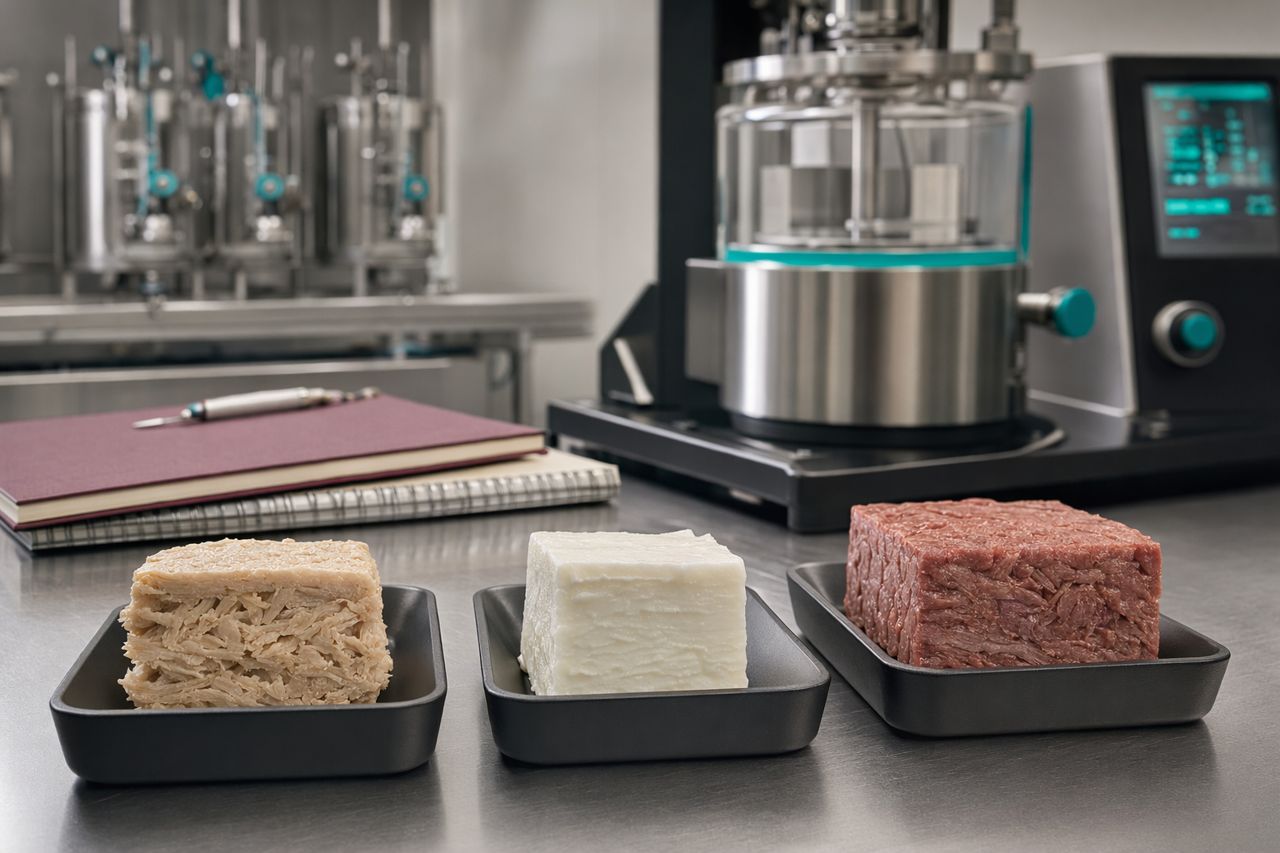
Protein systems differ. Myofibrillar proteins, casein-rich dairy systems, soy, pea, wheat, fungal proteins, gelatin, collagen, and hybrid blends each present different accessibility, water behavior, and matrix architecture.
What it looks like
- A formula works in chicken but not fish
- A dairy gel improves, but the plant-based version does not
- One pea protein lot performs; another lot fails
- A hybrid meat-plant system binds inconsistently
What to check
- Are the required reactive sites accessible in the chosen protein source?
- Has the protein been heavily heat-treated, denatured, or chemically modified?
- Is the supplier lot changing solubility, hydration rate, or particle size?
- Is the protein system missing a structural partner that supports network formation?
Practical correction
Treat every protein system as its own architecture. In plant-based and hybrid formulations, transglutaminase often works best when paired with deliberate hydration, emulsification control, and a supporting texture system rather than used as a single-point fix.
Mistake 5: ignoring water, salt, pH, and temperature interactions
Transglutaminase performance depends on the processing environment. Water availability, ionic strength, pH, temperature, and hold time all influence how much functional structure develops before the product is set, chilled, cooked, dried, or frozen.
What it looks like
- Good binding in one facility but not another
- Seasonal variation in results
- Failure after a brine, acid, or salt change
- Weak yield improvement despite visible binding
What to check
- Is water tied up by starches, fibers, gums, or high-solids ingredients?
- Did a salt or brine change alter protein extraction or hydration?
- Is the pH outside the useful window for the specific protein system?
- Is the product too cold to develop structure within the available time?
- Is heat applied before the network has formed?
Practical correction
Control the window, not just the ingredient list. Define a practical operating range for temperature, pH, hold time, and mixing order during pilot trials, then protect that range during scale-up.
Mistake 6: using more enzyme to solve every problem
Over-application can create an overly tight protein network. The product may bind, but it can lose juiciness, tenderness, melt behavior, or clean bite.
What it looks like
- Rubbery sausage or formed meat
- Dairy gels with excessive firmness and poor spoonability
- Plant-based products that chew long and dry
- Slices that resist cutting or deform at the knife
What to check
- Is the texture target defined in measurable product terms?
- Are you optimizing for binding strength at the expense of eating quality?
- Is the hold time longer than planned?
- Are batch delays creating unintended extra structure before cooking or chilling?
Practical correction
Optimize the whole process. The best result is usually a balance of enzyme level, protein preparation, hold time, and final thermal or cold-set conditions. Stronger is not always better; controlled strength is the target.
Mistake 7: skipping a control matrix during trials
Without controls, teams often misread the source of improvement or failure. Transglutaminase may be credited for changes caused by salt, heat, hydration, starch, gums, shear, or protein lot variation.
What a useful pilot set includes
- A no-enzyme control using the same process
- A process-control sample with the same hold and temperature
- A formula variant isolating the main suspected constraint
- Texture, slicing, cook yield, purge, and sensory notes recorded together
- Photos of cut surface, fracture, and exudate behavior
Practical correction
Do not run one “enzyme sample” against memory. Build a small, disciplined trial matrix so the team can see what the enzyme is actually contributing.
Mistake 8: forgetting downstream stress
A product can look excellent immediately after forming and still fail after cooking, chilling, freezing, thawing, transport, slicing, reheating, or high-speed packaging.
What it looks like
- Strong formed shape before cooking, weak slice after cook
- Frozen-thawed product loses cohesion
- Retail pack develops purge
- Foodservice product fails after reheating
- Dairy or plant gels weep after storage
What to check
- What is the true commercial stress path?
- Is the enzyme strategy built for the final use case, not just the pilot observation point?
- Does the formulation need water management support in addition to protein crosslinking?
Practical correction
Evaluate the product the way the customer will use it. Include the intended cook, chill, freeze-thaw, slice, pack, hold, and reheat conditions in the validation plan.
Mistake 9: scaling the mixing step without scaling the result
Bench mixing gives intimate contact. Production equipment introduces dead zones, shear gradients, fill-level effects, longer transfer times, and heat gain. A successful beaker or bowl trial does not automatically translate to a mixer, tumbler, emulsifier, scraped-surface system, or continuous line.
What it looks like
- The center of the batch differs from the edge
- First units off the line bind differently from later units
- Hold time varies by tote, cart, or pipe distance
- Product temperature climbs during mixing
What to check
- Does the production mixer recreate the bench dispersion pattern?
- Are addition points placed where the enzyme can distribute quickly?
- Is residence time consistent across the batch?
- Are transfer delays included in the actual reaction window?
Practical correction
Scale process behavior, not just formulation percentages. Validate dispersion, temperature, hold time, and downstream timing at the equipment level.
Troubleshooting checklist for failed transglutaminase trials
Use this when a trial underperforms or behaves inconsistently:
- Confirm protein readiness — hydration, extraction, denaturation history, particle size, and lot variation.
- Review addition point — before or after key structural events such as emulsification, acidification, heating, or chilling.
- Inspect dispersion — clumps, dry pockets, surface concentration, powder competition, and mixing dead zones.
- Control process window — temperature, pH, salt, water activity behavior, hold time, and delays.
- Evaluate final product stress — cook, slice, freeze-thaw, pack, distribute, reheat, and shelf-life behavior.
- Compare against controls — no-enzyme and process-matched controls are essential.
- Define the texture target — not just “more binding,” but bite, firmness, elasticity, juiciness, cut quality, and yield.
Application-specific notes
Meat and poultry restructuring
Focus on protein extraction, surface moisture, particle contact, and cold-chain control. Too little contact creates weak bonding; too much development can make bite dense or elastic. Validate slicing and cook yield, not just raw formed strength.
Seafood systems
Seafood proteins can be delicate and variable. Avoid assuming meat-process timing will transfer directly. Control moisture, salt, mixing intensity, and thermal steps carefully to prevent fragile gels or uneven bind.
Dairy gels and cultured systems
Dairy systems depend heavily on protein type, heat history, pH path, and final texture target. Transglutaminase can support firmness and water retention, but process timing around heating and acid development is critical.
Plant-based and hybrid proteins
Plant proteins may need stronger hydration strategy, particle-size control, and matrix support. Crosslinking can improve bite and cohesion, but it cannot fully replace fat structuring, emulsification, water binding, and flavor-system design.
What a reliable trial brief should include
Before requesting pricing or samples, prepare the information that helps a technical team recommend a practical starting point:
- Product type and target texture
- Protein sources and approximate composition
- Current process sequence
- Addition point under consideration
- Temperature and hold-time constraints
- Key pain point: yield, bite, sliceability, purge, firmness, crumble, or freeze-thaw stability
- Downstream process: cook, chill, freeze, slice, pack, reheat, or distribute
- Commercial format: batch, continuous, foodservice, retail, ingredient, or co-manufactured
This keeps the conversation focused on usable formulation strategy rather than generic enzyme claims.
Request a quote or get pricing
If you are troubleshooting a transglutaminase trial, send the product format, protein system, process sequence, and the failure mode you are seeing. Transglutaminase Enzyme Solutions can help frame the right commercial discussion for your application.
Ready for a quote? Use the inquiry form at the foot of this page. Tell us the application, the quantity per order or per year and the delivery country. Price, pack size and lead time are quoted per order.
Prefer a direct commercial response? Use the same form and include “get pricing” in the message so the inquiry can be routed appropriately.