Technical detail
Transglutaminase for ready meals and prepared food manufacturing
Ready meals put protein structure under pressure. Components are formed, filled, sliced, chilled, frozen, reheated, held, and moved through packaging lines before the consumer ever sees the product. Transglutaminase helps prepared food manufacturers design protein systems that stay cohesive through that chain.
Transglutaminase, also known as protein-glutamine gamma-glutamyltransferase, supports covalent cross-linking between suitable protein substrates. In commercial terms, that means stronger binding, cleaner portioning, improved bite, reduced crumbling, and better structural control across meat, poultry, seafood, dairy, egg, and plant-protein meal components.
Transglutaminase Enzyme Solutions supplies transglutaminase for manufacturers that need reliable texture-building performance without overcomplicating formulation or line integration.
Wholesale and bulk transglutaminase for food manufacturers, ingredient blenders, distributors and resellers. Every order is quoted individually. Request a quote with your product or application, the quantity you need and the destination country.
Why structure fails in prepared meals
Ready meal proteins are often exposed to multiple sources of stress:
- Forming, tumbling, pumping, stuffing, or depositing
- Slicing, dicing, filling, or portioning after set
- Freeze-thaw movement and ice crystal damage
- Sauce contact, moisture migration, and thermal cycling
- Retort, pasteurization, steam, oven, microwave, or pan-reheat conditions
- Long chilled or frozen shelf-life requirements
- Automated packing and tray sealing pressure
Without a controlled protein network, products can lose definition, shed moisture, split at seams, crumble after reheating, or deliver an inconsistent bite. Transglutaminase gives R&D teams another structural lever: not just thickening, not just gelling, but protein-to-protein binding within the matrix.
Where transglutaminase fits in ready meal systems
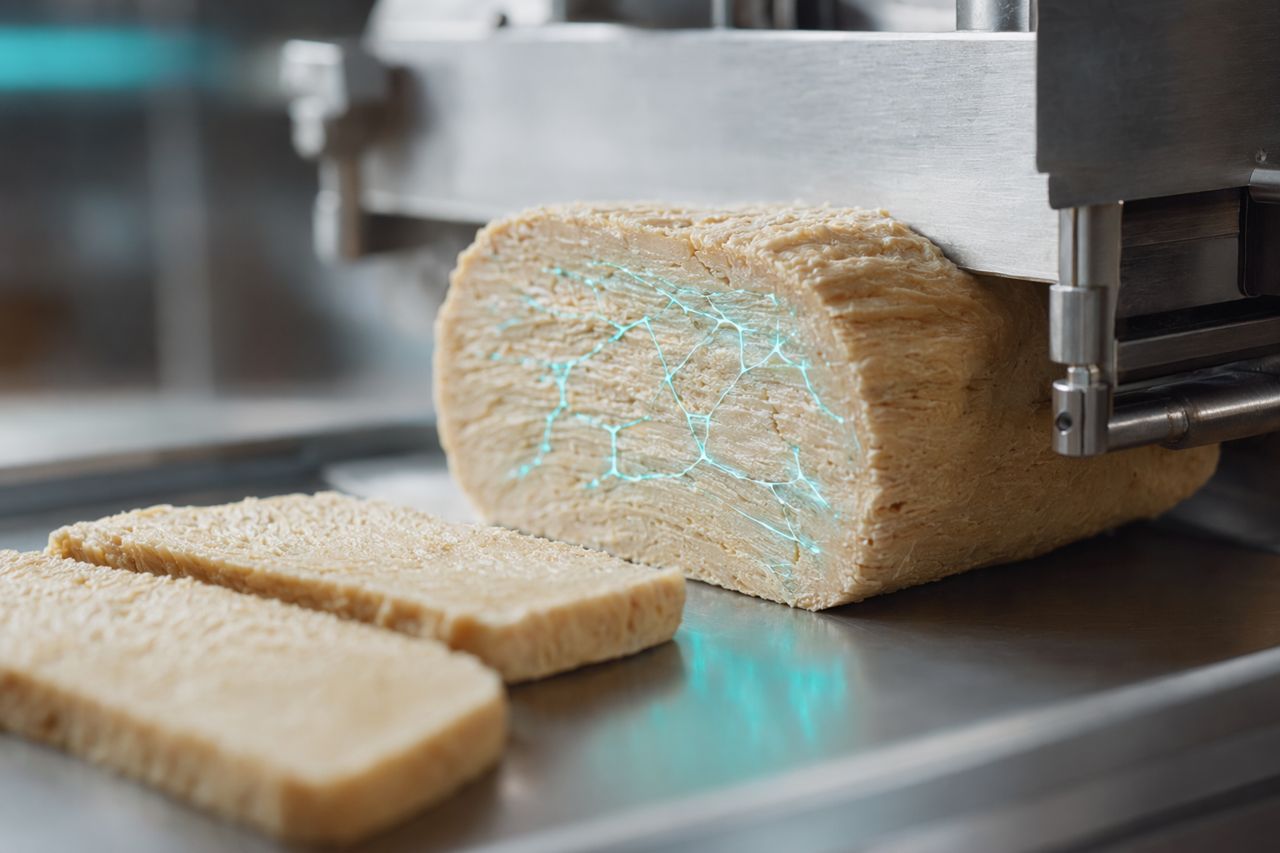
Formed meat, poultry, and seafood components
Use transglutaminase to improve cohesion in formed or restructured proteins used in meal trays, bowls, frozen entrees, and prepared kits. It can support:
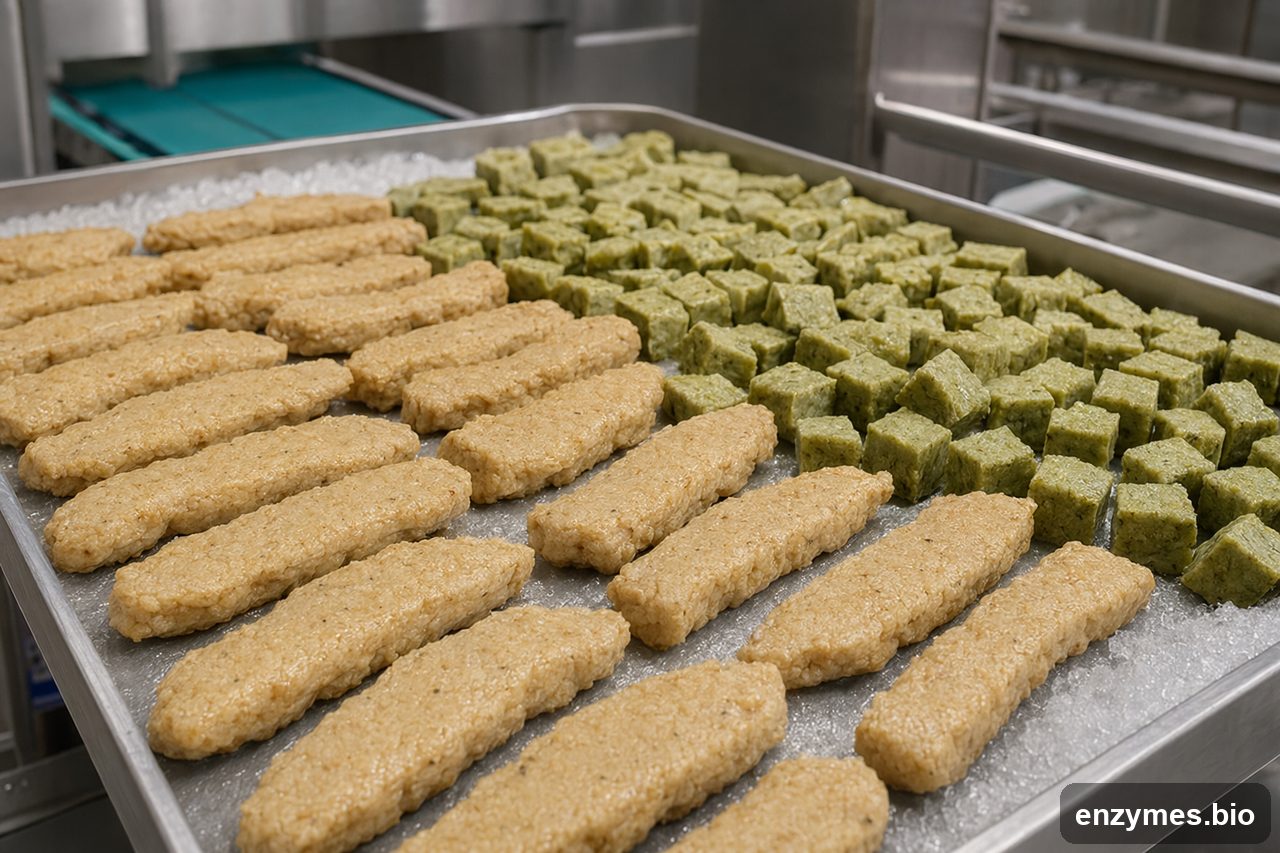
- Chicken strips, medallions, cubes, and formed fillets
- Beef, pork, or lamb pieces for plated meals
- Seafood portions, fish blocks, and composite seafood formats
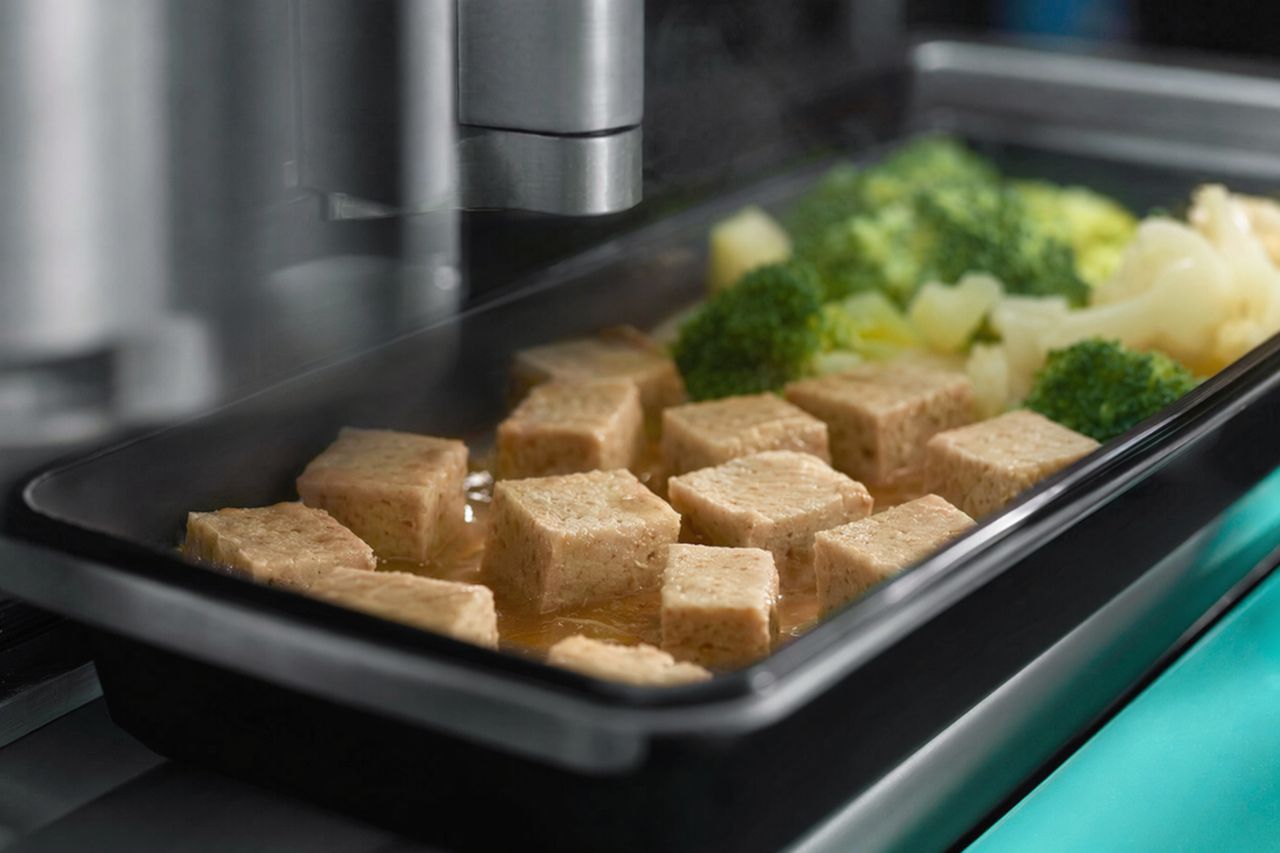
- Sliced proteins for heat-and-eat trays
- Cooked or uncooked components that need shape stability before packaging
The commercial value is straightforward: better binding strength, cleaner cuts, lower breakage, and more predictable finished-piece geometry.
Filled and layered prepared foods
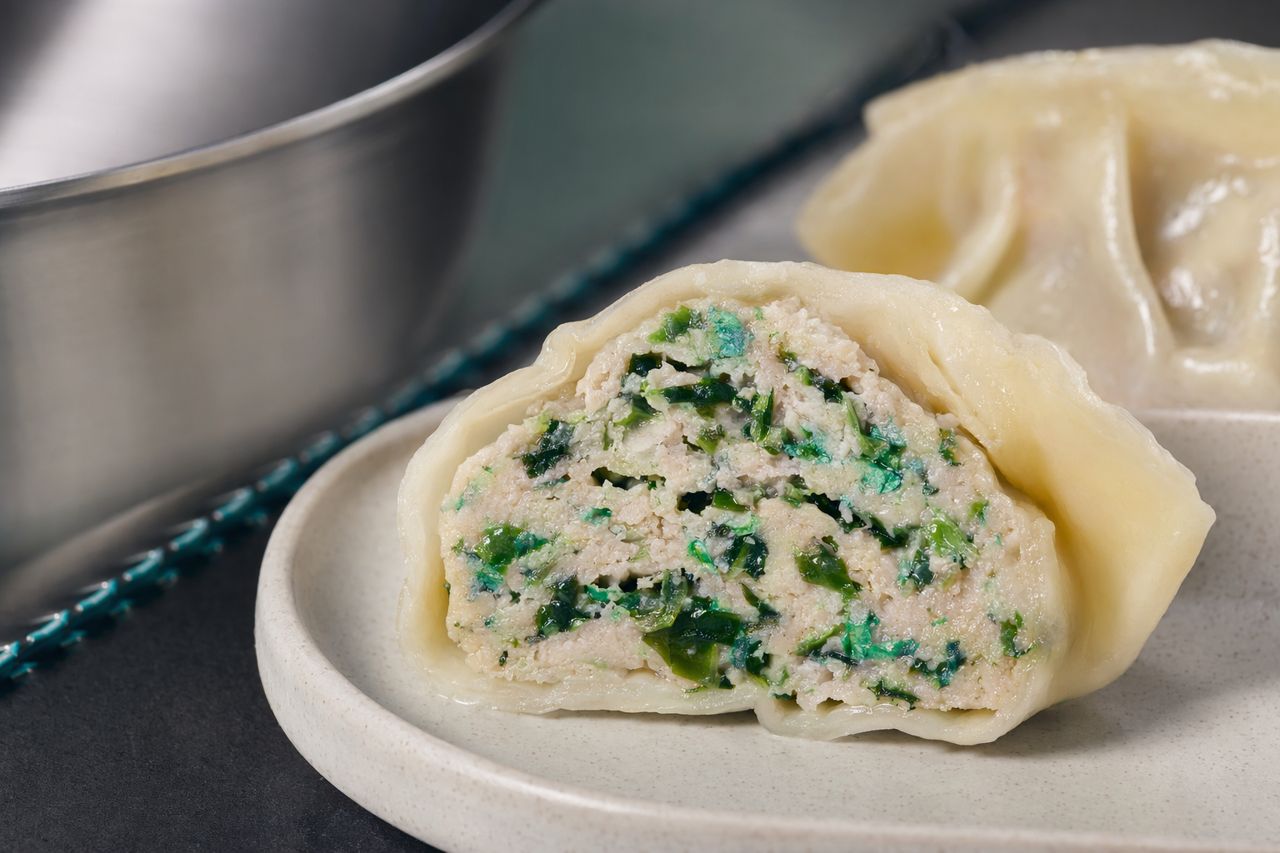
Filled pasta, dumplings, pies, croquettes, wraps, and layered meal formats often require internal structure without a dense or rubbery bite. Transglutaminase can help protein-containing fillings hold shape during depositing, cooking, freezing, and reheating.
Potential advantages include:
- Reduced filling collapse
- Cleaner extrusion or depositing behavior
- Improved cut face in layered products
- Better hold within starch- or dough-based carriers
- Lower visible separation after thermal processing
Plant-based ready meals
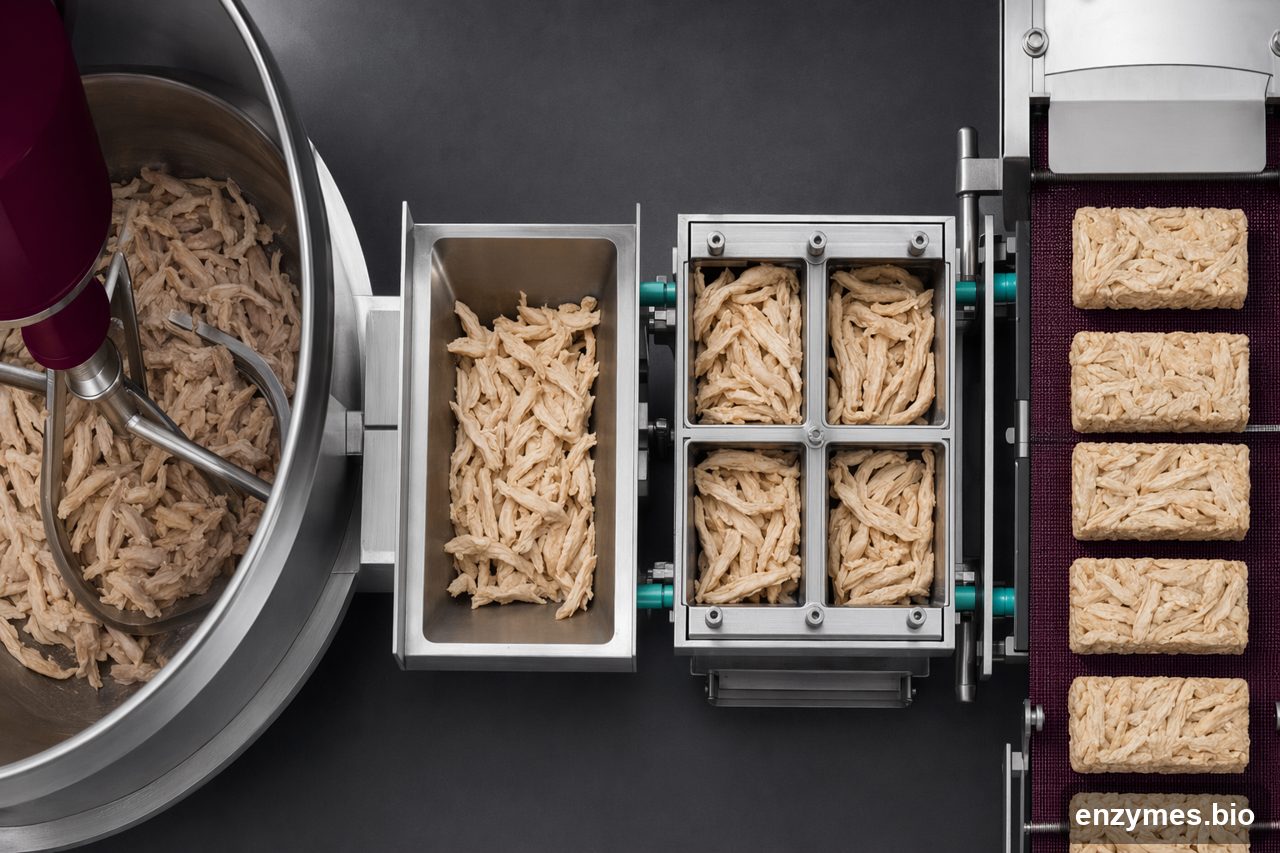
Plant-protein systems often need help moving from hydrated particulate blends to cohesive, forkable, or sliceable structures. Transglutaminase can support network formation in compatible plant-protein matrices, especially where formulation includes soy, pea, wheat, or blended protein systems.
In plant-based meal components, it may support:
- Firmer formed pieces without excessive gum loading
- Improved bite uniformity across batches
- Better resistance to crumble during reheating
- Structural design in hybrid vegetable-protein inclusions
- More flexibility in fat, moisture, and binder balance
Performance depends on protein source, degree of processing, hydration, salt system, fat phase, thermal profile, and overall formulation architecture. Transglutaminase Enzyme Solutions supports qualification work around the actual protein system, not generic assumptions.
Dairy, egg, and high-protein inclusions
Prepared foods increasingly use high-protein sauces, fillings, breakfast components, and dairy or egg inclusions. Transglutaminase can be evaluated where protein network control is required for set, bite, syneresis management, or cut stability.
Relevant development areas include:
- Protein-rich fillings
- Egg-based components and breakfast meal assemblies
- Cheese-containing prepared foods
- Creamy or gelled inclusions that must survive heating and chilled storage
- High-protein refrigerated meal formats
Performance objectives for ready meal manufacturers
Texture control
Transglutaminase helps manufacturers move from loose aggregation to engineered protein structure. Depending on the substrate and process, it can support a firmer, more cohesive, more elastic, or more sliceable texture.
Yield and moisture retention
A stronger protein network can help reduce purge, cooking loss, and structural water release. This matters in tray-packed meals where free liquid affects appearance, label presentation, and consumer perception.
Portion integrity
Formed and sliced components must survive transfer, weighing, filling, freezing, and reheating. Transglutaminase can improve piece integrity and reduce breakage across automated handling.
Formulation flexibility
By strengthening the protein phase, transglutaminase may allow R&D teams to rebalance salt, phosphate, hydrocolloid, starch, or protein-source strategies. It is not a one-for-one replacement for every binder, but it can reduce dependence on purely viscosity-based structure.
Process stability
Prepared meal manufacturing rewards ingredients that work within real production windows. Transglutaminase can be integrated into mixing, tumbling, forming, stuffing, or filling steps when hydration, contact time, temperature, and subsequent heat treatment are properly managed.
Process integration guidance
Transglutaminase performance is highly system-specific. The following variables should be validated during plant trials:
- Protein type and available reactive sites
- Moisture level and water distribution
- Salt, phosphate, and mineral balance
- Fat level and emulsion stability
- pH and seasoning load
- Mixing energy and order of addition
- Contact time before cooking or chilling
- Thermal step, including enzyme inactivation
- Freeze-thaw and reheat profile
- Packaging format and shelf-life target
For most ready meal applications, the best results come from early formulation mapping: define the target texture, identify the stress points, then place transglutaminase where it can create structure before the product is locked by heat, chill, or freeze.
Development areas we help evaluate
Transglutaminase Enzyme Solutions can support application discussions for:
- Chilled ready meals
- Frozen entrees and meal bowls
- Formed protein pieces for tray meals
- Sliced or diced inclusions
- Prepared meat, poultry, and seafood components
- Plant-based meal proteins
- Filled pasta, dumplings, and savory fillings
- Breakfast meal components
- High-protein prepared foods
- Foodservice meal kits and bulk prepared components
Specification and procurement considerations
For procurement teams, transglutaminase selection should cover more than price per kilogram. Commercial qualification should review:
- Protein-system compatibility
- Carrier and formulation fit
- Dispersion behavior in the target process
- Microbiological and food safety documentation
- Allergen and dietary-positioning requirements
- Country-specific regulatory and labeling review
- Shelf-life, storage, and handling conditions
- Batch consistency and supply reliability
- Packaging format for plant use
Transglutaminase Enzyme Solutions can provide documentation for qualification and help align product selection with your manufacturing process, finished-product claims, and regional compliance needs.
What to test in a plant trial
A practical trial should measure performance against the finished meal, not just the intermediate protein block. Recommended checkpoints include:
- Raw or pre-cook mix behavior
- Forming, filling, or depositing quality
- Set strength before cutting or handling
- Cook yield and purge
- Slicing, dicing, or portioning integrity
- Freeze-thaw stability where applicable
- Sauce contact and tray appearance
- Microwave, oven, steam, or pan-reheat texture
- Sensory bite after full shelf-life simulation
- Line speed and packaging survivability
This approach keeps the evaluation tied to commercial outcomes: fewer rejects, better eating quality, cleaner presentation, and more stable production.
Build stronger prepared food systems
Transglutaminase is not simply a texture additive. Used correctly, it is a protein-architecture tool for ready meals that need reliable shape, bite, binding, and yield across real manufacturing conditions.
If you are developing a formed, filled, sliced, frozen, chilled, or heat-treated prepared food component, Transglutaminase Enzyme Solutions can help you evaluate transglutaminase for your protein system and process.
Ready for a quote? Use the inquiry form at the foot of this page. Tell us the application, the quantity per order or per year and the delivery country. Price, pack size and lead time are quoted per order.